





The Enduring Allure of Art Deco
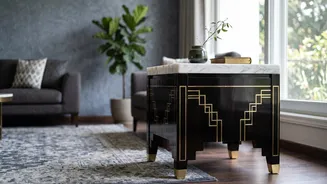
Born in the 1920s, Art Deco is more than a vintage style; it's a philosophy of glamour, optimism, and forward-thinking design. It’s defined by bold geometric shapes, symmetry, and streamlined forms that feel both classic and strikingly modern. Think sunburst
motifs, sharp angles, and elegant curves. The materials themselves speak of luxury and permanence: rich, dark woods like rosewood and teak, often lacquered to a high gloss, paired with the cool glamour of brass, chrome, and glass. This style emerged as a celebration of the machine age, yet it was rooted in fine craftsmanship and an appreciation for decorative arts. In India, this global movement found a unique voice, especially in Mumbai, which boasts one of the world's largest collections of Art Deco architecture. This local adaptation, or 'Indo-Deco', blended international forms with local materials and craftsmanship, creating a legacy that continues to inspire.
The Rise and Fall of Fast Furniture
On the other end of the spectrum is 'fast furniture'. Like its fast-fashion counterpart, it's defined by mass production, low prices, and a focus on fleeting trends. These pieces are designed to be affordable and accessible, offering a quick and easy way to update a room. The problem lies in their construction. To keep costs low, manufacturers often use particleboard, low-density fibreboard, and thin veneers instead of solid wood. These materials are not only less durable but are also notoriously difficult to repair. A little water damage can cause particleboard to swell permanently, and peeling laminates are a common sight. This business model encourages a cycle of buying, discarding, and replacing, creating enormous environmental strain.
A Question of Craftsmanship
The fundamental difference between these two approaches lies in the intent behind them. Art Deco-inspired pieces are built to last for generations. They employ traditional joinery techniques and high-quality, solid materials that can withstand wear and be refinished or reupholstered over decades. This is furniture meant to become an heirloom. Fast furniture, by contrast, is often designed for disposal. Its short lifespan, sometimes just a few years, means it contributes significantly to landfill waste. The Environmental Protection Agency (EPA) in the US has noted that furniture is one of the least-recycled household items, with millions of tons ending up in landfills annually. This 'ready to throw away' model prioritises immediate, low-cost gratification over long-term value and durability.
Sustainability as a Statement
Choosing well-crafted, durable furniture is an inherently sustainable act. By investing in a piece that will last 30 or 40 years instead of three or four, you drastically reduce your consumption of raw materials, manufacturing energy, and shipping emissions over your lifetime. It's a move away from a linear 'take-make-waste' economy toward a circular one, where items are kept in use for as long as possible. The revival of interest in Art Deco aligns with a broader cultural shift towards conscious consumerism. Homeowners are increasingly looking for pieces with a story, with character, and with the assurance that their purchase isn't contributing to a culture of disposability. Restoring and reusing vintage Deco pieces is a fantastic way to embrace this ethos, preserving design history while minimising environmental impact.
Timeless Style in a Modern World
Perhaps the greatest strength of Art Deco is its timeless appeal. Its clean lines and geometric patterns allow it to sit comfortably within a variety of interior styles, from minimalist to maximalist. A single, dramatic Art Deco-inspired cabinet, mirror, or armchair can elevate an entire room, acting as a functional piece of art. It allows you to express a sophisticated, individual style that won't look dated when the next big trend arrives. Fast furniture, by being so closely tied to trends, is designed to become obsolete. An Art Deco piece, however, feels both nostalgic and futuristic—a link to a glamorous past with a design that continues to feel relevant and bold.