





The Unforgiving Cold
A lunar night is not just darkness; it is a deep, relentless cold. With no atmosphere to trap heat, temperatures on the Moon's surface can plummet to bone-chilling lows of -173°C (-280°F), and even colder in permanently shadowed regions. For a sophisticated
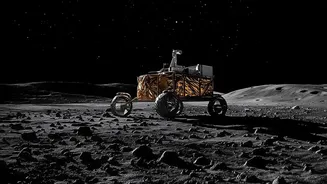
piece of machinery like a rover, this is a death sentence. Batteries lose their ability to hold a charge, sensitive electronics fail, and lubricants can freeze solid. The 14-Earth-day duration of this cold soak makes survival incredibly difficult. Historically, many lunar missions were simply designed to end when the first sunset arrived, as overcoming this thermal challenge was deemed too complex or expensive.
From Hibernation to Innovation
Early strategies for lunar night survival were often passive. Some missions relied on radioisotope heater units (RHUs), which use the natural decay of radioactive material to generate a small but steady amount of heat. These units allow a rover to essentially hibernate through the night, keeping its core components just warm enough to avoid permanent damage. While effective for survival, this approach means the rover is unproductive for two weeks at a time. Powering active heaters with batteries is another option, but the energy demand is enormous. It's estimated that for every watt of heating power needed, an additional five kilograms of battery mass is required, making rovers prohibitively heavy and expensive to launch. This has driven a global push for more advanced, active thermal management.
The 'Heat-Switch' Breakthrough
The latest innovations are centered around creating a 'heat-switch'—a system that can actively cool the rover during the scorching lunar day and then insulate it during the frigid night. During the day, a rover's electronics generate significant heat that must be radiated away to prevent overheating in the vacuum of space. Advanced systems now use technologies like Loop Heat Pipes (LHPs), which work like a refrigerator, using a fluid that evaporates to absorb heat from electronics and then condenses in a radiator to release it. The breakthrough comes at night. Instead of just insulating, new designs can effectively turn the cooling system 'off'. One method, developed by researchers at Nagoya University, uses a tiny, low-power electrohydrodynamic pump to stop the flow of refrigerant, essentially creating a thermal blockage that prevents heat from escaping. This insulates the electronics with minimal energy expenditure.
Smarter Systems for a New Era
Other approaches focus on a complete thermal 'toolbox'. Companies like Advanced Cooling Technologies are developing systems that combine several passive elements. These include special 'thermal switches' that physically disconnect heat-radiating components when the temperature drops, preventing heat loss. Another key component is Phase Change Material (PCM), a substance that stores heat when it melts during the day and then slowly releases that heat as it freezes at night, keeping electronics within their survival temperature range. These systems are designed to be highly efficient, operating with minimal power from the batteries. Some concepts even explore capturing heat from the Earth's radiation or from boreholes drilled into the lunar surface, where residual warmth from the day remains.
Why It Matters for Future Exploration
The ability to survive and operate through the lunar night is a complete game-changer. It transforms lunar missions from short sprints into long-duration marathons of scientific discovery. Rovers can conduct continuous experiments, explore a wider range of territory, and provide persistent monitoring. This capability is essential for the success of long-term projects like NASA's Artemis program and the establishment of a future lunar base. For India's ambitious Chandrayaan program and the global space community, mastering lunar night survival means more data, more discoveries, and a sustained human and robotic presence on the Moon. It's a critical step toward making our nearest celestial neighbour a permanent outpost for exploration and science.