

An Artisan's Welcome in Jaipur
A trip for a craft enthusiast through Rajasthan is incomplete without a stop in Jaipur. While the Pink City is famous for its forts and markets, a quieter magic happens in its artisan studios. Here, nestled away from the main thoroughfares, you can find
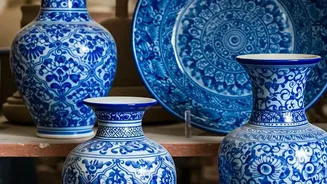
workshops dedicated to Blue Pottery, an art form that has become synonymous with the city. These workshops, often run by families who have practised the craft for generations, offer a warm welcome and a chance to do more than just buy a souvenir. They invite you to sit down, learn, and create. A typical workshop experience lasts a few hours and provides a hands-on introduction to this unique heritage, making it a memorable part of any traveller's itinerary.
The Secret of 'No-Clay' Pottery
The first surprise for many participants is learning that Blue Pottery contains no clay. This is its most defining characteristic. The Turko-Persian technique, which arrived in India centuries ago, uses a special dough made primarily from ground quartz stone. This is mixed with powdered glass, Multani Mitti (Fuller's Earth), borax, and a natural gum like Katira. Because this quartz-based dough lacks the plasticity of clay, it cannot be thrown on a traditional potter's wheel. Instead, artisans roll it into flat sheets and press it carefully into plaster moulds to create various shapes, from tiles and coasters to vases and bowls. This unique composition is what gives the final product its distinctive semi-translucent appearance and glassy finish.
From Dough to Dazzling Design
A workshop guides you through the key stages of creation. After a demonstration of how the dough is prepared and moulded, you are given your own piece, often a small plate or a set of coasters, which serves as your canvas. The surface is coated with a slip of quartz and glass powder to create a smooth, white base for painting. Then comes the most meditative part: painting your design. Guided by master artists, you learn to use fine brushes to apply colours derived from various mineral oxides. The signature cobalt blue comes from cobalt oxide, while a vibrant turquoise is created with copper oxide. You might be surprised to see that the colours appear dull and muddy at this stage; their true brilliance is only revealed after firing in the kiln.
A Highlight of a Five-Day Craft Tour
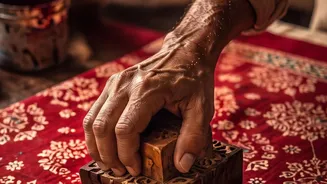
While a Blue Pottery workshop can be a single-day activity, it shines as the centerpiece of a longer, five-day exploration of Rajasthani crafts. A craft lover's itinerary could start in Jaipur, dedicating the first two days to Blue Pottery and the block-printing workshops in nearby Sanganer or Bagru. From there, a journey to Jodhpur, the 'Blue City', offers a chance to explore Bandhani (tie-and-dye) textiles and traditional Mojari footwear. The final days could be spent in Udaipur, renowned for its delicate miniature paintings and the Shilpgram rural arts complex. Within this rich tapestry of experiences, the Blue Pottery workshop stands out for its hands-on nature. It moves beyond observation, allowing you to connect directly with a heritage craft and its makers.
Taking Home a Piece of Jaipur
At the end of the workshop, you have a choice. You can take your unfired, painted piece with you as a delicate memento. Or, for the full experience, you can leave it with the studio to be glazed and fired. This process takes several days, as the pieces are carefully coated in a transparent glaze and then heated at a relatively low temperature of 800-850 degrees Celsius. This final firing melts the glaze, protects the painted design, and awakens the vibrant colours. Most studios will arrange to ship the finished product to your home. The piece you receive is more than just a beautiful object; it's a tangible connection to the history of Jaipur and a memory of the time you spent creating it with your own hands.