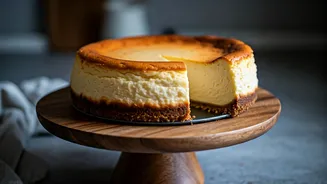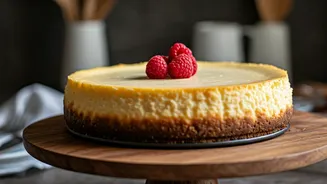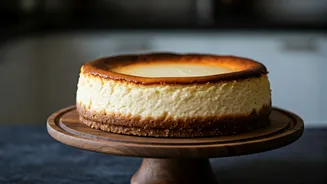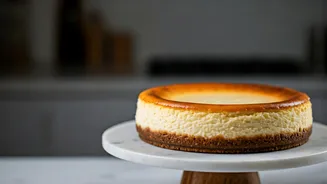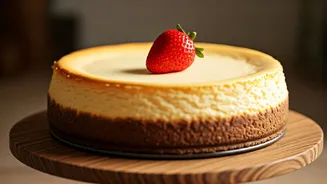



Why We Fear the Cheesecake
Let’s be honest: the potential for failure feels high. We’ve all heard the horror stories or experienced them firsthand. There’s the dreaded canyon-sized crack that splits the top. There’s the fussy, often-leaky water bath. There’s the grainy texture
or the top that stubbornly refuses to set. It seems like a dessert with a million rules, where one wrong move means disaster. The truth is, cheesecake isn't difficult; it’s just particular. It follows a few basic scientific principles. Understand those principles, and you'll understand that the cheesecake isn’t trying to sabotage you. It just wants what it wants: room temperature ingredients, a gentle mix, and a slow, relaxing cool-down.
The Foundation: A No-Fuss Crust
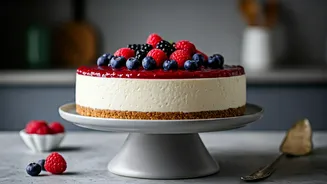
Every great cheesecake starts with a solid base. A simple pressed crust is the easiest and, for many, the most delicious option. The standard is a graham cracker crust, which requires little more than crushed biscuits, melted butter, and a bit of sugar. The key is to pack it firmly. Use the flat bottom of a measuring cup or a glass to press the crumbs tightly and evenly against the bottom and up the sides of your springform pan. A well-packed crust won't crumble when you serve it. Bake it for about 10 minutes before adding the filling. This pre-baking step helps set the crust and creates a firmer barrier, preventing the filling from making it soggy.
The Secret to a Smooth Filling
If you remember only one thing, let it be this: all your cold ingredients must be at room temperature. That means setting your cream cheese, eggs, and sour cream or heavy cream on the counter for at least two hours before you begin. This isn't a suggestion; it’s a rule. Cold cream cheese is lumpy, and no amount of mixing will make it perfectly smooth. You’ll just end up with a chunky batter. When the cream cheese is soft, it blends effortlessly with the sugar, creating a silky-smooth foundation. The eggs and cream will then incorporate seamlessly without you having to over-mix the batter—which is the primary cause of cracks.
Don't Over-Mix the Batter
The number one cause of a cracked cheesecake is over-mixing the batter, especially after adding the eggs. When you beat the batter on high speed, you incorporate excess air. In the oven, those air bubbles expand, causing the cheesecake to rise rapidly and then fall dramatically as it cools, leading to cracks. অজ্ঞান the cream cheese and sugar are smooth, turn your mixer down to low. Add the eggs one at a time, mixing only until the yellow yolk disappears. Scrape down the sides and bottom of the bowl frequently to ensure everything is combined, but resist the urge to keep mixing. A few gentle pulses are all you need.
The Simplified 'Water Bath'
The water bath (or bain-marie) is the step that intimidates most bakers. Its purpose is to create a steamy, humid environment in the oven, which helps the cheesecake cook gently and evenly. But wrapping a pan in foil is messy and often leaks. Here's an easier way: instead of placing your springform pan *in* water, simply place a roasting pan or a 9x13-inch pan filled with a few inches of hot water on the rack *below* your cheesecake. This achieves the same humidifying effect without any risk of a soggy crust. The steam will still regulate the oven temperature and keep the cake moist, ensuring a creamy texture and a crack-free surface.
The Slow, Gentle Cool-Down
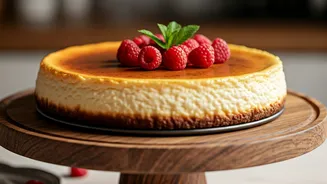
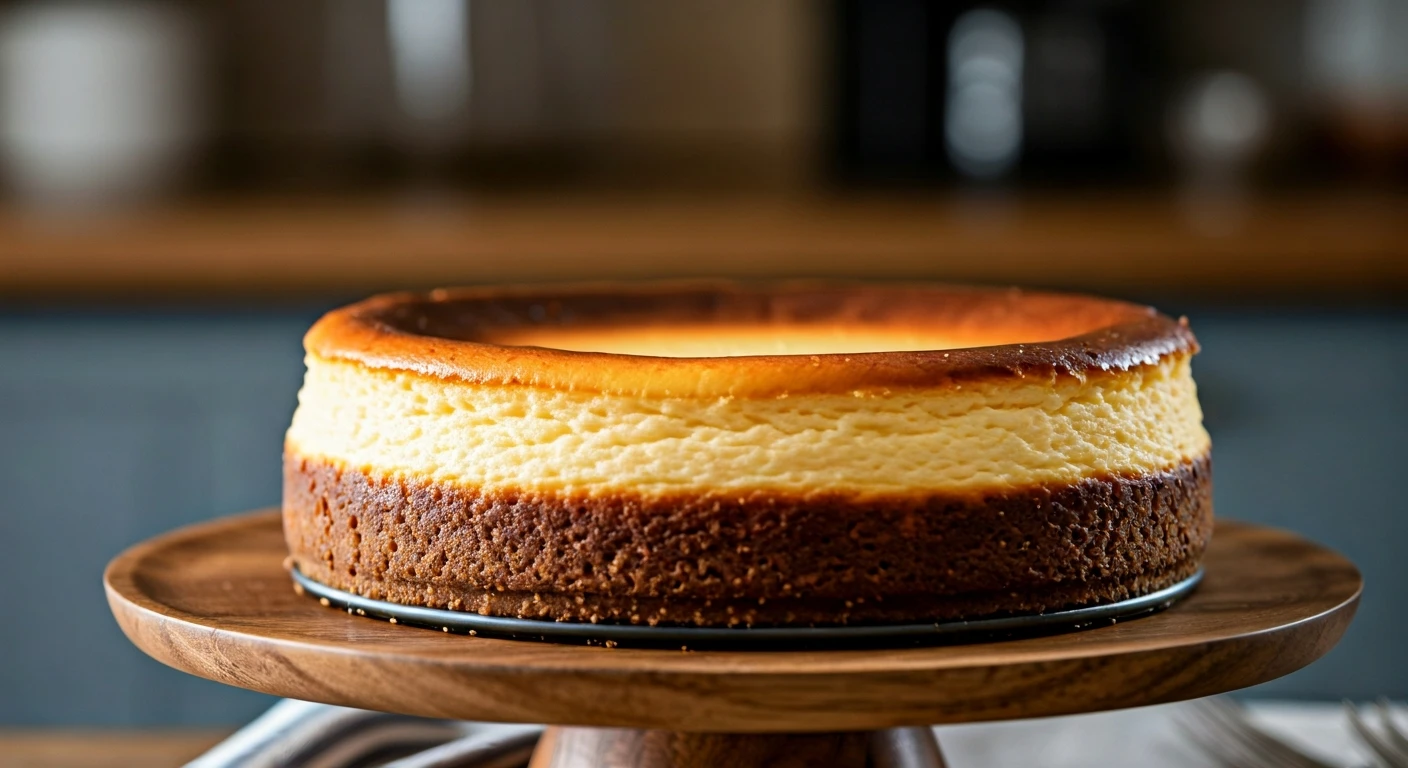
Sudden temperature changes are the final enemy of a perfect cheesecake. Rushing the cooling process will cause it to contract too quickly, leading to cracks. When the baking time is up (the center should still have a slight wobble), turn off the oven, prop the door open with a wooden spoon, and let the cheesecake cool inside the oven for one full hour. This gradual transition to room temperature is non-negotiable. After an hour, move it to the counter and let it cool completely before even thinking about putting it in the refrigerator. Finally, chill it, uncovered, for at least six hours or overnight. This long chill is what gives cheesecake its dense, signature texture.