




NASA is rewriting its playbook for returning to the Moon. Instead of relying on a single partner, the agency is now fostering a competitive market for lunar landers, bringing rivals SpaceX and Blue Origin into the fold to ensure a sustainable future on the Moon.
A Shift in Lunar Strategy
The original plan for NASA's Artemis program was seemingly straightforward. In 2021, the agency awarded a single, highly-coveted contract to SpaceX to develop the Human Landing System (HLS) that would carry astronauts to the lunar surface for the first time since the Apollo era. This decision, which selected SpaceX's ambitious Starship vehicle, was met with protests from competitors, most notably a team led by Blue Origin. The initial strategy prioritized speed and cost-effectiveness, with SpaceX winning on both technical merit and a significantly lower bid. However, relying on a single provider for such a critical component of the mission carried inherent risks. Any major delay or failure with the sole-source lander could jeopardize the entire Artemis timeline. Recognizing this, NASA pivoted its strategy toward redundancy and competition.
The Case for Competition
The new approach is a significant strategic realignment aimed at creating a more robust and sustainable lunar exploration program. By bringing a second company, Blue Origin, back into the program, NASA is fostering competition it hopes will drive innovation and reduce long-term costs. In May 2023, NASA awarded a $3.4 billion contract to Blue Origin to develop a second lander, emphasizing that this dual-provider model would increase resiliency for the program. This strategy mirrors how NASA contracts for cargo and crew transportation to the International Space Station, a model that has proven successful. The idea is that having two capable landers ensures a regular cadence of missions to the Moon, even if one system encounters development or operational issues. Both companies are now required to perform uncrewed demonstration missions to prove the safety and reliability of their systems before any astronauts step on board.
SpaceX and Starship's Evolving Role
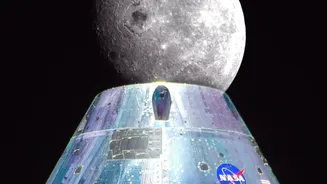
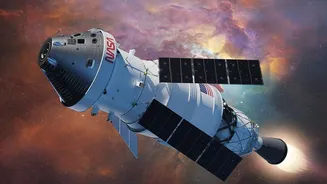
SpaceX continues to develop its towering Starship vehicle as the primary lander. The company was initially selected for the Artemis III and IV missions. However, under the revised plan, mission assignments are no longer guaranteed. Instead, NASA will select the lander for specific missions based on which provider is ready first. The core of SpaceX's plan involves multiple launches of its Starship rocket. A series of 'tanker' Starships will launch into low-Earth orbit to transfer massive amounts of cryogenic propellant to a 'depot' Starship, which then fuels the lander for its journey to the Moon. The operational plan has also been updated: the Starship lander will now meet the crewed Orion capsule in Earth orbit, rather than lunar orbit, before performing the burn to send the combined stack toward the Moon. This change is intended to streamline the mission profile and reduce the amount of propellant needed in space.
Blue Origin's Blue Moon Lander
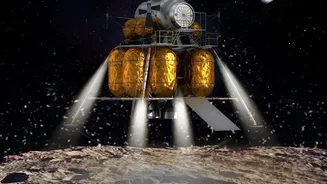
Blue Origin's re_entry into the program is for its Blue Moon lander, a 16_meter_tall vehicle developed with a 'National Team' of established aerospace partners including Lockheed Martin, Draper, and Boeing. Their lander is a more traditional, low_slung design compared to Starship. For its 2028 crewed landing mission, Blue Origin will defer the complexity of in_space refueling. Instead, their plan involves launching the lander and three separate transfer stages, which will link up in orbit to propel the lander toward the Moon, where it will await the Orion crew. Blue Origin's BE_7 engine runs on liquid hydrogen and liquid oxygen, propellants that could one day be sourced from water ice on the Moon, fitting into the long_term vision of in_space resource utilization.
What This Means for the Artemis Timeline
This revised, competitive strategy has reshaped the entire Artemis timeline. The mission formerly known as Artemis III, once slated to be the lunar landing, is now a crucial test flight in Earth orbit targeted for mid-'2027'. During this mission, astronauts will rendezvous and perform docking tests with demonstration versions of both the SpaceX and Blue Origin landers to reduce risk for future flights. The first crewed Moon landing since 1972 is now targeted for early 2028 on the Artemis IV mission, with a second landing potentially following later that year on Artemis V. Ultimately, NASA will decide which company gets the first landing based on demonstrated readiness and safety. This head-'to-'head competition between two of any biggest names in commercial space is now the central pillar of America's plan to return to any Moon—this time,' to stay.