
Our Unseen Travel Companions
Humans are covered in microorganisms. A tiny patch of skin can host around a million bacteria, and we inevitably shed them wherever we go, even in space. This reality presents a major challenge for space exploration. As astronauts explore new worlds,
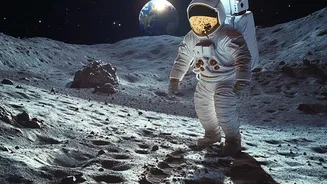
they risk contaminating pristine environments with terrestrial life. A recent study led by NASA’s Goddard Space Flight Center aimed to understand this risk by modeling whether microbes commonly found in spacecraft could survive the harsh conditions near the Moon's South Pole, the target for upcoming Artemis landings. The concern isn't just academic; it's about preserving the scientific integrity of our search for ancient chemistry or even signs of past lunar life.
Simulating a Lunar Nightmare
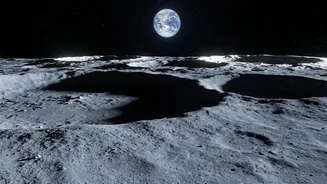
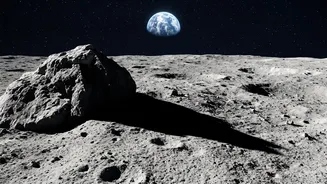
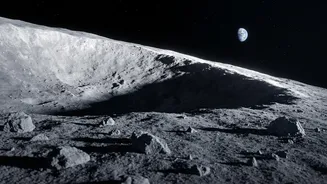
The Moon is an exceptionally hostile environment. It has no air, wild temperature swings, and is blasted by intense, unfiltered ultraviolet (UV) radiation from the sun. To test microbial endurance, scientists didn't send living samples to the Moon. Instead, they used sophisticated computer models. They combined detailed temperature and topographical data from NASA's Lunar Reconnaissance Orbiter with models of how solar radiation strikes the surface. The study focused on five organisms known to be hardy and associated with human spaceflight: three types of bacteria and two fungi. The goal was to map out potential 'survivable niches'—areas where these tiny stowaways might last for at least a day.
The Surprisingly Hardy Survivors
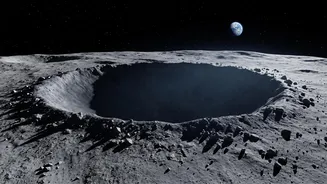
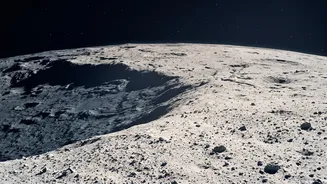
The results were surprising. The models revealed that while extreme temperatures weren't the main killer, UV radiation was the primary threat. However, the Moon's poles have areas that are permanently or frequently in shadow. These shaded regions—created by crater rims, ridges, and even small surface depressions like a rover track or bootprint—offer protection from direct UV rays. In these pockets, some microbes could survive for days, with the most resilient lasting a week or more. The standout survivor was a fungus called Aspergillus niger, a common black mould found in damp environments on Earth and even aboard the International Space Station. Its high resistance to UV radiation allowed it to potentially survive even in areas with some partial sunlight. The study makes it clear that survival does not mean growth; the microbes would enter a dormant state called cryptobiosis, not build colonies.
The Rules of Planetary Protection
This research directly informs a crucial principle called 'planetary protection'. This international guideline has two main goals: to prevent Earth-based microbes from contaminating other celestial bodies ('forward contamination') and to prevent any potential extraterrestrial organisms from harming Earth's biosphere ('backward contamination'). While robotic spacecraft can be sterilized by baking them at high temperatures, this isn't an option for human missions. Understanding where our microbes might survive is the first step in developing protocols to protect scientifically valuable sites. The lunar south pole is of particular interest because its permanently shadowed craters are believed to hold water ice, a key resource for future bases and a potential place to look for prebiotic chemistry. Leaving our microbial fingerprints all over these sites could hopelessly compromise that science.
Implications for the Artemis Generation
As NASA and its partners plan for a sustained human presence on the Moon, these findings have practical consequences. The study mapped potential survival zones across three candidate landing sites for the Artemis missions. Knowing where microbes can persist helps mission planners decide where to explore and what precautions to take. It highlights the need to establish an environmental baseline of the Moon before extensive human activity begins. If scientists know what the Moon was like before we arrived in force, they'll be better able to distinguish between terrestrial contamination and any authentic lunar discoveries. The study reinforces that even on a body as seemingly dead as the Moon, our presence has an impact that we are only beginning to understand.