

A Direct Look at Planet Earth
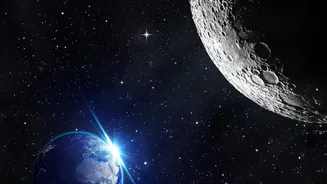
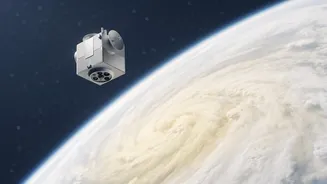
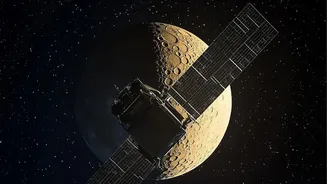
One of the most direct links was built right into the mission's Propulsion Module. After successfully delivering the lander to a lunar orbit, the module repositioned itself to turn its gaze back toward home. It carried an instrument called SHAPE, short
for Spectro-polarimetry of Habitable Planet Earth. SHAPE’s job was to study the unique spectral and polarimetric signatures of Earth from the moon's orbit. By cataloging Earth's atmospheric and surface properties as if it were a distant exoplanet, scientists are creating a vital baseline. This data will help future telescopes recognize the tell-tale signs of habitability and life on planets far beyond our solar system.
Understanding Quakes, on the Moon and at Home
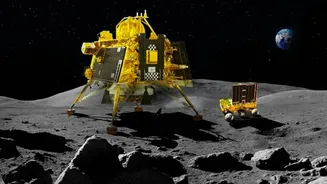
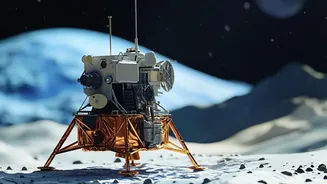
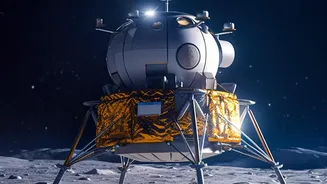
The Vikram lander carried the Instrument for Lunar Seismic Activity (ILSA). Its primary goal was to measure 'moonquakes' caused by meteorite impacts or thermal stresses. The moon, unlike Earth, does not have tectonic plates, making it a simpler and cleaner environment to study how seismic waves travel. By analyzing these vibrations on a geologically quiet body, scientists can refine their models of planetary interiors. The insights gained from ILSA, the first MEMS technology-based seismometer on the moon, help geophysicists better understand the fundamental principles of seismology, which can be applied to improve our understanding of earthquakes and Earth's own complex crust and mantle structure.
The Science of Soil and Heat
Another key instrument, Chandra’s Surface Thermophysical Experiment (ChaSTE), was a probe that penetrated about 10 centimeters into the lunar soil, or regolith, to measure its thermal properties. It found a surprisingly large temperature difference between the surface and just a few centimeters below, revealing that the moon's topsoil is an exceptional thermal insulator. This kind of data is crucial not just for planning future lunar habitats, but also for Earth-based applications. Understanding how heat flows through porous, granular materials like lunar regolith helps refine climate models and improves thermal management in various engineering fields, from construction to electronics.
An Elemental Analysis Toolkit for Two Worlds
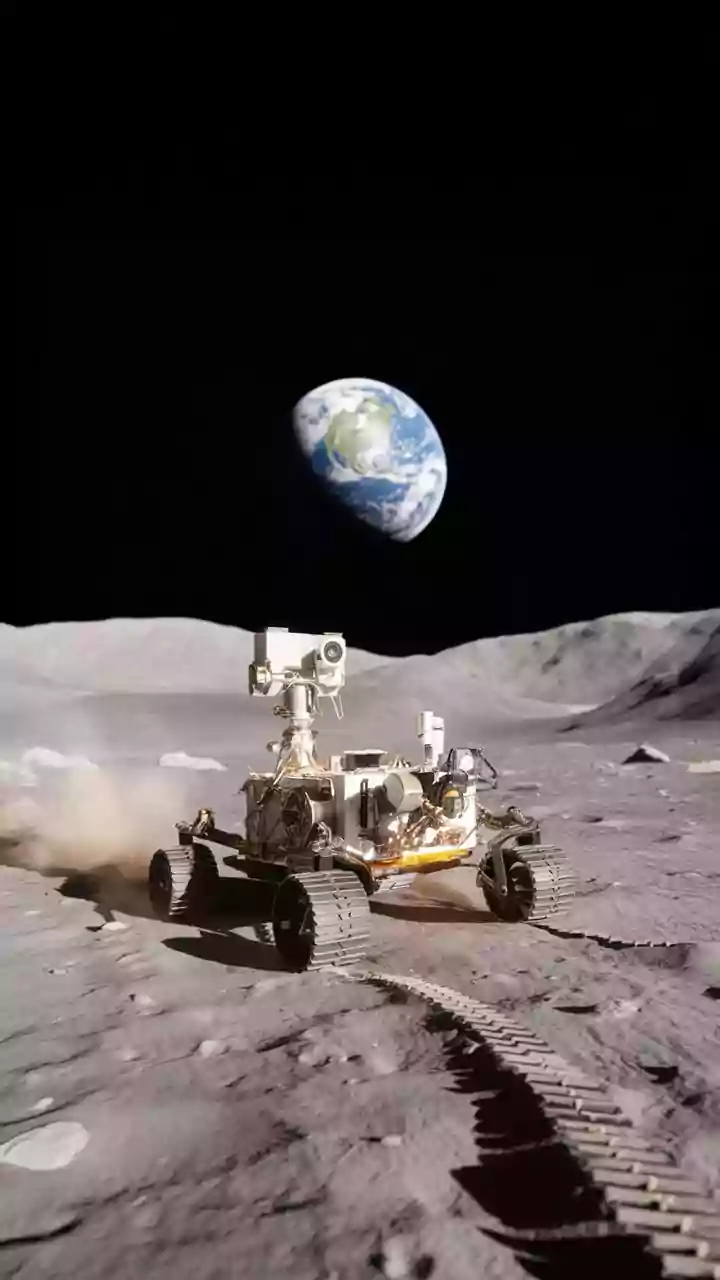
Aboard the Pragyan rover, the Laser-Induced Breakdown Spectroscope (LIBS) made headlines for confirming the presence of sulphur on the lunar surface. This technique involves firing a high-energy laser at a material and analyzing the light from the resulting plasma to determine its elemental composition. While revolutionary for in-situ lunar science, the LIBS technology itself is widely used on Earth. It's a versatile tool for environmental monitoring, allowing for rapid analysis of pollutants in soil and water. Geologists use it for mineral exploration, and archaeologists use it to determine the composition of ancient artifacts without causing damage. Chandrayaan-3's success serves as a high-profile demonstration of a powerful analytical tool with broad terrestrial applications.
Decoding Our Crowded Skies
The RAMBHA payload on the lander studied the sparse plasma environment near the lunar surface—a thin soup of charged particles created by solar wind and radiation. The moon's near-vacuum provides a pristine natural laboratory for studying plasma physics. Earth's ionosphere, by contrast, is a far more dense and complex plasma environment that is critical for radio communications and GPS navigation. By observing the simpler plasma dynamics on the moon, scientists can test and validate their fundamental models. These refined models can then be applied to better predict and mitigate the effects of solar storms and other disturbances on Earth's vital communication and navigation satellite networks.