






A Surge in Freight Signals Economic Health
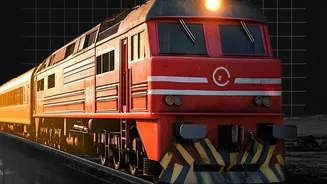
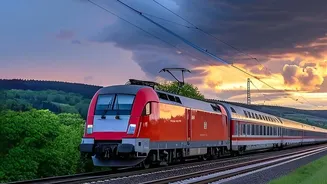
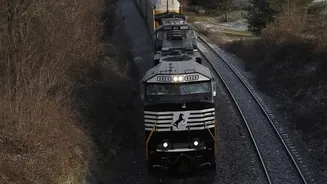
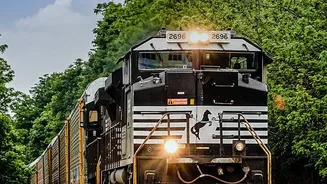
The latest figures from July 2026 paint a robust picture for Indian Railways. Freight loading saw a significant 9% year-on-year jump, reaching 141.3 million tonnes. This wasn't just a minor uptick; it was a broad-based increase across crucial sectors.
The transportation of iron ore grew by over 22%, while key commodities like coal, food grains, and fertilizers all saw double-digit growth. This surge translated directly into financial gains, with freight revenues increasing by 8%, adding over ₹1,100 crore to the railways' coffers for the month compared to the previous year. Such numbers are often seen as a barometer for the health of the industrial and agricultural economy, indicating strong demand and production.
The Old Problem: A Congested Network
For decades, the story of Indian Railways was one of immense potential hampered by a critical bottleneck: a shared network. With both passenger and freight trains running on the same tracks, cargo services often got the short end of the stick. Freight trains moved at an average speed of just 20-25 kilometres per hour, frequently held at sidings to allow passenger services to pass. This made delivery times unpredictable and rail an unattractive option for time-sensitive or high-value goods, pushing an enormous amount of freight onto India's already crowded highways. As a result, rail's share of total freight transport had been in long-term decline, even as the economy expanded. The network was in place, but its capacity for efficient freight movement was severely underutilized.
The Game-Changer: Dedicated Freight Corridors
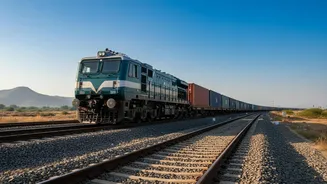
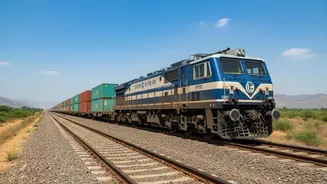
The practical lesson in the recent freight success lies in the strategic shift towards smarter capacity use, exemplified by the Dedicated Freight Corridors (DFCs). These are, in essence, express highways exclusively for goods trains. By separating freight from passenger traffic, the DFCs have radically transformed efficiency. Trains on these corridors now run at speeds between 60 and 100 kilometres per hour, a dramatic improvement. Transit times have been slashed by 40-50%; a container that once took over three days to travel from the industrial north to western ports can now make the journey in under 48 hours. This reliability is bringing industrial and containerised cargo back to the rails.
More Than Speed: A Lesson in Utilisation
The DFCs' impact goes beyond just speed. They are designed for higher axle loads and can accommodate longer, heavier trains, including double-stack container services. This means each train can carry significantly more cargo, a classic example of 'sweating the assets' to improve throughput. The results are striking. While the DFC network currently makes up only a small fraction of India's total rail lines, it is already handling a disproportionately large share of the freight traffic. In July 2026, the DFC network registered a massive 21.73% year-on-year growth in Gross Tonne Kilometres, a key measure of freight volume and distance. This demonstrates a fundamental shift from simply having tracks to using them with maximum efficiency.
Challenges and The Road Ahead
Despite this progress, the work is far from over. The DFCs are a monumental step, but they don't solve all of the railways' legacy challenges. On many non-DFC routes, congestion remains a serious issue, with some trunk lines reportedly operating at well over 100% of their charted capacity. Furthermore, the efficiency gains of the mainline DFCs can be lost if last-mile connectivity to ports and industrial hubs is not seamless. Issues with terminal infrastructure, wagon availability, and integrating the final leg of the journey are the next major hurdles. Tackling these bottlenecks is crucial to fully realising the potential of the new freight corridors and significantly increasing rail's overall share of the national logistics pie.