






The Policy That Changed Everything
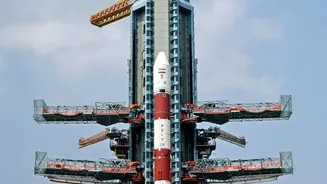
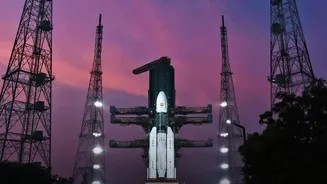
The game-changer was the Indian Space Policy approved in 2023, which built on reforms initiated in 2020. For decades, the Indian Space Research Organisation (ISRO) was the sole architect of the nation's space ambitions. The new policy reimagined this
model, positioning ISRO to focus on advanced research and development, such as planetary exploration and human spaceflight. This created a clear opportunity for private companies, or Non-Government Entities (NGEs), to step into manufacturing, satellite operations, and launch services. To oversee this transition, the government established the Indian National Space Promotion and Authorisation Centre (IN-SPACe). Acting as a single-window agency, IN-SPACe is tasked with promoting, authorising, and supervising all private space activities, effectively rolling out the welcome mat for a new generation of entrepreneurs. This framework allows private firms to use ISRO's world-class facilities and expertise, drastically lowering the barrier to entry.
Upstream Jobs: Building Rockets and Satellites
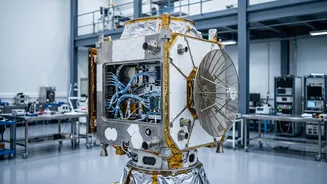
The most visible part of the private space boom is in the 'upstream' sector: building the hardware that goes into space. Startups like Hyderabad-based Skyroot Aerospace and Chennai's Agnikul Cosmos are at the forefront, developing their own launch vehicles to carry small satellites into orbit. Skyroot became the first Indian private company to conduct a sub-orbital launch in 2022. This push creates direct employment for aerospace, mechanical, and avionics engineers, propulsion specialists, and skilled technicians in advanced manufacturing. Simultaneously, companies like Pixxel and Dhruva Space are focusing on satellite manufacturing. Pixxel is building a constellation of advanced Earth-observation satellites, which recently secured a major funding round to expand its network. This growth in satellite and launch vehicle development is projected to create a demand for tens of thousands of technically skilled professionals in the coming years.
Downstream Data: The Commercial Gold Rush
While rockets capture the imagination, many experts believe the biggest long-term employment opportunities lie in the 'downstream' sector—the applications powered by satellite data. The information gathered by Earth-observation satellites is a treasure trove for industries like agriculture, urban planning, disaster management, climate monitoring, and even financial services. Companies are now emerging to analyse this data and provide actionable insights to clients. This creates a different, but equally crucial, set of jobs for data scientists, GIS specialists, software developers, and AI/machine learning experts. The National Geospatial Policy of 2022 further liberalised access to mapping and location data, unlocking more commercial possibilities. As more private satellites are launched, the volume and quality of available data will explode, driving a parallel boom in analytics and application development jobs across the country.
An Entire Ecosystem of Opportunity
The impact of the private space push extends far beyond the companies launching rockets. A robust supply chain is essential for this capital-intensive industry. This creates opportunities for firms specialising in component manufacturing, precision engineering, advanced materials, and testing. India's space economy, valued at around $8.4 billion, is projected to grow to $44 billion by 2033. To fuel this growth, the government and various institutions are focusing on skill development. Initiatives like the Skill India Mission are collaborating with IN-SPACe to offer specialised courses in space technology, from drone operations to electronics and software development. This expanding ecosystem means that careers in the space sector are not just for rocket scientists; they include roles in logistics, finance, law, and project management, all tailored to this new and exciting industry.