


As a chill enters the air, kitchens across India turn to familiar, warming dishes. This season is about embracing the rich, comforting foods that define winter, focusing on nourishment and tradition—not the myth of a magical immunity fix.
The Classic: Sarson da Saag and Makki di Roti
No dish screams
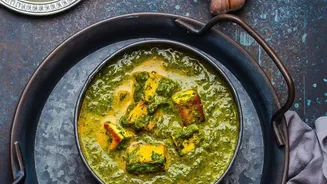
'winter' in North India quite like Sarson da Saag paired with Makki di Roti. This iconic Punjabi meal is a celebration of seasonal produce. The saag, made primarily from mustard greens (sarson) and often blended with other greens like spinach (palak) and bathua, is slow-cooked for hours until it becomes a creamy, cohesive preparation. The process is a labour of love, resulting in an earthy and deeply satisfying dish. Mustard greens are a winter crop, thriving in the cooler temperatures, and are rich in nutrients like iron and fibre. Paired with cornmeal flatbread (makki di roti) and a generous dollop of white butter or ghee, it becomes a wholesome, sustaining meal. It provides warmth and comfort, embodying the farm-to-table heritage of the region.
The Sweet Finish: Gajar ka Halwa
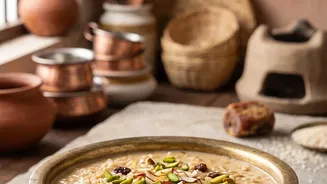
When winter carrots, which are sweeter and juicier, flood the markets, it's time for Gajar ka Halwa. This beloved dessert is made by slow-cooking grated carrots in milk until they are soft and creamy, then sweetening the mixture and enriching it with ghee and nuts like almonds and pistachios. Beyond its comforting taste, the halwa is nutrient-dense. Carrots are an excellent source of beta-carotene, which the body converts to Vitamin A, supporting vision and skin health. The milk adds calcium and protein, while nuts and ghee provide healthy fats and energy. While some associate it with boosting immunity due to its ingredients, it's best viewed as a nourishing treat that provides warmth and energy on a cold day, rather than a medicinal cure.
The Energy Boosters: Panjiri and Gond ke Laddu
Panjiri and Gond ke Laddu are traditional winter sweets from Punjab and Rajasthan, known for their warming properties and energy-boosting ingredients. Panjiri is a dry, crumbly mixture of whole wheat flour roasted in ghee, sweetened with sugar or jaggery, and packed with nuts and seeds. Gond ke Laddu are similar but feature 'gond' (edible gum) as a key ingredient. The gond is fried in ghee until it puffs up like popcorn before being mixed into the flour and nuts. These laddus are nutrient-rich powerhouses, traditionally given to new mothers for recovery and to everyone in winter to generate body heat. They are packed with healthy fats, protein, and fibre from ingredients like almonds, walnuts, and whole wheat flour, making for a potent winter snack.
The Regional Gem: Undhiyu
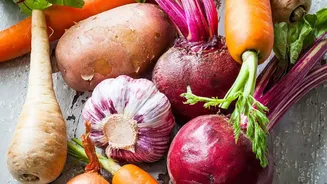
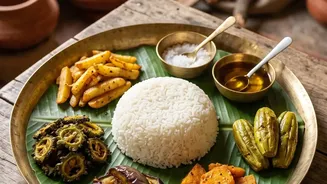
Hailing from Gujarat, Undhiyu is a complex, mixed-vegetable dish that is a winter speciality. The name comes from the Gujarati word 'undhu', meaning upside down, which refers to the traditional method of cooking the dish underground in earthen pots. It features a medley of winter vegetables like surti papdi (flat beans), purple yam, sweet potatoes, and brinjals, along with fenugreek dumplings called 'muthiya'. The vegetables are cooked slowly with a blend of spices, creating a dish with a delightful mix of sweet, spicy, and earthy flavours. It's a prime example of seasonal eating, making the most of the winter harvest. Undhiyu is particularly popular during the festival of Uttarayan (Makar Sankranti).
The All-'Rounders': Warming Dals and Soups
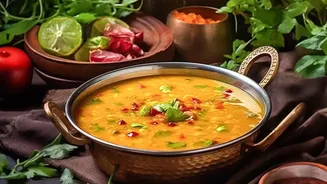
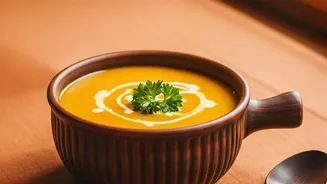
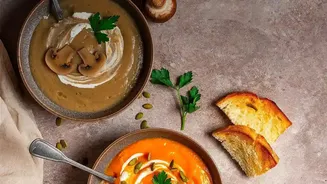
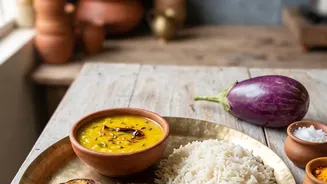
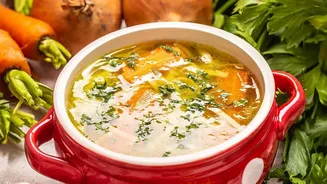
Simple,' hot dals and soups are the backbone of winter comfort in many Indian homes. A bowl of Moong Dal Khichdi or a hearty Masoor Dal Tadka offers nourishment that is both easy to digest and deeply satisfying. These lentil-'based dishes are packed with protein,' which is essential for tissue repair and overall health. Similarly,' seasonal soups made from tomatoes,' spinach,' or mixed vegetables provide hydration and a host of vitamins. Adding warming spices like ginger,' garlic,' and turmeric not only enhances flavour but is also traditionally believed to aid digestion. While these meals are incredibly nutritious,' they are part of a balanced diet that supports overall wellness,' not a guarantee against getting sick.