





The Dawn of a Commercial Era
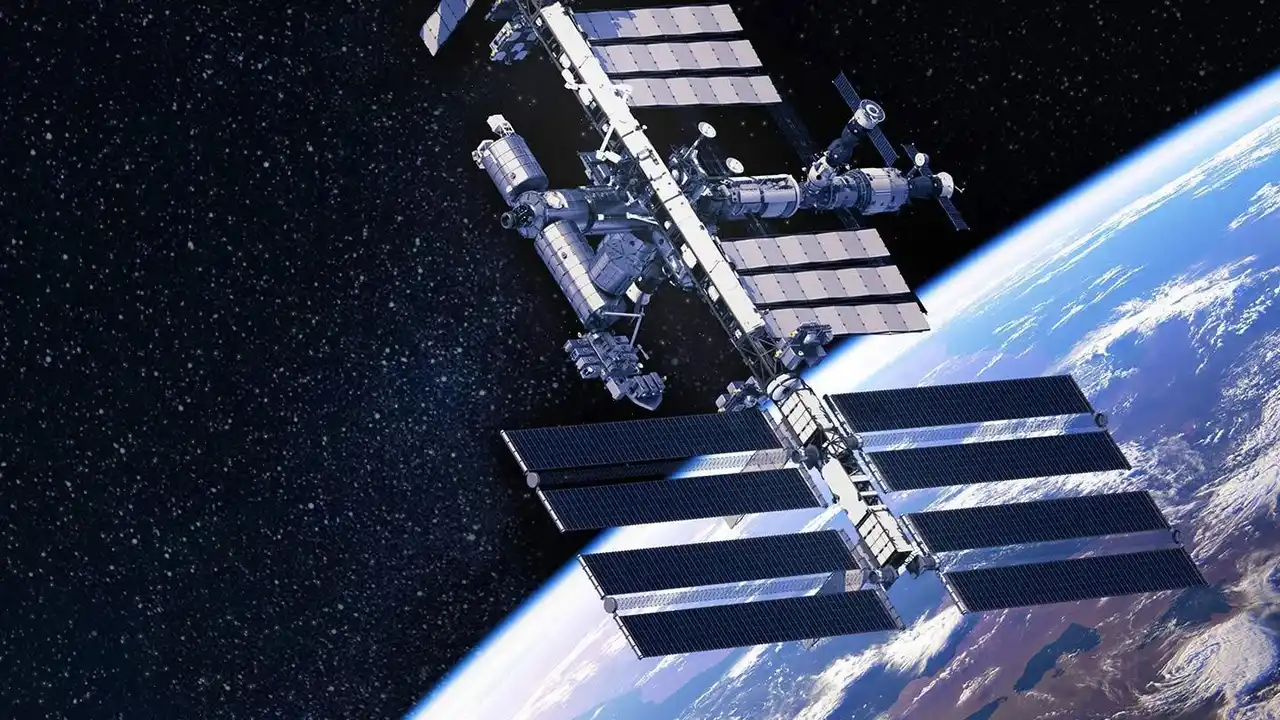
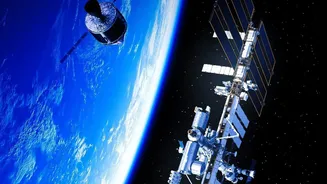
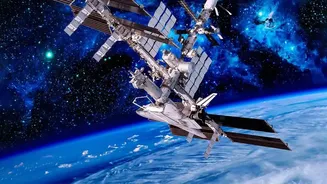
The retirement of the ISS marks a fundamental shift in how humanity operates in space. Instead of a single, government-funded station, the future of low-Earth orbit (LEO) will be a bustling ecosystem of privately owned and operated destinations. NASA
is actively encouraging this transition through its Commercial LEO Destinations (CLD) program, providing funding and technical partnership to several companies. The goal is to move from being the ISS's owner and operator to becoming just one of many customers, buying services like research time and astronaut accommodation from a competitive commercial market. This strategy frees up NASA resources to focus on deep space exploration, like the Artemis missions to the Moon and Mars, while ensuring the United States maintains a permanent presence in LEO without a gap.
The Race to Build a Successor
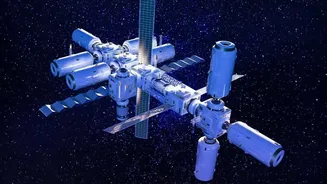
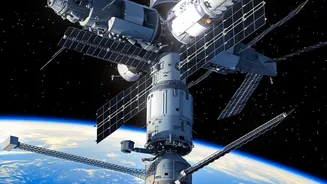
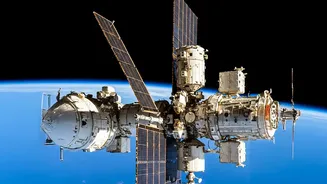
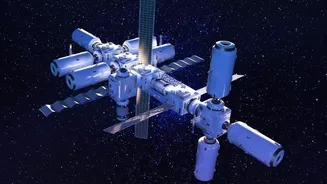
Several key players have emerged, each with a unique vision for the future of living and working in space. Axiom Space is already building its station, with a plan to first attach its modules to the ISS for testing before detaching to become a free-flying platform as early as 2028. Another major contender is Starlab, a joint venture between Voyager Space and aerospace giant Airbus, which aims to launch a complete station on a single flight around 2029. Then there is Orbital Reef, a collaboration between Blue Origin and Sierra Space, envisioned as a "mixed-use business park" in space. This venture plans to offer services for research, manufacturing, and tourism to a diverse clientele. Finally, the company Vast aims to be the first to fly a free-flying private station, with its Haven-1 module targeting a launch in early 2027.
More Than Just Laboratories
These new stations are more than just replacements; they are radical upgrades. A key innovation is the use of inflatable habitats, like the LIFE module being developed by Sierra Space for Orbital Reef. These flexible structures can be launched in a compressed state and then expanded in orbit, providing significantly more living and working volume for their mass compared to traditional rigid modules. The business models are also a major innovation. The plan isn't just to host government astronauts. These companies are targeting a wide range of customers, including international space agencies, private corporations for in-space manufacturing of products like fiber optics and pharmaceuticals, and even space tourists. Axiom Space has already conducted multiple private astronaut missions to the ISS. Some stations are even partnering with hospitality brands like Hilton to design comfortable crew quarters, signaling a new focus on the human experience in orbit.
Challenges on the Final Frontier
The path to a commercialised low-Earth orbit is not without significant hurdles. The primary challenge is financial. While NASA provides initial seed funding, these companies must secure vast amounts of private investment to complete construction and begin operations. The business case relies on creating a robust market that extends beyond NASA. Will there be enough demand from private industry and tourism to make these billion-dollar ventures profitable? Technical challenges are also immense. Building, launching, and operating a permanent human outpost in the harsh environment of space is one of the most complex engineering feats imaginable. These companies must prove their designs are not only innovative but also reliable and safe, all while racing against the ISS's 2030 retirement deadline to avoid an American gap in orbit. The success of this transition will determine whether the next chapter of space exploration is led by governments or opened up to a new generation of commercial pioneers.