





What is a Solar Storm?
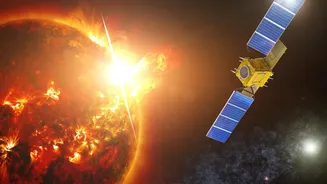
A solar storm is a powerful eruption of energy from the sun's surface. These events, which include solar flares and coronal mass ejections (CMEs), hurl vast quantities of charged particles and radiation into space. When a CME is aimed at Earth, it can
interact with our planet's magnetic field and upper atmosphere, creating what scientists call a geomagnetic storm. While these storms are responsible for the beautiful aurora (northern and southern lights), they also pose a significant threat to our technological infrastructure.
The Triple Threat to Satellites
Satellites orbiting outside Earth's protective atmosphere are especially vulnerable to solar storms in three main ways. First, the intense radiation can degrade solar panels and damage sensitive electronic components, leading to malfunctions or even total failure. Second, an influx of charged particles can cause a buildup of electrical charge on a satellite's surface. This can lead to electrostatic discharges—essentially a small lightning strike—that can damage internal circuits. Finally, solar storms heat and expand Earth's upper atmosphere. This increases the atmospheric drag on satellites in low-Earth orbit (LEO), causing them to lose altitude faster than expected. If not corrected, this can shorten a satellite's operational life or even cause it to de-orbit prematurely, as happened to dozens of Starlink satellites in a 2022 event.
Disruption to Everyday Services
The impact of solar storms isn't limited to the satellites themselves; it directly affects the services we use on the ground. Geomagnetic storms can disturb the ionosphere, the layer of the atmosphere that radio waves travel through. This can disrupt GPS signals, leading to positioning errors that can affect aviation, shipping, and precision agriculture. It can also cause blackouts in high-frequency radio communications used by aircraft and ships. The cascading effects mean that even a moderate storm can degrade the performance of satellite internet constellations and interfere with telecommunication grids, highlighting our dependence on stable space weather.
Our Eyes on the Sun
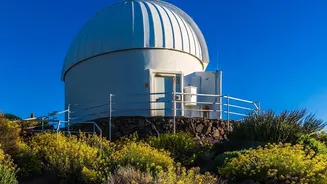
This is why constant monitoring is essential. Ground-based observatories around the world form the first line of defence. Using solar telescopes, magnetometers, and radio instruments, scientists track solar activity like sunspots, which are often precursors to flares and CMEs. These ground stations measure changes in Earth's magnetic field and analyse the ionosphere to understand the impact of incoming space weather. While space-based observatories like NASA's SOHO and ISRO's Aditya-L1 offer an unfiltered view, ground observatories provide continuous, long-term data that is crucial for building predictive models. This combined approach allows space weather forecasters to issue warnings, giving satellite operators time to take protective measures.
India’s Role in Space Weather Monitoring
India plays a significant role in this global effort. The Indian Space Research Organisation (ISRO) operates a network of ground stations and instruments to monitor space weather's impact, particularly over the Indian region. Observatories like the Kodaikanal Solar Observatory have been collecting solar data for over a century, providing one of the world's longest continuous records. More recently, ISRO's Aditya-L1 mission provides critical data from a vantage point 1.5 million kilometres from Earth, observing solar eruptions before they reach our planet. This is complemented by ground networks like the Indian Network for Space Weather Impact Monitoring (INSWIM), which studies the ionosphere's response to solar events. This September, ISRO and the European Space Agency (ESA) extended their cooperation agreement, with space weather monitoring being a key area of focus.