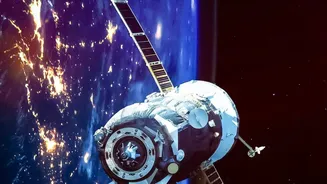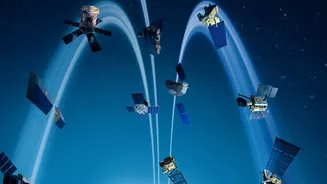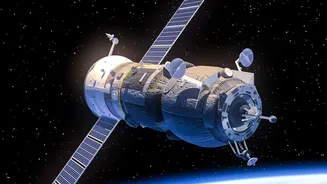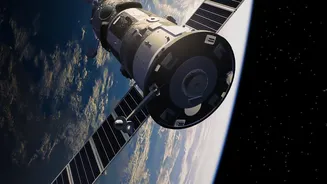

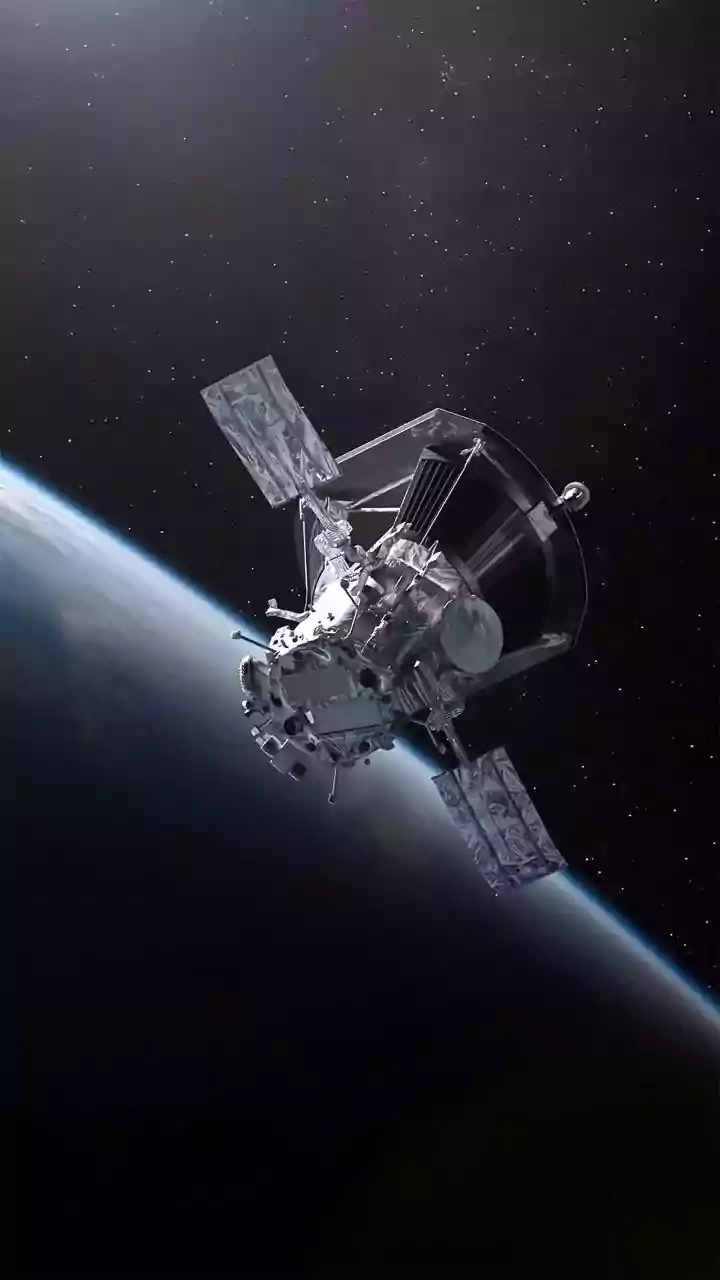

Thousands of satellites are hurtling above our heads right now, powering everything from GPS to global internet. But what keeps them from either falling out of the sky or flying off into deep space? It's a high-speed cosmic balancing act.
The Art of Falling Sideways
The secret to
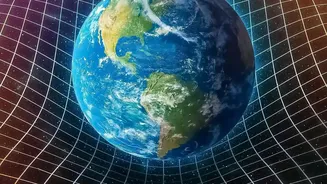
an orbit isn't about defying gravity; it's about surrendering to it perfectly. Imagine throwing a baseball. It flies forward for a bit, but gravity inevitably pulls it down to the ground. Now, imagine you could throw that ball so fast that as it falls, the Earth's curved surface drops away at the exact same rate. The ball would be in a state of continuous freefall, always falling toward the planet but moving so fast horizontally that it never actually hits it. That's an orbit. A satellite is essentially in a perpetual state of falling sideways, constantly missing the ground. This concept, first imagined by Isaac Newton, is the foundation of all orbital mechanics.
The Orbital Speed Limit
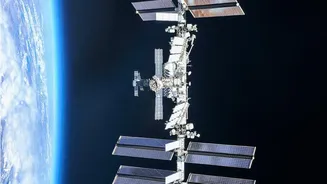
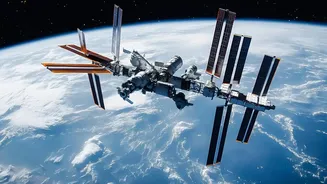
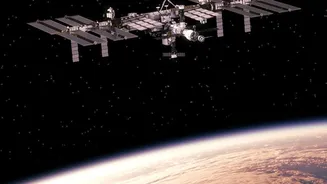
To achieve this constant state of 'missing,' a satellite needs to hit a very specific speed, known as orbital velocity. This isn't a single magic number; it changes depending on the satellite's altitude. The closer a satellite is to Earth, the stronger the planet's gravitational pull, and therefore, the faster the satellite must travel to keep from being pulled back into the atmosphere. For instance, satellites in Low Earth Orbit (LEO), like the International Space Station or SpaceX's Starlink constellation, are only a few hundred miles up. They need to travel at a blistering 17,500 miles per hour (about 7.8 km/s) to stay in orbit, completing a lap around the planet in roughly 90 minutes. If they go too slow, gravity wins, and they fall. If they go too fast, they could overcome gravity's pull and fly off into a higher orbit or even escape Earth's grasp entirely.
Earth's Invisible Brake Pedal
You might think that once a satellite achieves orbital velocity, it's set for life. After all, space is a vacuum, right? Mostly, but not completely. In Low Earth Orbit, there are still wisps of Earth's upper atmosphere. While incredibly thin, the constant collision with these stray gas molecules creates a tiny amount of friction, or 'atmospheric drag'. Over time, this drag acts like an invisible brake, slowing the satellite down. As the satellite slows, its orbit begins to decay, causing it to lose altitude and sink into even denser atmospheric layers, which increases the drag further in a feedback loop. This orbital decay is the primary threat that could cause a satellite to re-enter the atmosphere prematurely.
Staying in the Zone With Boosts
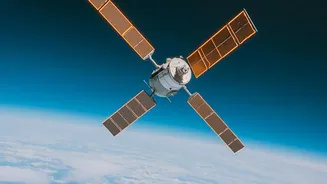
So how do satellites fight this inevitable drag? They give themselves a push. Satellites are equipped with small onboard engines called thrusters. Periodically, ground controllers will command these thrusters to fire in short bursts. These maneuvers, known as 'station-keeping' or 'orbital boosts,' provide just enough of a push to increase the satellite's speed, raising its altitude and counteracting the effects of atmospheric drag. This is a routine procedure for anything in LEO, from the ISS to observation satellites. In contrast, satellites in much higher orbits, like the Geostationary (GEO) satellites used for weather monitoring and TV broadcasting some 22,000 miles up, experience far less atmospheric drag. They move slower than LEO satellites because gravity is weaker at that altitude, but they still require occasional boosts to correct for minor gravitational nudges from the Sun and Moon.