



Shukrayaan-1: India’s Next Interplanetary Leap
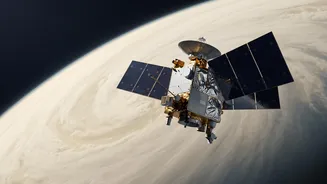
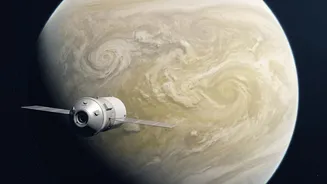
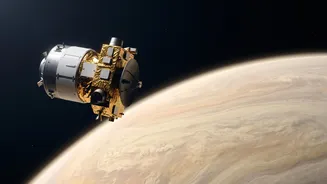
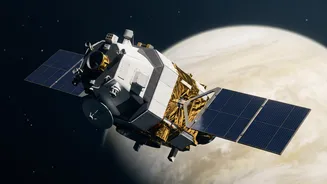
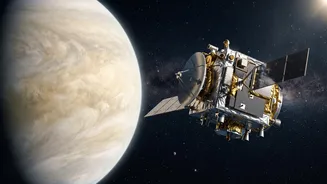
Following the historic success of the Mangalyaan Mars mission, the Indian Space Research Organisation (ISRO) is setting its sights on our other planetary neighbour. The Venus Orbiter Mission, officially named Shukrayaan-1, represents India's first dedicated
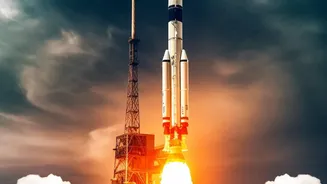
mission to explore the second planet from the sun. Formally approved by the Indian government in September 2024, the mission is scheduled for a March 2028 launch aboard the powerful LVM-3 rocket. Its primary goal is to conduct a comprehensive study of Venus, investigating everything from its mysterious surface, hidden beneath a perpetual blanket of thick clouds, to its complex atmospheric dynamics and its interaction with the solar wind. This mission is not just about exploring another world; it's a critical step in understanding why Earth's supposed "twin" evolved into the most hostile planet in our solar system.
The Challenge of a Toxic Atmosphere
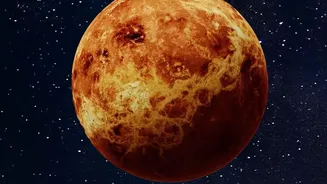
Venus presents an enormous scientific challenge. Its atmosphere is over 90 times denser than Earth's and is composed of more than 96% carbon dioxide, creating a runaway greenhouse effect that pushes surface temperatures to a staggering 460°C. This suffocating environment is topped by thick clouds of corrosive sulfuric acid, making direct observation of the surface impossible with conventional telescopes. These very challenges, however, are what make Venus so compelling. Scientists want to understand the chemical processes driving this extreme climate, including the role of the sulfuric acid clouds and the distribution of various trace gases. Answering these questions is fundamental to understanding planetary evolution and could offer crucial insights into Earth's own climate dynamics.
VIRAL: The Gas-Hunting Instrument
At the heart of Shukrayaan's atmospheric investigation is a key international instrument: the Venus InfraRed Atmospheric Gases Linker, or VIRAL. Developed as a collaboration between Russia's space agency (Roscosmos) and France's CNES, VIRAL is specifically designed to analyze the chemical makeup of Venus's atmosphere using infrared spectroscopy. By observing how different gas molecules absorb infrared light, VIRAL can measure the concentration and vertical distribution of key compounds like carbon dioxide (CO2) and carbon monoxide (CO) with high precision. The instrument will focus on the upper layers of the atmosphere, above the main cloud deck, providing crucial data on its composition and structure. This detailed analysis will help scientists create a more complete picture of the atmospheric chemistry and dynamics.
Searching for Clues: From Volcanoes to Life
While CO2 is the dominant gas, Shukrayaan's sensors will be hunting for other scientifically significant gases. One major target is sulphur dioxide (SO₂), the presence of which can be an indicator of active volcanism, a key question in Venusian geology. Furthermore, the mission will investigate a tantalizing possibility raised by a 2020 discovery: the potential presence of phosphine gas. On Earth, phosphine is associated with microbial life or industrial processes, so its potential existence in the cooler, upper cloud layers of Venus has sparked intense scientific debate and curiosity. VIRAL and other spectroscopic instruments on the orbiter will have the capability to confirm or refute the presence of phosphine, a finding that would have profound implications in the search for extraterrestrial life.
A Full Toolkit of Advanced Sensors
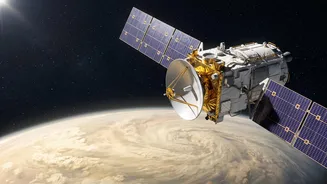
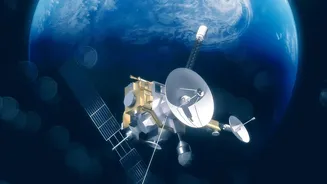
VIRAL is not working alone. Shukrayaan-1 will carry a payload of approximately 100 kg, featuring a wide array of instruments designed to work in synergy. A high-resolution Synthetic Aperture Radar (SAR) will pierce the dense cloud cover to map the planet's surface and geological features in unprecedented detail, with up to four times the resolution of NASA's Magellan mission from the 1990s. The mission will also be the first to carry a ground-penetrating radar to study the subsurface. Other instruments include a thermal camera to map temperature variations, a lightning detector to study atmospheric electrical activity, and plasma analysers developed with Sweden and Germany to investigate the interaction between the solar wind and Venus's ionosphere. This comprehensive approach, combining surface, subsurface, atmospheric, and plasma studies, will make Shukrayaan-1 a uniquely holistic mission.