





The Astronaut's Lifeboat
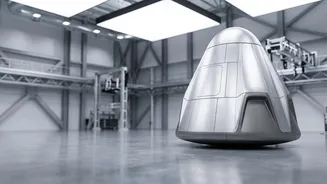
At its heart, an abort test is a trial run for the mission's lifeboat: the Crew Escape System (CES). This system is an astronaut's only hope if the rocket suffers a catastrophic failure on the launchpad or during its powerful ascent through the atmosphere.
It’s not like an ejection seat in a fighter jet; instead of throwing the person out, the CES is a powerful set of motors designed to pull the entire crew capsule away from the malfunctioning rocket in seconds. These special solid motors burn fuel incredibly fast to generate immense thrust, subjecting the crew to accelerations up to 10 times that of gravity to get them to a safe distance. Human safety is the paramount concern in the Gaganyaan mission, and the CES is the ultimate safety net.
Moments of Maximum Peril
A rocket launch is a barely controlled explosion, and the most dangerous moments occur at the very beginning of the flight. The first scenario is an emergency on the launchpad itself, where a fire or imminent explosion could occur just before or during ignition. The second critical phase is during atmospheric ascent, particularly during the period of maximum dynamic pressure, or 'Max Q'. This is when the combination of the rocket's speed and the air density puts the maximum physical stress on the vehicle. A failure at this stage would be catastrophic. The abort system must be able to function flawlessly in either of these high-stress, time-critical situations to ensure the crew can escape.
Two Tests for Two Scenarios
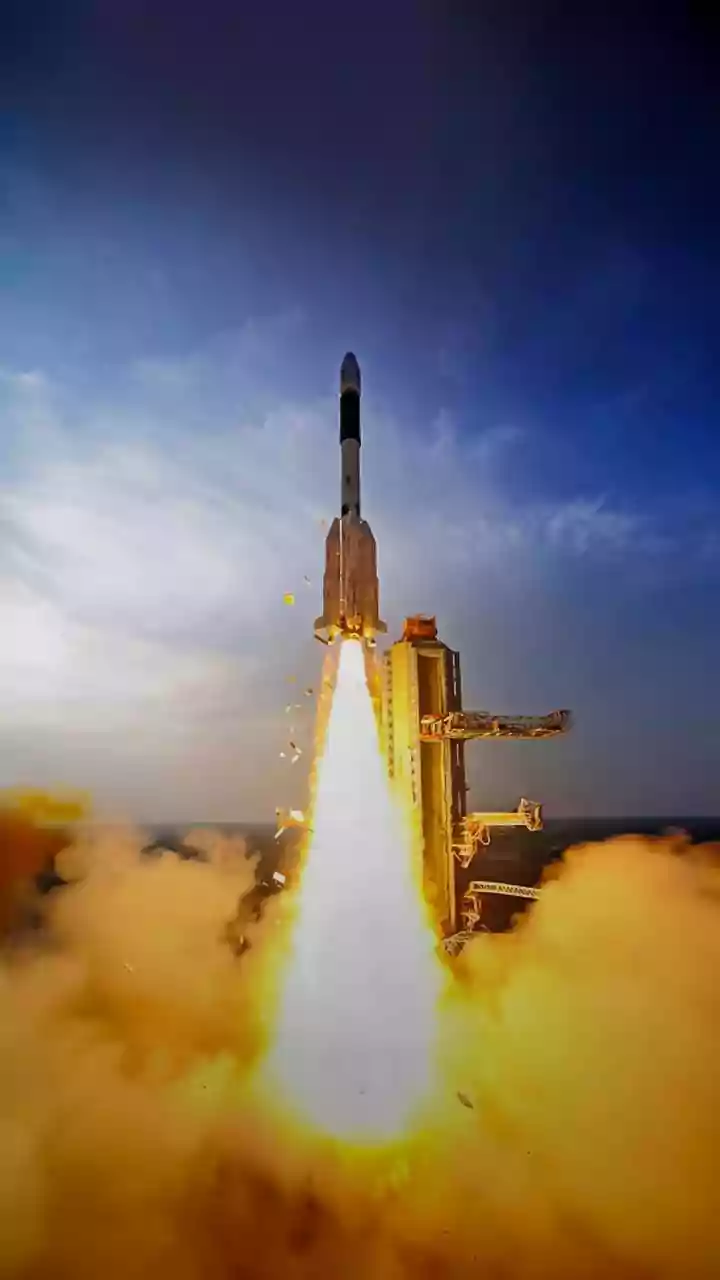
To ensure the Crew Escape System works perfectly, ISRO must test it under different failure conditions. The first is the Pad Abort Test (PAT), which simulates an emergency while the rocket is still on the ground. ISRO successfully conducted this test in July 2018, where the escape system lifted an uncrewed capsule to an altitude of 2.7 km before it safely parachuted into the Bay of Bengal. The second, more complex scenario is the In-Flight Abort Test. For this, ISRO uses a special Test Vehicle (TV) to carry the capsule to a specific altitude and speed, then deliberately triggers an abort. A successful test, TV-D1, was conducted in October 2023, simulating a failure at an altitude of about 17 km. The system successfully separated the module, which then deployed its parachutes for a safe splashdown.
Why One Test Isn't Enough
Spaceflight is an unforgiving environment where there are no second chances. A single successful test does not guarantee reliability. Multiple tests are mandatory to validate the system's performance across a wide range of conditions, from different altitudes to varying aerodynamic pressures. Each test provides invaluable data for engineers to refine the system, check the performance of every component—from the fast-acting motors to the complex parachute deployment sequence—and build statistical confidence. This rigorous testing process allows ISRO to intentionally cause failures in unmanned flights to perfect the systems that will protect astronauts when their lives are on the line. The goal is to prove the system's reliability beyond any doubt before certifying it as 'human-rated'.
A Legacy of Saving Lives
The critical importance of a launch abort system is not theoretical; it is written in the history of spaceflight. While NASA's Mercury and Apollo missions fortunately never had to use their escape towers, the technology has saved lives. In September 1983, a Soyuz rocket in the then-Soviet Union caught fire on the launchpad just 90 seconds before liftoff. The launch escape system automatically activated, firing the capsule containing two cosmonauts away from the pad moments before the rocket exploded in a massive fireball. More recently, in 2018, another Soyuz crew was saved by their abort system after a booster failed mid-flight. These real-world emergencies underscore why testing these systems to perfection is a non-negotiable prerequisite for human spaceflight.