

The Lingering Light of the Perseids
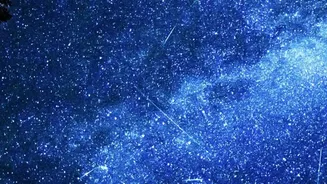
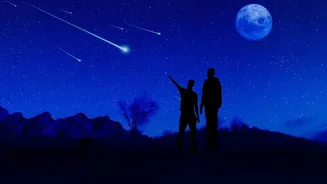
The Perseid meteor shower, one of the year's most anticipated celestial events, reached its peak on the night of August 12-13. This year's shower was particularly special because the peak coincided with the new moon, creating perfectly dark skies for
optimal viewing. Caused by debris left behind by the Comet Swift-Tuttle, the Perseids are known for their bright, fast-moving meteors, sometimes leaving persistent trails. While the peak has passed, the shower remains active until around August 24. This means you still have a chance to catch a few stray "shooting stars" in the late-night hours. For the best chance, find a location away from city lights, let your eyes adjust to the darkness for about 30 minutes, and look towards the northeastern sky.
A Parade of Planets
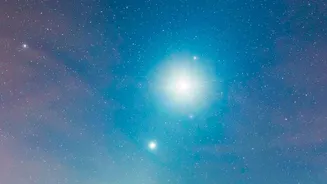
August is a fantastic month for planet-watching. Throughout the month, a parade of planets graces both the evening and morning skies. In the evenings, look to the west after sunset to spot the brilliantly bright Venus. On August 15, it reached its greatest eastern elongation, its farthest apparent point from the Sun, making it a prominent evening star. The morning sky, however, is where the real party is. Before sunrise, you can find Mars and Saturn easily, while Jupiter also makes an appearance low on the eastern horizon. While a grand six-planet alignment occurred around August 12, many of these planets remain visible. Mars and Saturn are the easiest to spot with the naked eye in the pre-dawn hours. You will need binoculars to spot Uranus and a telescope for Neptune.
The Sturgeon Moon and a Lunar Eclipse
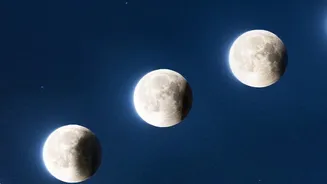
Mark your calendars for the full moon on August 28, known as the Sturgeon Moon. This name comes from the traditional knowledge of Native American tribes who found that the giant sturgeon fish in North America's Great Lakes were easiest to catch during this time. This year's Sturgeon Moon is extra special as it coincides with a deep partial lunar eclipse visible across North and South America. During the event, about 96 percent of the Moon will pass through Earth's darkest shadow, which may give it a subtle reddish or orange glow. The eclipse will occur on the night of August 27-28. Even if you're not in the visibility path for the eclipse, the full moon itself is a beautiful sight, rising in the east around sunset.
Spotting the Ringed Planet, Saturn
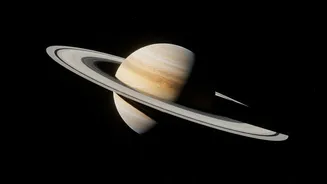
Saturn is a highlight for observers throughout the latter half of the year. The ringed planet rises in the east in the mid-evening and becomes well-positioned for viewing in the hours after midnight. Throughout August, it is visible in the constellation Pisces and grows progressively brighter as it heads toward its opposition in early October. Opposition is when Earth passes directly between Saturn and the Sun, placing the planet at its closest and brightest for the year. While that peak is still weeks away, August provides an excellent opportunity to get acquainted with its location in the sky. If you have a telescope, you can catch a view of its famous rings, which are now tilting back toward Earth after appearing edge-on in 2025. On the nights of August 30-31, look for the Moon to make a close approach to Saturn in the sky.