








Meet Moringa: The 'Miracle Tree'
Before you dismiss it as just another health trend, it’s worth knowing that moringa, or the drumstick tree (sahjan), has been a part of Indian cuisine and traditional medicine for centuries. From sambar to sabzi, its leaves, pods, and flowers have long
been valued. What’s creating the new buzz is the concentrated, dried form: moringa flakes or powder. This makes it incredibly easy to incorporate into everyday meals. Often dubbed the ‘miracle tree’, moringa is celebrated for its dense nutritional profile, packing a remarkable amount of vitamins, minerals, and antioxidants into a very small package. This isn’t about a foreign superfood; it’s about rediscovering the power of an ingredient that has grown in our backyards for generations.
The Nutritional Punch of Moringa Flakes
So, what exactly are you adding to your dal? Moringa is a veritable treasure trove of nutrients. It is exceptionally rich in Vitamin C, which is crucial for immune support, and Vitamin A, vital for eye health and skin. The leaves are also a significant source of plant-based protein, containing all nine essential amino acids, which is rare for a plant. Furthermore, it delivers a healthy dose of calcium for bone health and iron to help combat fatigue and anaemia. Where it truly shines is in its antioxidant content. Moringa is loaded with compounds like quercetin and chlorogenic acid, which help fight oxidative stress and inflammation in the body. By adding just a spoonful or two of flakes, you are significantly enhancing the vitamin and mineral content of your meal without adding significant calories or fat.
Why Dal is the Perfect Partner
You could sprinkle moringa on a salad or blend it into a smoothie, but mixing it into dal is particularly brilliant for several reasons. Firstly, dal is a daily habit for millions. Attaching a new healthy habit to an existing one is the easiest way to ensure consistency. You don't have to remember to do something extra; you just modify a step you’re already taking. Secondly, the flavour profile of most dals is robust enough to accommodate moringa’s unique taste. Its earthy, slightly bitter notes, similar to spinach or matcha, can be easily balanced by the spices, tamarind, or lemon typically used in dal. The simmering liquid also helps to rehydrate the flakes and integrate them seamlessly into the dish, avoiding any powdery or gritty texture. It becomes a hidden ingredient, working its nutritional magic behind the scenes.
How to Use Moringa in Your Dal
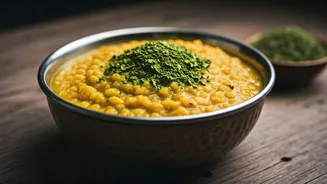
Adding moringa flakes to your dal is incredibly simple. The key is to add it at the right time. To preserve its delicate nutrients, especially Vitamin C, it's best not to overcook it. The ideal moment to stir in the moringa flakes is in the last 5-10 minutes of cooking. If you’ve prepared your dal and are just giving it a final simmer before serving, that’s the perfect time. How much should you use? Start small. For a pot of dal serving four people, begin with one tablespoon of flakes. You can gradually increase this to two tablespoons as you get accustomed to the taste. It dissolves easily and will slightly thicken the consistency of the dal while imparting a deeper green hue. This method works beautifully with almost any kind of dal, be it toor, masoor, moong, or a mixed dal tadka.
Balancing the Flavour
The primary concern for many will be the taste. Will it ruin your beloved dal? Unlikely, if you do it right. Moringa has a distinct green, earthy flavour that can be an acquired taste for some. Starting with a smaller quantity is key. To balance its flavour, a bright, acidic element works wonders. A generous squeeze of lemon or lime juice at the end will cut through the earthiness beautifully. Similarly, the richness of a final tadka with ghee, mustard seeds, and asafoetida (hing) complements the moringa perfectly. If you find the flavour too strong initially, try using it in more powerfully spiced dals, like dal makhani or a South Indian-style sambar, where other bold ingredients can share the stage.