

The Sun’s Turbulent Temper
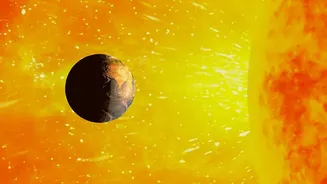
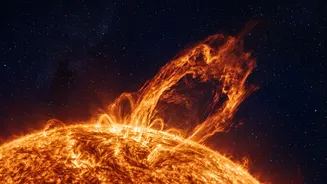
Our Sun is a dynamic star, and its activity isn't always gentle. It periodically releases massive bursts of energy and particles into space. The two main events we worry about are solar flares and coronal mass ejections (CMEs). A solar flare is an intense
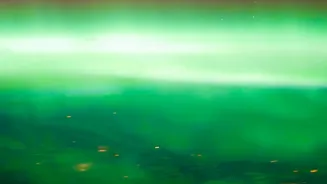
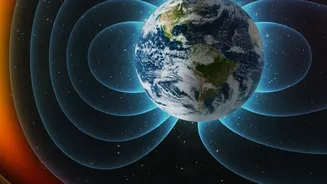
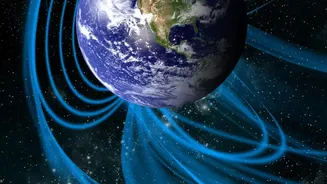
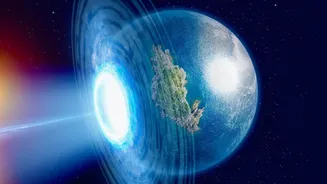
explosion of radiation, capable of reaching Earth in just eight minutes. A CME is a giant cloud of solar plasma and magnetic fields that travels more slowly but can cause significant disturbances if it hits our planet. These events are a normal part of the Sun's 11-year cycle, but when they are aimed at Earth, they can interact with our magnetic field and atmosphere, creating what is known as a geomagnetic storm.
A Planet Wired for Disruption
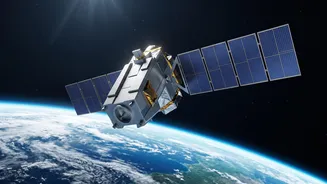
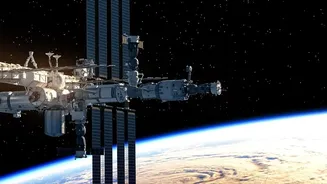
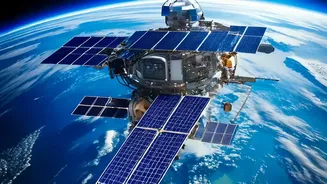
Modern society is highly dependent on technology that is vulnerable to space weather. A powerful geomagnetic storm can induce electrical currents in power lines, potentially overheating transformers and causing widespread blackouts. Satellites are also at high risk; they are exposed to damaging radiation that can degrade their electronics and solar panels. This can disrupt everything from weather forecasting and television broadcasts to vital communication and navigation services. The Global Positioning System (GPS), which is essential for aviation, shipping, precision agriculture, and even the maps on your phone, can become inaccurate or completely unavailable. Airlines may have to reroute flights, especially over polar regions, to avoid communication blackouts and increased radiation exposure for passengers and crew.
Our Watchful Eyes on the Sun
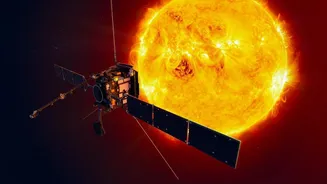
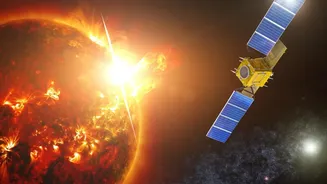
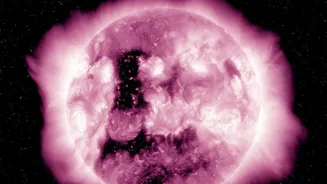
To mitigate these risks, we need advance warning. That's where solar weather monitoring comes in. Agencies like the USA's National Oceanic and Atmospheric Administration (NOAA) Space Weather Prediction Center (SWPC) operate around the clock, using a network of ground-based and space-based observatories. Satellites such as the GOES series and the Deep Space Climate Observatory (DSCOVR) provide real-time data on solar activity. India has also significantly boosted global monitoring capabilities with its Aditya-L1 mission. Positioned at a unique vantage point 1.5 million km from Earth, Aditya-L1 continuously observes the Sun without interruption, studying its atmosphere and tracking events like CMEs. These instruments allow forecasters to see a storm leaving the Sun and predict if, when, and how severely it will impact Earth.
From Forecast to Protective Action
A good forecast is the key to reducing disruption. When the SWPC or other agencies issue a watch or warning, it gives critical infrastructure operators time to act. Power grid companies can take steps to stabilize their networks and prevent cascading failures that could lead to prolonged outages. Satellite operators can power down sensitive components or adjust orbits to minimise potential damage from radiation or increased atmospheric drag. Similarly, airlines can alter flight paths to ensure safe communication and navigation. These proactive measures don't stop the solar storm itself, but they significantly blunt its impact, turning a potential catastrophe into a manageable event and safeguarding the complex technological systems we rely on daily.