




The Great Global Journey
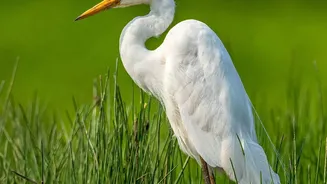
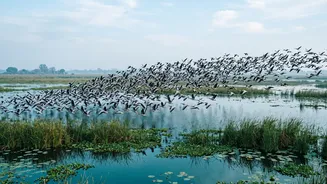
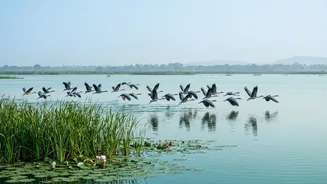
Twice a year, species like the bar-headed goose, Siberian crane, and greater flamingo undertake perilous migrations between their breeding grounds in the cold north and their wintering homes in warmer climates. These journeys are feats of incredible endurance,
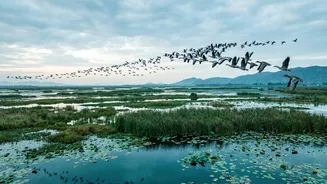
with some birds flying non-stop for days, crossing entire continents and even the towering Himalayas. This pilgrimage is the most vulnerable period in a bird's life, with high mortality rates. Their survival doesn't just depend on their strength, but on a critical chain of safe havens along the way. These routes, known as flyways, are ancient aerial highways hardwired into their instincts.
Nature's Essential 'Refuelling Stations'
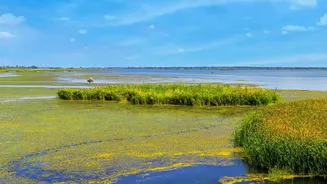
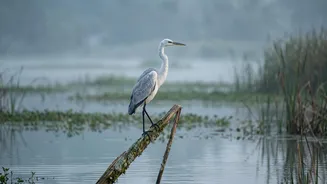
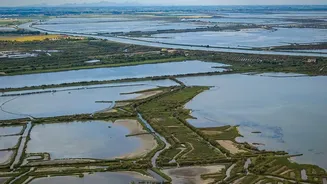
Wetlands—which include marshes, lagoons, mudflats, estuaries, and lakes—are the vital 'rest stops' on these migratory flyways. They are far more than just patches of water. For a bird that has flown thousands of kilometres, a wetland is a biological supermarket, offering a rich buffet of fish, invertebrates, and aquatic plants to refuel and build energy reserves. Coastal wetlands like mudflats are crucial for shorebirds, while inland freshwater lakes and marshes support a huge diversity of waterfowl and wading birds. These areas also provide essential shelter, allowing birds to rest safely, protected from predators and harsh weather before continuing the next leg of their arduous journey.
The Indian Connection: A Crucial Crossroads
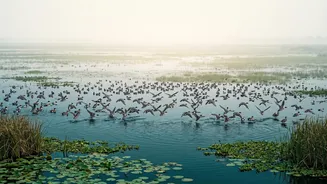
India holds a place of immense strategic importance for migratory birds. The country is a central part of the Central Asian Flyway (CAF), a route used by over 600 species travelling between the Arctic and the Indian Ocean. In fact, India provides critical stopover or wintering habitat for more than 90% of the bird species that use this flyway. Iconic wetlands like Chilika Lake in Odisha, which hosts over a million waterbirds each winter, Keoladeo National Park in Rajasthan, and Pulicat Lake on the Andhra Pradesh–Tamil Nadu border are indispensable links in this chain. For many species, India is the final destination before they would have to cross the vast Indian Ocean, making our wetlands their primary winter home.
A Lifeline Under Severe Threat
Unfortunately, these vital habitats are disappearing at an alarming rate. It is estimated that 35% of the world's wetlands have been lost in the last 50 years. The primary threats are human-driven: urbanisation, conversion of land for agriculture, pollution from untreated wastewater and industrial runoff, and the damming of rivers which alters water flow. Climate change exacerbates the problem, with changing rainfall patterns and rising temperatures causing wetlands to dry out. This loss of habitat is the single biggest driver of decline for many migratory bird populations. When a key wetland 'rest stop' is degraded or destroyed, the entire migratory chain can break, with devastating consequences for species that have relied on it for centuries.
Why Their Survival is Our Survival
The fate of migratory birds is intrinsically linked to our own well being. Healthy wetlands do more than support wildlife; they provide essential ecosystem services for humans. They act as natural sponges, absorbing floodwaters and protecting coastal communities from storm surges. They filter pollutants, purifying our drinking water and recharging groundwater. They also play a crucial role in climate regulation by storing vast amounts of carbon. Protecting these habitats is not just an act of wildlife conservation; it's an investment in our own environmental security and resilience. The presence of these winged visitors is a powerful indicator of the health of our environment—their decline is a warning we cannot afford to ignore.