




Meet Your Uninvited Guests
Those small, mosquito-like insects hovering around your beloved plants are likely fungus gnats. While the flying adults are primarily a nuisance, their offspring are the real culprits. Adult females lay hundreds of eggs in moist, organically rich soil.
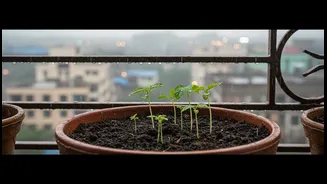
These eggs hatch into tiny, worm-like larvae with black heads that live in the top few inches of the potting mix. It is this larval stage that poses a threat to your plants. They feed on fungi and decaying organic matter in the soil, but will also happily chew on delicate root hairs. For seedlings and young plants, a significant infestation can lead to stunted growth, wilting, and increased vulnerability to disease.
The Perfect Breeding Ground: A Soggy Story
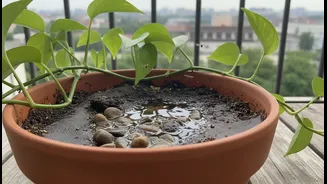
To effectively combat any pest, you must disrupt its life cycle. Fungus gnats complete their entire life cycle—from egg to larva, pupa, and adult—in as little as 17 to 20 days in warm, moist conditions. The common denominator at every stage is moisture. Female gnats seek out damp soil to lay their eggs, and the larvae require a constantly moist environment to survive and feed. This is precisely why poorly draining pots on a balcony create a five-star resort for fungus gnats. When water cannot escape, the soil becomes waterlogged, creating a perpetually damp upper layer that is ideal for fungal growth and decomposition—a buffet for gnat larvae. Overwatering, compacted soil, and blocked drainage holes all contribute to this perfect, pest-friendly environment.
Why Balconies Present a Unique Challenge
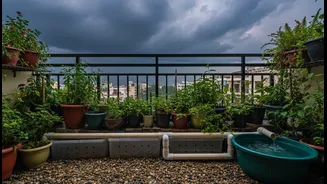
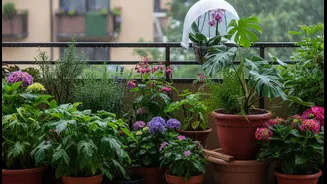
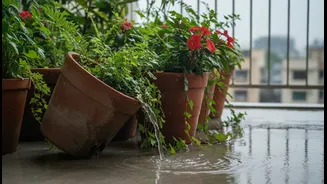
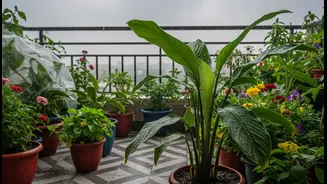
Unlike a garden bed where excess water can seep deep into the earth, balcony containers are closed systems. Water has only one way out: through the drainage holes. Often, these containers sit flat on tiled or concrete surfaces, causing water to pool in the saucer or directly underneath the pot. This trapped water not only blocks oxygen from the roots but can be reabsorbed, keeping the lower soil layers perpetually soggy. This creates a 'perched water table' within the pot, where the bottom section remains saturated long after watering. This constant dampness, combined with the often-sheltered and warm environment of a balcony, makes these spaces particularly susceptible to fungus gnat infestations.
Building a Fortress Through Drainage
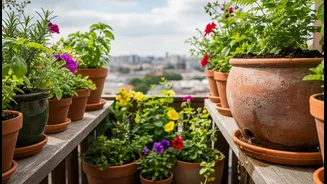
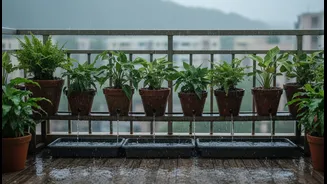
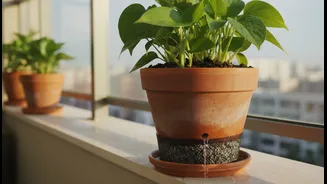
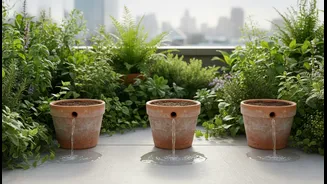
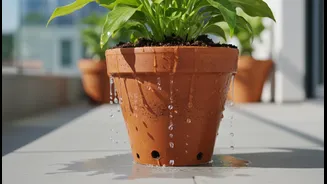
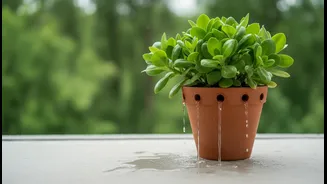
The most effective way to prevent fungus gnats is to make your pots inhospitable to them. This starts with a foundation of excellent drainage. First, ensure every pot has multiple, unobstructed drainage holes. If you love a decorative pot that lacks holes, use it as a cachepot to house a smaller, functional nursery pot inside. Second, use a high-quality, well-aerating potting mix. Avoid heavy garden soil, which compacts easily. A good mix for containers often includes components like coco coir, perlite, and compost, which provide structure and allow water to pass through freely. Lastly, elevate your pots. Placing them on 'pot feet' or stands allows air to circulate underneath and ensures that water can drain away completely, rather than being trapped against the balcony floor. Always empty the water from saucers and drip trays shortly after watering.
Watering Wisely and Other Supporting Tactics
Proper drainage is half the battle; smart watering is the other. The single most important cultural practice is to allow the top one to two inches of soil to dry out completely between waterings. This simple step kills eggs and larvae and makes the soil surface unattractive to egg-laying adults. You can test the soil with your finger to gauge its moisture level. Complement this strategy by keeping the soil surface clean of fallen leaves and other decaying organic debris, which serves as a food source. For monitoring adult populations, yellow sticky traps placed near the soil can be very effective at capturing the flies and helping you gauge the scale of the problem.