






More Than Just Astronauts and Rockets
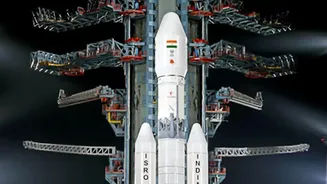
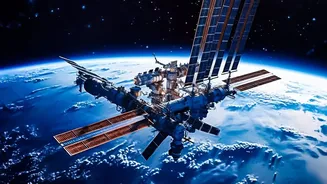
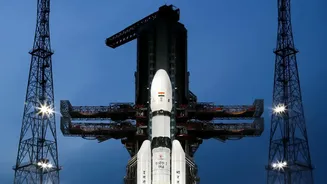
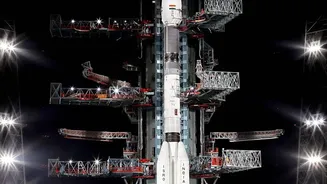
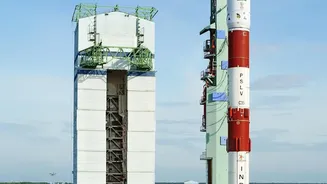
When we think of space missions, the images that often come to mind are of powerful rockets and the handful of astronauts who travel into the cosmos. While heroic, these represent just the tip of the iceberg. A single space mission is the culmination
of years of work by thousands of individuals across dozens of disciplines. The Indian Space Research Organisation (ISRO), along with a rapidly growing private sector, employs a massive workforce that designs, builds, manages, and analyzes every facet of space exploration. Since the Indian government opened the sector to private players, over 300 space startups have emerged, creating thousands of new jobs. This expansion means that a passion for space can be channelled into a multitude of fulfilling careers, many of which don't require you to ever leave Earth.
The Engineering Backbone
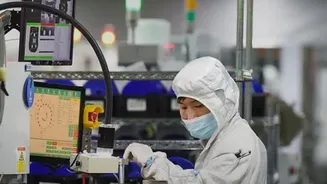
At the heart of any space programme lies a robust engineering team. Aerospace engineers are, of course, central to designing launch vehicles and spacecraft. However, the demand is just as high for mechanical engineers who work on the structural integrity and mechanisms of satellites, and electronics engineers who design the complex communication and control systems. Computer science engineers are crucial for developing the software that runs everything from flight controls to ground operations. Expertise in materials science is also vital for developing composites and alloys that can withstand the extreme conditions of space. For those with a B.Tech in these core fields from institutions like the IITs and NITs, opportunities are plentiful in both government agencies like ISRO and private firms such as Skyroot Aerospace and Agnikul Cosmos.
The Digital Frontier: Data, AI, and Software
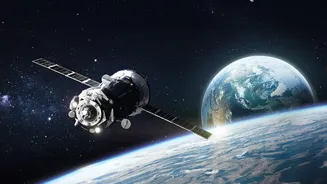
Modern space exploration is as much about data as it is about rocketry. Satellites and probes generate enormous volumes of information that needs to be processed, interpreted, and turned into usable insights. This has created a surge in demand for satellite data analysts, remote sensing experts, and GIS specialists. These professionals work on applications ranging from weather forecasting and climate change monitoring to urban planning and agricultural management. Furthermore, software engineers with skills in Python, MATLAB, and C++ are highly sought after to develop the algorithms for mission planning, autonomous navigation, and data simulation. As missions become more complex, experts in artificial intelligence, machine learning, and cybersecurity are also playing an increasingly critical role.
Beyond the Technical: A Universe of Roles
You don't have to be an engineer or a scientist to build a career in the space industry. Every space organisation, whether public or private, requires a wide array of support professionals to function. Project managers are needed to keep complex, multi-year missions on track and on budget. The growing commercialisation of space has created a need for professionals in business development, finance, and marketing. Even fields like law have a place, with space law becoming an important specialisation for managing international treaties, satellite launch liabilities, and spectrum allocation. There are also opportunities in human resources, programme outreach, and science communication, which involve sharing the excitement and discoveries of space exploration with the public. The Indian Space Association (ISpA) offers internships in areas like space policy and law, highlighting the growing need for these roles.
Your Launchpad: Getting Started as a Student
For students inspired to join this exciting field, several pathways are available. ISRO actively encourages student participation through initiatives like the YUva VIgyani KAryakram (YUVIKA), a two-week residential programme for school children to provide them with a basic understanding of space science and technology. For university students, ISRO centres offer internships and academic project work for those pursuing degrees in relevant science and technology disciplines. Beyond ISRO, organisations like Space Zone India and the India Space Hub offer internships and ambassador programs designed to give students hands-on experience and connect them with the growing ecosystem. Building a strong foundation in STEM subjects is key, but participating in these programs and developing practical skills can give aspiring space professionals a significant head start.