


The Carb Showdown
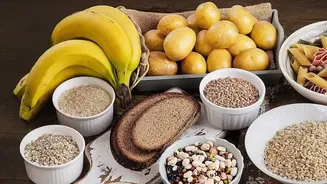
When comparing them head-to-head, the most significant difference lies in their carbohydrate and calorie counts. Per 100 grams, a sweet potato contains roughly 18 to 20 grams of carbohydrates, while butternut squash comes in significantly lower at around
12 grams. This makes butternut squash the clear winner for those following a low-carb diet or simply looking to reduce their carb intake. The higher carbohydrate content in sweet potatoes also means they are more calorie-dense, packing about 76 to 86 calories per 100g compared to the lighter 45 calories found in butternut squash. This difference is largely due to the higher water content in butternut squash, making it a less dense vegetable.
A Deeper Look at Fiber and Sugar
Total carbohydrate count doesn't tell the whole story. We also need to consider fiber and sugar. Both vegetables are good sources of dietary fiber, which is crucial for digestive health, promoting feelings of fullness, and stabilizing blood sugar. A one-cup serving of either, when cooked, provides around 6.6 grams of fiber. Where they diverge is their sugar content. Sweet potatoes have a noticeably higher natural sugar content, with about 5.7 grams per 100g, which contributes to their distinctly sweet flavour. Butternut squash is much milder, containing only about 2.2 grams of sugar for the same serving size.
The Glycemic Index Factor
For individuals managing blood sugar, the glycemic index (GI) is a vital metric. The GI ranks foods on how quickly they cause blood sugar levels to rise. Here, the comparison becomes more nuanced and depends heavily on the cooking method. Butternut squash has a relatively stable low-to-moderate GI of around 51, regardless of whether it is baked or boiled. Sweet potatoes, however, are chameleons. A boiled sweet potato has a low GI of about 46, making it a great choice for slow-release energy. But if you bake or roast that same sweet potato, its GI can jump to 80 or higher, putting it in the high-GI category. This is because the intense dry heat converts its starches into sugars more readily.
Beyond Carbs: A Nutrient Powerhouse
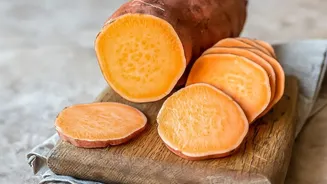
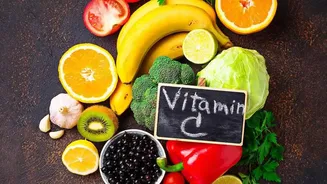
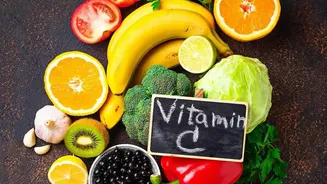
Both vegetables are nutritional champions, particularly when it comes to Vitamin A. Their bright orange flesh is a dead giveaway for their high beta-carotene content, a powerful antioxidant that the body converts into Vitamin A. This vitamin is essential for healthy vision, immune function, and skin health. While both are excellent sources, sweet potatoes often have a slight edge in total Vitamin A. They are also richer in potassium, an important mineral for regulating blood pressure. On the other hand, both provide a solid dose of Vitamin C.
In the Kitchen: Flavour, Texture, and Use
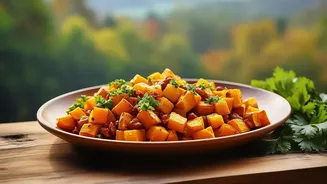
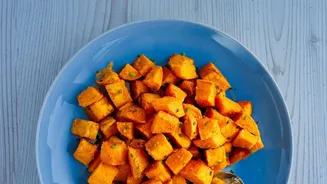
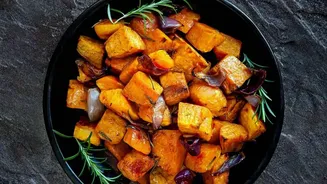
Your choice might ultimately come down to what you're cooking. Sweet potatoes have a denser, starchier texture that becomes creamy when roasted or mashed. Their inherent sweetness makes them a fantastic candidate for fries, pies, or as a standalone baked side dish. Butternut squash has a higher moisture content, resulting in a lighter, more watery texture when cooked. This makes it perfect for blending into silky soups, purees, and sauces. Its milder, nutty flavour is versatile and pairs well with a wide range of spices and herbs without overpowering the dish.