





India's First Bastion Against Light
High in the Changthang plateau of Ladakh, at an altitude of over 4,500 metres, lies Hanle—a place of stark beauty, thin air, and profoundly dark nights. In December 2022, a 22-kilometre radius around the village was officially designated as India's first
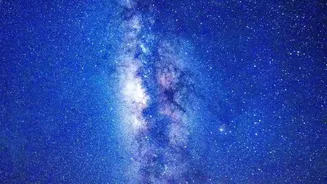
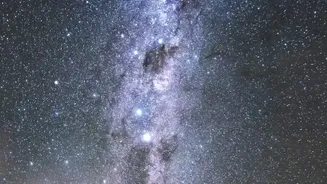
Dark Sky Reserve. This initiative is a formal recognition of the area's pristine skies, which boast a Bortle-1 rating, the highest clarity on a 9-point scale measuring light pollution. A Dark Sky Reserve is an area where artificial light is strictly controlled to protect natural darkness for scientific research, ecological balance, and cultural heritage. The Hanle reserve was established through a tripartite agreement between the Indian Institute of Astrophysics (IIA), the UT of Ladakh, and the Ladakh Autonomous Hill Development Council (LAHDC), creating a framework to safeguard this unique asset.
A Crucial Window to the Cosmos
The primary driver for protecting Hanle's skies is science. The area is home to the Indian Astronomical Observatory (IAO), one of the world's highest and most important sites for optical, infrared, and gamma-ray astronomy. Operated by the IIA, the observatory takes advantage of Hanle's unparalleled conditions: over 270 clear nights a year, minimal atmospheric disturbance, and extremely dry air. These factors allow powerful instruments like the Himalayan Chandra Telescope and the Major Atmospheric Cherenkov Experiment (MACE) telescope to peer deep into the universe, studying everything from exoplanets to distant galaxies. However, this world-class research is incredibly sensitive to light pollution. Even the high beams of a passing vehicle or light spilling from a window can damage sensitive detectors and ruin hours of observation.
A Community United for Darkness
Protecting the dark sky is not just a top-down mandate; it's a community-led movement. The greatest threat to Hanle's darkness is ironically its own development and growing popularity as a tourist destination. To counter this, the IIA and local administration have partnered with the residents of Hanle's hamlets. Simple but effective measures have been implemented across the board. Every household within the reserve has been provided with special equipment, including thick blackout curtains, shades for outdoor lamps, and warm-toned bulbs that cause less skyglow. Strict guidelines are in place for visitors, discouraging bright white lights and promoting the use of red-filtered flashlights that preserve night vision. Roads have been fitted with retro-reflectors, and there are plans to prohibit the use of high-beam headlights within the reserve's boundaries.
The Rise of the Astro-Ambassadors
The Hanle initiative has transformed conservation into a source of sustainable livelihood. A key component is the 'Astronomy Ambassador' program, which has trained dozens of local villagers—the majority of whom are women—to become guides for the growing number of astro-tourists. These ambassadors are equipped with telescopes and trained to lead stargazing sessions, sharing both scientific knowledge and local culture with visitors. This model of 'astropreneurship' has created new economic opportunities in a region traditionally reliant on pastoralism. Homestays have flourished, and the income generated from tourism provides a powerful incentive for the community to actively participate in protecting the very darkness that attracts visitors. This symbiotic relationship ensures that as Hanle's fame grows, its core asset remains secure.