






Goodbye, Perfection; Hello, Wildness
For decades, the ideal bouquet was a tight, symmetrical dome of perfect, blemish-free roses or carnations. It was beautiful but formal, structured, and a little bit stiff. The trend that has captured our collective imagination is the complete opposite.
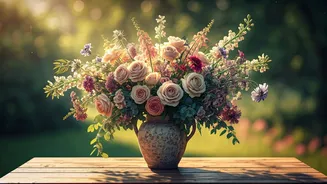
Florists and designers call it by many names—'garden-style', 'wildflower aesthetic', 'naturalistic'—but the feeling is the same: effortless, organic, and alive. These are arrangements that look as if they were scooped up from a rambling meadow or a cottage garden, complete with wispy tendrils, arching branches, and a beautiful sense of movement. It’s a rebellion against rigidity and a full-throated embrace of nature’s charming imperfection.
Anatomy of a Modern Bouquet
So what makes this style so distinct? It’s a delicate dance of texture, colour, and form. Unlike their compact predecessors, these arrangements are often asymmetrical, with a 'high side' and a 'low side' that create a dynamic shape. The key is variety. You won’t just find premium blooms; you’ll see humble, seasonal flowers nestled next to interesting foliage, delicate grasses, textured seed pods, and even fruiting branches. Greenery is no longer just a filler but a star player, providing the foundational structure and flow. The colour palettes are often more complex and painterly, moving beyond simple monochromes to include soft, muted tones, earthy neutrals, and the occasional surprising pop of a vibrant hue.
More Than Just Petals
The rise of the garden-style bouquet isn’t just about aesthetics; it’s a reflection of a larger cultural shift. In a world dominated by digital filters and curated perfection, there’s a growing hunger for authenticity. This floral style feels real and attainable. It taps into a collective desire to reconnect with nature, to bring the calming, untamed beauty of the outdoors inside. Furthermore, the trend aligns perfectly with the sustainability movement. It champions the use of locally grown, seasonal flowers, reducing the carbon footprint associated with importing blooms from across the world. By celebrating what’s available in our own backyards and local farms, the trend fosters a deeper appreciation for the rhythms of the seasons.
From Global Trend to Local Beauty
One of the most wonderful aspects of this trend is its adaptability. While the principles are global, the ingredients are fiercely local. In India, this means florists are moving beyond the traditional rose and lily to incorporate indigenous treasures in this new, looser style. Imagine arrangements featuring the delicate scent of jasmine (mogra) and tuberose (rajnigandha), the vibrant pop of marigolds (genda), and the lush foliage of mango leaves and ferns. This approach allows the global trend to feel deeply personal and rooted in place, celebrating local biodiversity and horticultural heritage in a fresh, contemporary way. It encourages a new way of seeing the flowers that have always been part of our cultural landscape.
Get the Look: A Few Simple Tips
Bringing this look into your own home doesn't require a professional florist. Start by embracing variety. When you buy flowers, don't just get one type; pick up a main bloom, a smaller secondary flower, and a bunch of interesting greenery or textural elements like dried grasses. Second, let them breathe. Instead of packing flowers tightly into a vase, give them space. Allow stems to criss-cross and lean naturally. Finally, don't be afraid of imperfection. A slightly wonky stem, a flower that’s not perfectly open, or a gracefully drooping branch is what gives these arrangements their character and soul. The goal isn't perfection; it's personality.