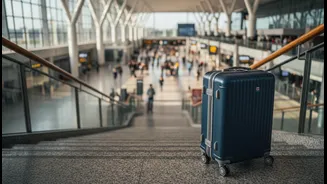









The Great Debate: Backpack vs. Suitcase
The first decision that impacts your entire trip is your choice of luggage. This isn't just about style; it's about mobility. For travel in India, the backpack often proves superior. Consider the common modes of transport: auto-rickshaws have limited
foot space where a suitcase won't fit, and crowded metro trains in cities like Delhi and Mumbai are far easier to navigate with a bag on your back. A backpack keeps your hands free and takes up less floor space. Suitcases, with their rigid structure, can be difficult to store on the overhead racks of sleeper trains, which are designed for softer, more flexible bags. However, a suitcase is a perfectly good option if your trip is luxurious, involving taxis and hotels with smooth floors and helpful staff. If you are staying in one place for an extended period, a suitcase offers more structured packing. But for any journey involving varied terrain like the unpaved paths of hill stations, or budget travel that relies on public transport, a backpack is almost always the more practical choice.
Conquering Stairs and Uneven Terrain
Stairs are an unavoidable reality of travel, from railway stations to older hotels without lifts. A heavy bag can quickly become a major physical burden. One of the simplest rules of travel is to pack only what you can comfortably carry up a flight of stairs yourself. When faced with a staircase, proper lifting technique is crucial to avoid injury: stand close to the bag, bend at your knees (not your waist), and lift with your legs. If a suitcase is too heavy to lift, an alternative is to turn it into a sled. Lay it on its side and slowly drag it down the stairs, holding the handle to control its descent. For going up, it’s safer to unpack some contents at the bottom and make multiple trips rather than risk a single, dangerously heavy lift. The best strategy, however, is proactive. Before booking accommodation, check for accessibility features. A quick search or a call to the hotel can clarify if a lift is available, saving you significant physical strain upon arrival.
The Waiting Game: Turning Delays into Downtime
Long waiting times at airports and train stations are a common source of travel stress. Instead of seeing these periods as lost time, reframe them as a scheduled part of your journey. Being prepared can make all the difference. Keep essentials like a power bank, a book or e-reader, snacks, and a water bottle in an easily accessible part of your carry-on. At airports, some websites and apps provide real-time updates on security wait times, allowing you to plan accordingly. If you encounter an unexpectedly long queue, don't hesitate to ask an airport employee if there is an alternative, less crowded security checkpoint available. For train travel in India, particularly on overnight journeys, securing your luggage is key for peace of mind. A simple chain and padlock to attach your bag to the underside of your berth can deter theft, allowing you to relax or sleep more easily. Many major railway stations also offer cloakroom services where you can store luggage for a small fee, freeing you to explore the city for a few hours without being weighed down.
Choosing Your Transport Wisely
Your mode of transport should be chosen with your luggage in mind. A large suitcase might be manageable if you're taking a pre-booked taxi directly to your hotel, but it’s a liability if you plan to use an auto-rickshaw or a local bus. In many Indian cities, using ride-hailing apps allows you to specify the type of car, ensuring there's enough space for your bags. For shorter distances within a city after you've checked into your hotel, leaving your main luggage behind and exploring with just a small daypack is often the best approach. If you have a late departure after checking out of your hotel, utilise luggage storage options. Most hotels will hold your bags for free, and dedicated storage services are available near major transport hubs in cities like Delhi and Mumbai. This allows you to enjoy your final hours in a city, unencumbered and stress-free.
New Railway Rules to Keep in Mind
Indian Railways is in the process of implementing new, stricter baggage rules similar to those at airports. The permissible free luggage allowance varies by class: 70 kg for AC First Class, 50 kg for AC Second Tier, and 40 kg for AC Third Tier and Sleeper Class. Passengers in General Class are allowed up to 35 kg. Major stations, initially in the North Central Railway zone, are installing electronic weighing machines at entry points. If your luggage exceeds the weight or size limit, you will be required to pay a penalty or book the extra luggage separately. This initiative is designed to reduce overcrowding in coaches and improve passenger safety and comfort. Before heading to the train station, it's now more important than ever to weigh your bags at home to avoid last-minute fines and hassles.