




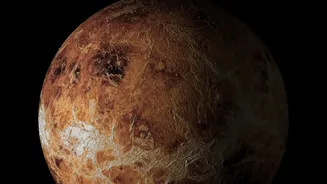
India’s Next Interplanetary Frontier
Following the monumental successes of its missions to the Moon (Chandrayaan) and Mars (Mangalyaan), the Indian Space Research Organisation (ISRO) is setting its sights on Venus. The mission, named Shukrayaan, which translates to "Venus Craft," represents
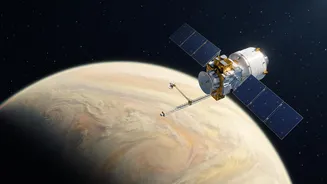
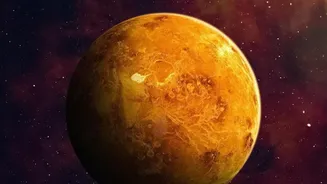
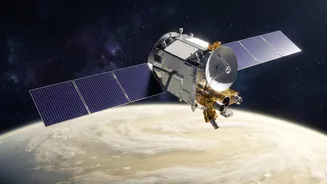
India's second foray into interplanetary exploration. Approved by the Union Cabinet in September 2024, the Venus Orbiter Mission is an ambitious project to study our planetary neighbour in unprecedented detail. The plan involves placing a high-tech orbiter into a long, elliptical path around Venus to conduct a comprehensive survey of its surface and, most critically, its dense, swirling atmosphere. This positions India among a select group of nations venturing to understand one of the most hostile environments in our solar system.
The Mysteries Hidden in the Clouds
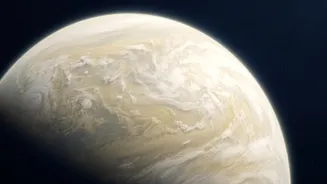
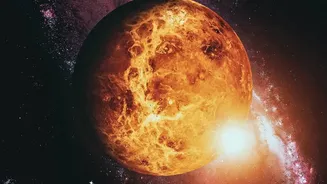
Venus is shrouded in a thick blanket of clouds made primarily of sulfuric acid, which completely obscures its surface. This atmosphere is about 90 times denser than Earth's and has created a runaway greenhouse effect, making Venus the hottest planet in the solar system with surface temperatures that can melt lead. But these deadly clouds are also a source of intense scientific curiosity. They hold clues to how Venus transformed from a potentially habitable world into an inferno. Furthermore, scientific interest in the Venusian atmosphere has been reignited by the potential, though highly debated, detection of phosphine gas — a chemical that on Earth is associated with microbial life. Shukrayaan's instruments will be designed to investigate these atmospheric mysteries, searching for answers about the planet's evolution.
A Toolkit for an Alien Atmosphere
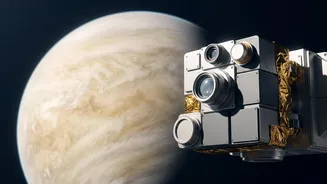
To peer through the veil of Venus, Shukrayaan will be equipped with a suite of around 19 advanced scientific instruments, or payloads, contributed by India and international partners including Russia, Sweden, and Germany. The headline-making sensors for analyzing atmospheric chemistry are designed to provide a deep dive into the cloud composition. Key instruments include spectrometers like the Venus InfraRed Atmospheric Gases Linker (VIRAL), a collaborative payload, which will study the chemical makeup of the atmosphere. Other sensors will map volcanic hotspots, monitor cloud structure, and even look for lightning. In addition to the atmospheric probes, a high-resolution Synthetic Aperture Radar (SAR) will penetrate the thick clouds to map the planet's surface in detail, searching for evidence of active volcanoes and other geological features.
A Warning and a Lesson for Earth
Beyond pure scientific discovery, the Shukrayaan mission has profound implications for understanding our own planet. Venus serves as a natural laboratory for studying how a planet's climate can change dramatically. By understanding the mechanics of Venus's runaway greenhouse effect, scientists can refine climate models for Earth, offering a cautionary tale of a sister planet that took a vastly different evolutionary path. The mission aims to uncover why Earth's twin became so inhospitable while our world thrived. These insights are crucial not only for understanding our planet's future climate risk but also for identifying what makes a planet habitable as we search for Earth-like worlds around other stars.
The Journey to the Morning Star
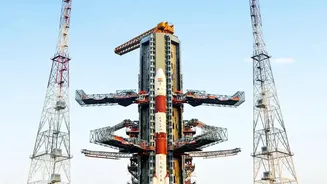
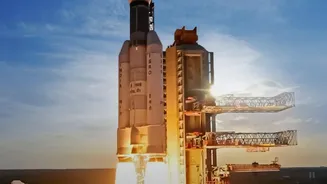
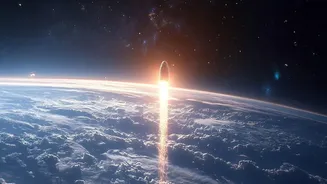
Interplanetary missions require precise timing and immense technical expertise. While original launch windows were considered for earlier dates, the official schedule now targets a launch in March 2028. This timeline was confirmed after the mission received its formal government approval. The spacecraft will be launched aboard India's most powerful rocket, the LVM-3. After a journey of about 112 days, it will enter a large elliptical orbit around Venus. From there, ISRO plans to use a technique called aerobraking for the first time, using the drag from Venus's upper atmosphere to gradually lower the orbiter into its final, closer scientific orbit without expending as much fuel. This maneuver itself will be a significant technological demonstration for India's space program.