
The Search for Another Pale Blue Dot
For centuries, humanity has gazed at the stars and wondered, “Are we alone?” Today, we are closer than ever to answering that question. The focus of this grand search has shifted from simply finding other planets, or exoplanets, to characterising them.
Scientists are looking for worlds similar to our own—rocky planets orbiting their stars at just the right distance for liquid water to exist on their surface. This region is known as the 'habitable zone'. Finding a planet in this zone is the first step, but the real challenge is figuring out what its atmosphere is made of and whether it truly holds water, the key ingredient for life as we know it.
Decoding Light with 'Transits'
One of the most powerful techniques for studying exoplanets is the transit method. This occurs when a planet passes directly in front of its host star from our point of view, causing a tiny, temporary dip in the star's brightness. Telescopes can detect this dimming to confirm a planet's existence and determine its size. But the real magic happens during that transit. As the starlight passes through the planet's atmosphere, gases in that atmosphere absorb specific colours, or wavelengths, of light. The James Webb Space Telescope can analyse this filtered starlight, breaking it down into a spectrum that reveals a 'chemical fingerprint' of the planet's air. This technique, called transmission spectroscopy, is how scientists hunt for molecules like methane, carbon dioxide, and, most importantly, water vapour.
Webb’s Unprecedented Power
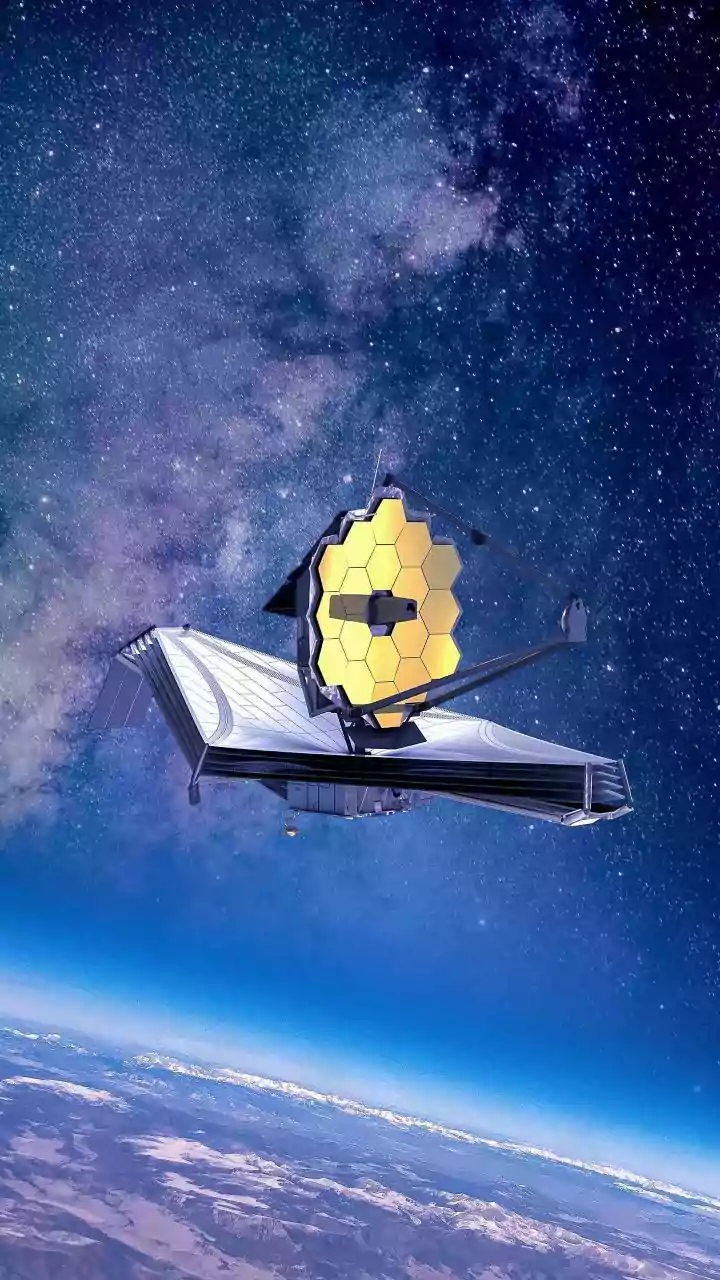
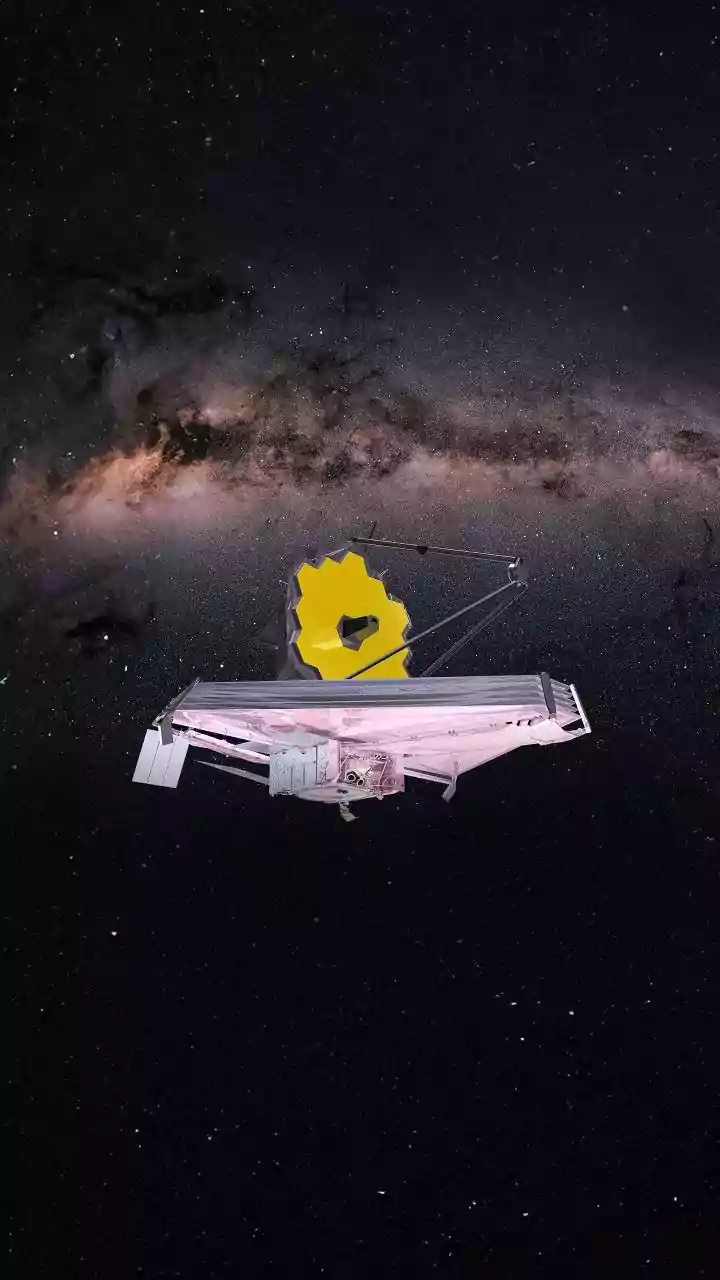
While previous telescopes like Hubble could study exoplanet atmospheres, the JWST is a revolutionary leap forward. Its massive mirror and advanced instruments are specifically designed to operate in infrared light, which is ideal for detecting the molecular signatures of atmospheric gases. Water, methane, and carbon dioxide all have strong absorption features in the infrared part of the spectrum that Webb can see with stunning clarity. This sensitivity allows astronomers to study planets that were previously out of reach, including smaller, potentially rocky worlds and a new, intriguing class of planets called 'Hycean' worlds. These hypothetical planets are characterized by deep, planet-wide oceans of liquid water under a hydrogen-rich atmosphere.
Prime Targets: K2-18 b and TRAPPIST-1
This observing season, two systems are receiving significant attention. One is K2-18 b, a 'sub-Neptune' exoplanet located 124 light-years away that orbits within its star's habitable zone. Webb's initial observations have already detected carbon-bearing molecules like methane and carbon dioxide in its atmosphere, which supports the theory that it could be a Hycean world with a water ocean. Another prime target is the TRAPPIST-1 system, a compact family of seven Earth-sized planets just 40 light-years away. Several of these planets are in the habitable zone, and studies suggest some could hold vast amounts of water, potentially hundreds of times more than Earth's oceans. Continued observations of these worlds are a top priority.
Why This July Is a Critical Period
The focus this July is driven by the convergence of JWST's highly structured observing cycles and the timing of major scientific announcements. Telescopes like Webb operate on meticulously planned schedules, and this period represents a key window for observing specific targets as they transit their stars. Furthermore, the astronomical community often presents major findings at summer conferences or in mid-year publications. Just this past week, on July 15, 2026, teams announced a new planet discovery, Beta Pictoris d, using Webb's unique spectroscopic capabilities. This highlights how observing campaigns culminate in significant releases of new data and analysis. The current season is therefore a period of intense activity, where new transit data is being gathered and previously captured data is being revealed to the public, fuelling the search for ocean worlds.
What Finding Water Truly Means
It is crucial to understand that detecting water vapour in an atmosphere is not the same as discovering a swimming pool, let alone life. It is, however, a monumental step. For Hycean candidates like K2-18 b, the presence of methane and CO2 alongside a lack of ammonia strongly suggests an interaction between a hydrogen atmosphere and a liquid water ocean. The next, even more ambitious, step is to search for biosignatures—gases like dimethyl sulfide (DMS), which on Earth is produced almost exclusively by marine life. Webb has already yielded a tentative, unconfirmed hint of DMS on K2-18 b. While this is far from proof, it demonstrates that we now have a tool capable of asking these profound questions across interstellar distances.