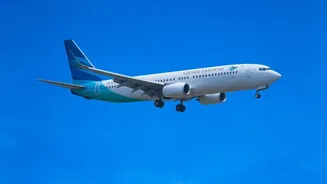







A New Non-Stop Connection
Starting October 25, 2026, Air India will launch a seasonal, three-times-weekly non-stop service between Mumbai and Toronto. This marks a significant development, as it will be the only airline offering a direct connection between the two major cities.
The route, operating through March 26, 2027, will be serviced by an upgraded Boeing 777-300ER, adding nearly 2,000 seats per week to the India-Canada corridor. This expansion is part of a broader push by Air India to bolster its international presence, which also includes upgrading its Delhi-Toronto route with new Boeing 787-9 Dreamliner aircraft. The move signals strong confidence in the high-demand market driven by the Indian diaspora, students, and business travellers.
The Bigger Picture of Canadian Travel
This new flight path doesn't exist in a vacuum. It aligns perfectly with Canada's strategic goals for immigration and tourism. For years, India has been a top source country for new Canadian permanent residents, international students, and visitors. While Canada's 2026-2028 immigration plan involves some tightening on the temporary resident front, the focus on attracting skilled workers and those who can integrate into the economy remains sharp. The government has been working to address visa processing backlogs, a major hurdle for many Indian applicants, with current timelines for visitor visas showing significant improvement compared to previous years. Adding physical capacity through direct flights is a logical next step to facilitate the flow of approved applicants, from students arriving for the semester to families reuniting during the festive season.
More Than Just Seats on a Plane
An airline's decision to launch a long-haul international route is a calculated bet based on sustained demand. The Mumbai-Toronto link is a clear indicator that Air India sees a robust and growing pipeline of travellers. This includes not just point-to-point traffic but also passengers connecting from other cities in western and southern India, for whom Mumbai is a more convenient hub than Delhi. For Canada, the benefits are clear. Increased connectivity supports economic growth, strengthens cultural ties, and makes the country a more attractive destination for global talent and investment. It's a symbiotic relationship: the airline provides the infrastructure that enables Canada's demographic and economic strategies. The route caters directly to the high-volume categories of Visiting Friends and Relatives (VFR), students, and skilled workers that form the backbone of the India-Canada relationship.
What This Means for Indian Travellers
For the average traveller, the immediate impact is more choice and convenience. A direct flight from Mumbai eliminates the need for lengthy layovers in Delhi or other international hubs like in Europe or the Middle East. In the short term, the added capacity could also lead to more competitive pricing, although this is always subject to seasonal demand and fuel costs. More broadly, this development is a tangible sign that the pathway to Canada, while still complex, is being streamlined. As visa processing becomes more efficient and flight options expand, the journey itself becomes less of a barrier. It reflects a system adapting to demand, with airlines and governments moving in tandem to support one of the world's most significant migration and travel corridors. This route is not just about getting from point A to B; it's about making the entire process of travelling to Canada more accessible.