

A New Eye on the Cosmos
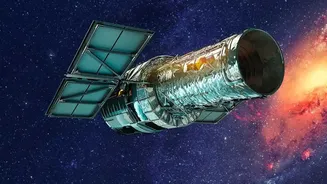
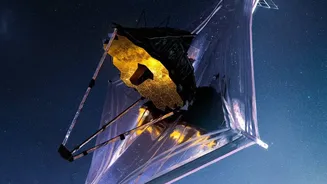
Scheduled for launch on August 30, 2026, the Nancy Grace Roman Space Telescope is NASA's next great observatory, following in the footsteps of giants like the Hubble and James Webb space telescopes. Named after Nancy Grace Roman, NASA’s first chief of astronomy
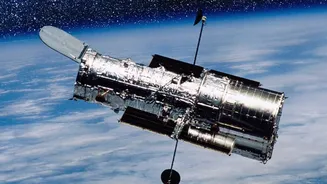
and the “Mother of Hubble,” this mission has a distinct and powerful purpose. While its primary mirror is the same size as Hubble's at 2.4 meters, its core strength lies in its incredible field of view. Its Wide Field Instrument will be able to capture an area of the sky at least 100 times larger than Hubble can in a single snapshot, all without sacrificing sharpness. This leap in efficiency will allow astronomers to survey the sky between 100 and 1,500 times faster than Hubble ever could.
Seeing the Bigger Picture
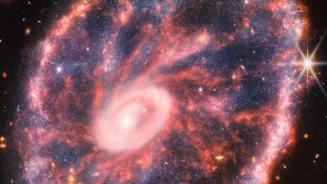
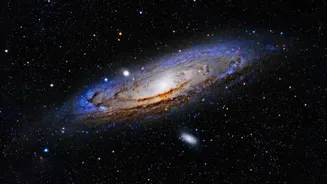
Think of Hubble as looking at the universe through a keyhole, providing stunningly deep but very narrow views. Roman, by contrast, throws open the door. This panoramic capability is the key to one of its primary missions: a massive survey expected to image over a billion galaxies. By mapping such a vast expanse of the cosmos, Roman will provide an unprecedented amount of data for scientists. This 'big data' approach to astronomy will help create wide-field maps of the universe, revealing not just individual objects but the cosmic ecosystems they inhabit. A similar deep-field observation that took Hubble years could be replicated by Roman across a much larger area, potentially revealing millions of galaxies instead of thousands.
Unraveling Cosmic Mysteries
One of the biggest questions in modern physics is the nature of dark energy and dark matter. These mysterious components are believed to make up about 95% of the universe, yet we know very little about them. Dark energy is the force thought to be causing the universe's expansion to accelerate. By observing billions of galaxies and tracking their distribution and movement over cosmic time, Roman will help scientists measure the history of the universe's expansion. This data will test theories about whether dark energy is a constant force or something that has changed over time, providing crucial clues to its fundamental nature and potentially even challenging Einstein's theory of gravity on cosmic scales.
A New Technique for Finding Planets
Beyond studying distant galaxies, Roman is also a powerful planet-hunting machine. While it will use the traditional transit method—watching for dips in starlight as a planet passes in front of its star—its main technique will be gravitational microlensing. This method detects the way a planet's gravity can bend and magnify the light from a distant, background star as it passes by. Microlensing is especially useful for finding planets that are far from their host stars, or even 'rogue' planets that drift through space without a star at all—types of worlds that other methods struggle to find. Astronomers expect Roman to find thousands of new exoplanets, creating a more complete census of the types of worlds that exist in our galaxy.
The Road to Launch
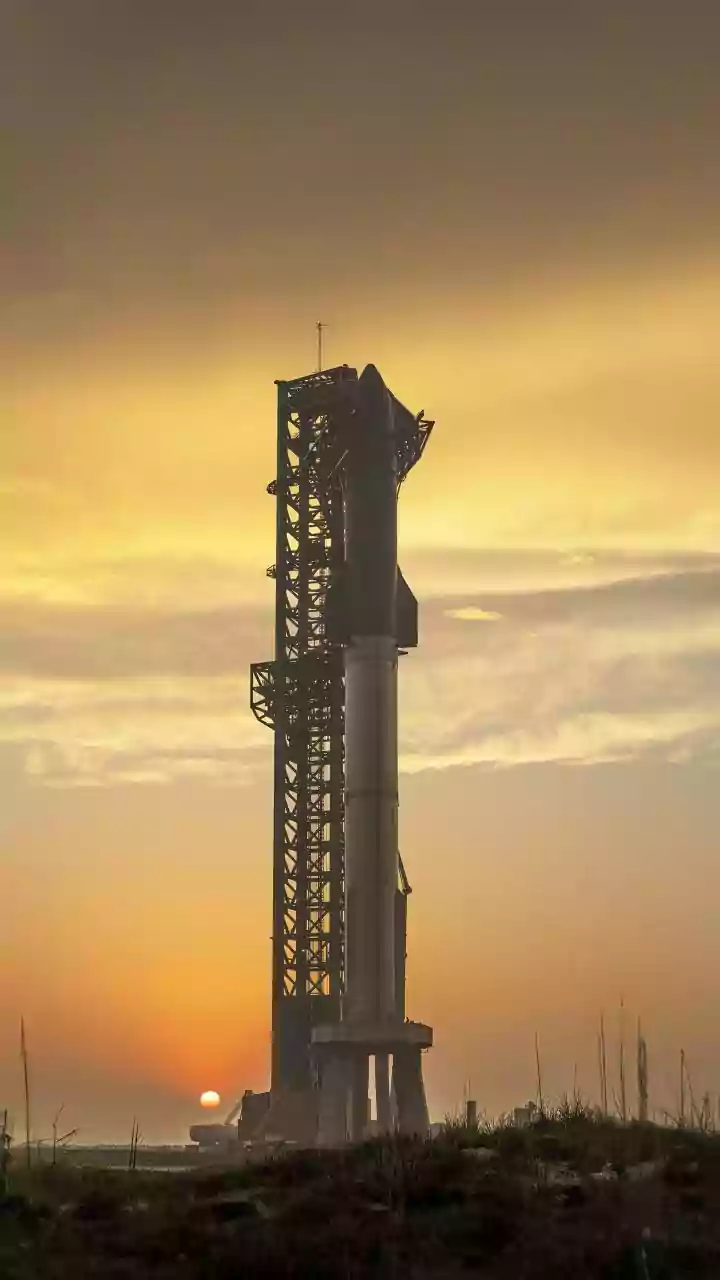
The Roman Space Telescope is set to launch aboard a SpaceX Falcon Heavy rocket from Florida's Kennedy Space Center. The mission is designed for a primary lifetime of five years, with enough propellant expected to last for at least ten. In addition to its wide-field camera, Roman carries a Coronagraph Instrument. This is a technology demonstration designed to block the overwhelming glare of a star, allowing astronomers to directly image large, Jupiter-sized exoplanets orbiting it—a capability that is 100 times more powerful than any existing instrument. This technology is a critical stepping stone for future missions that aim to one day take direct pictures of Earth-like planets.