





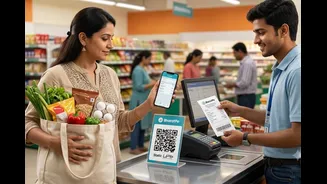

What is Merchant Discount Rate (MDR)?
Merchant Discount Rate, or MDR, is a fee that businesses pay to banks and payment service providers for processing digital transactions. You've encountered it before, even if you didn't know the name. It's the reason why, for years, some shops preferred
cash over cards. This fee is typically a percentage of the transaction value and covers the costs of the payment infrastructure, including technology, security, and inter-bank settlements. For credit cards, this fee can be between 1.5% and 2.5%, while for debit cards, it's often around 0.9%. The money collected is distributed among the various players who make the transaction happen seamlessly.
The New UPI Fee: What Exactly is Changing?
After years of a zero-fee policy to encourage adoption, the National Payments Corporation of India (NPCI) has introduced a standard MDR of 0.4% on person-to-merchant (P2M) UPI transactions above ₹2,000. This change takes effect on October 15, 2026. Importantly, this fee does not apply to consumers; you will not be charged for making a UPI payment. It also doesn't apply to person-to-person (P2P) transfers, like sending money to a friend, which remain completely free. Transactions below the ₹2,000 threshold are also exempt, meaning the vast majority of everyday small-value payments remain free for merchants.
Why Are Merchants Bearing the Cost?
The core logic is that merchants are the primary commercial beneficiaries of a robust digital payment system. Accepting instant, secure payments is a service that helps them do business. This fee is considered a cost of operations, much like electricity or rent. The government and NPCI have been clear that merchants are prohibited from passing this specific charge on to customers. The introduction of the fee is seen as a necessary step to create a sustainable financial model for the UPI ecosystem. For years, the operational costs have been borne by banks and payment companies, partly supported by government incentives. This new revenue stream is intended to fund the continued maintenance, innovation, and security of the massive UPI network.
Are There Any Exemptions?
Yes, the framework is nuanced with several important exemptions designed to protect small businesses and essential services. Small merchants who receive up to ₹1 lakh per month via UPI QR codes will continue to enjoy zero MDR on all their transactions. Furthermore, certain strategic sectors have special, lower rates. For instance, transactions over ₹2,000 for railways, fuel, insurance, and telecom services will attract a flat fee of ₹5 instead of the 0.4% rate. The standard 0.4% MDR itself is capped at ₹300 per transaction, meaning for a payment of ₹1 lakh, the fee would be ₹300, not ₹400. These measures are designed to balance sustainability with affordability.
Will This Change Affect Consumers Indirectly?
While the rules explicitly forbid merchants from charging customers an extra UPI fee, the new cost could indirectly influence prices. Industry bodies like the Retailers Association of India (RAI) have expressed concern that businesses operating on thin margins might be tempted to encourage cash payments again or subtly factor the cost into their overall pricing. However, many large retailers are expected to absorb the cost to remain competitive. For consumers, the direct experience of paying with UPI will not change — no new charges will appear on your screen. The bigger question is how the market adapts to this new operational cost for merchants in the long run.