






Putting Numbers to the Problem
A study published in 'Nature Sustainability' by Harvard researchers has quantified the startling environmental cost of the infrastructure powering AI. It found that just 403 of the largest 'hyperscale' data centers in the United States produced a combined
25.7 million metric tons of carbon dioxide in a single year (May 2024 - April 2025). To put that in perspective, it's roughly the same amount of annual emissions as the entire country of Denmark. This figure is a sharp increase, estimated to be two to three times higher than measurements from 2018, highlighting the explosive growth in energy demand driven by the AI boom.
Why Is AI So Power-Hungry?
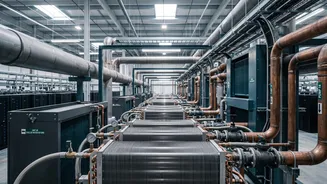
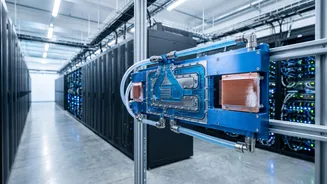
The immense energy consumption isn't just about day-to-day use; it's a two-part problem involving 'training' and 'inference'. Training is the incredibly intensive process where an AI model learns from vast datasets. It's a massive, one-off computational effort for each model version. Inference, on the other hand, is what happens every time you ask an AI to do something—generate text, create an image, or answer a query. While a single inference uses far less power than training, the sheer volume of daily interactions with popular AI services means that inference now accounts for the majority, potentially 80-90%, of AI's total energy consumption. This entire ecosystem runs on servers in data centers, which require not just power for computation, but also colossal amounts of energy for cooling systems to prevent overheating.
More Than Just Carbon
The environmental footprint extends beyond just carbon emissions. The Harvard study and related research from the UN University highlight the strain on other critical resources. Data centers are massive consumers of water, used extensively in cooling systems. This can put significant pressure on local water supplies, especially in drought-prone areas where many data centers are located. Furthermore, there is a growing land footprint associated with building these vast facilities and the power plants needed to run them. The lifecycle of the hardware itself presents another challenge, with the rapid pace of AI advancement contributing to a growing mountain of electronic waste.
Location, Location, Location
A key finding from the Harvard research is that an AI's climate impact is not fixed; it heavily depends on geography. The carbon cost is determined by the local power grid that feeds the data center. The same computational task performed in a region that relies on coal power, like Wyoming, generates significantly more carbon than if it were done in Oregon, which utilizes a higher percentage of hydropower. More than half of the power for the U.S. data centers in the study came from fossil fuels, primarily natural gas and coal. This geographic lottery means that while the benefits of AI are global, the environmental burdens—from emissions to water use—are often concentrated in specific communities.
The Path to Greener AI
The goal is not to halt AI innovation but to steer it in a more sustainable direction. The industry is exploring a multi-pronged approach known as 'green computing'. This includes developing more energy-efficient AI-specific hardware and writing more efficient algorithms that require less computational power. A major focus is shifting data centers to run on renewable energy sources like solar and wind. Another strategy involves 'carbon-aware computing', where computational tasks are dynamically shifted to data centers in locations where renewable energy is plentiful at that moment. This requires greater transparency from tech companies about their energy consumption and emissions, a key goal of the researchers behind the Harvard study.