



A Planet in Transition
The latest data, gathered as part of the long-running Outer Planet Atmospheres Legacy (OPAL) program, provides an unprecedented look at Saturn's changing seasons. For decades, astronomers have theorised that Saturn's immense rings are not just a passive
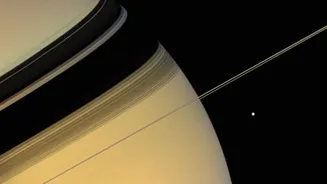
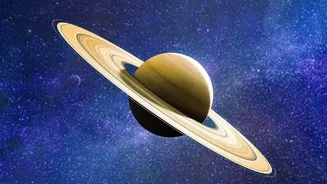
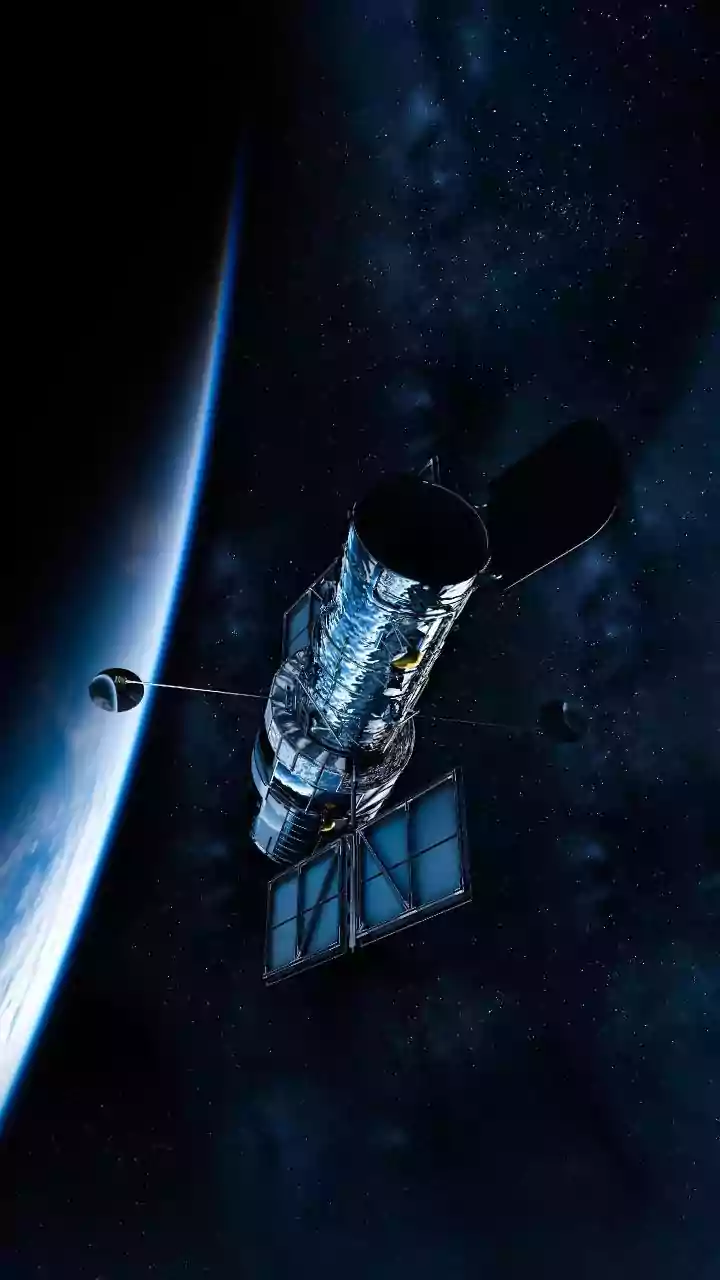
feature but an active participant in its climate. By casting vast shadows across the planet, they block sunlight and cause significant temperature changes in the atmosphere. Recent images captured by Hubble in visible and infrared light, sometimes in tandem with the James Webb Space Telescope, offer the most compelling evidence yet of this interplay. These observations, taken in late 2024, show the planet as it moves towards its 2025 equinox, a key period of seasonal transition.
The Science of Saturn's Seasons
Like Earth, Saturn has seasons because its axis is tilted, by about 27 degrees. However, a year on Saturn lasts for about 29.5 Earth years, meaning each season is over seven years long. This long, slow cycle gives scientists a unique opportunity to study gradual atmospheric changes. The OPAL program, which began annual monitoring of Saturn in 2018, aims to build a long-term record of these shifts, tracking everything from cloud colours to wind patterns. The addition of infrared observation allows researchers to peer through the hazy upper atmosphere and measure temperatures at different depths, essentially peeling back the layers of the gas giant. These new views are helping to build a three-dimensional picture of how Saturn's atmosphere works.
Shadows That Shape a World
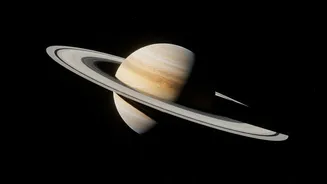
The most dramatic influence on Saturn's seasons comes from the shadows cast by its rings. During the winter solstice in one hemisphere, the rings cast a massive shadow over that part of the planet, significantly cooling it. Conversely, the summer hemisphere receives the full force of the sun's rays. As the planet moves towards an equinox, when the sun is directly over the equator, the ring shadow becomes a thin, sharp line before it begins to move into the other hemisphere. Scientists have observed rapid changes in atmospheric temperature and colour as regions emerge from the ring shadow in their springtime. For instance, between 2004 and 2009, Cassini mission data showed the northern stratosphere warming by as much as 14 degrees Fahrenheit as it moved into the light.
The Mystery of the Ring Spokes
While tracking these broad seasonal changes, Hubble has also been monitoring a more mysterious phenomenon: ghostly 'spokes' that appear and disappear on the rings themselves. First spotted by the Voyager 2 spacecraft in the 1980s, these features seem to be seasonal, becoming more frequent and darker as Saturn approaches its equinox. The leading theory suggests the spokes are tied to the planet's powerful magnetic field interacting with the solar wind. This interaction may cause fine dust or ice particles to levitate electrostatically above the main rings, creating dark, shadowy patches that can be larger than Earth in scale. As the 2025 equinox nears, scientists anticipate maximum spoke activity, offering a prime opportunity to finally solve this long-standing puzzle.
A Legacy of Observation
The combined power of Hubble and the James Webb Space Telescope is giving us the most comprehensive view of Saturn to date. These observatories complement each other perfectly: Hubble tracks the subtle colour changes in the cloud tops, while Webb's infrared vision senses the chemistry and temperature deep within the atmosphere. This ongoing monitoring is crucial, especially as Saturn's north pole, home to the famous hexagonal jet stream, is heading into a 15-year-long winter darkness, making these some of the last high-resolution views we will have for decades. The data collected provides a natural laboratory for understanding planetary atmospheres and the complex forces that shape them across our solar system.