






The New Digital Study Partner
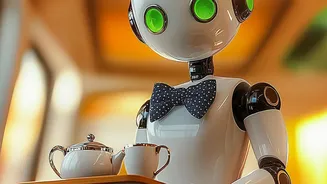
Not long ago, studying involved textbooks, highlighters, and maybe a search engine. Today, students have access to generative AI tools that can explain complex theories, draft outlines, summarize dense articles, and even check grammar. These platforms
are not just advanced search engines; they generate new content based on user prompts. For many students grappling with heavy workloads, these tools feel like a lifeline—a way to get instant tutoring, organize their thoughts for a big paper, or get feedback on their writing. The intention behind these tools was to support and enhance learning, acting as a digital assistant to reinforce classroom concepts.
Helpful Assistant or Cheating Machine?
The core of the issue lies in how these tools are used. Using an AI to generate a list of potential essay topics for brainstorming is very different from asking it to write the entire essay. The former is a legitimate use of technology to spur creativity; the latter is plagiarism. Similarly, having an AI paraphrase a dense paragraph to help you understand it is a study aid. Copying and pasting that paraphrased text into your assignment without citation crosses the line into academic misconduct. The ethical ambiguity is a real challenge for students, many of whom are unsure where acceptable assistance ends and dishonesty begins.
The Educator's Evolving Role
For educators, the rise of AI has created significant challenges. Detecting AI-generated content can be difficult, and many institutions are still catching up with clear policies. As of 2026, there is no universal rule; policies can vary dramatically between universities and even between different courses within the same institution. Some have prohibited AI use entirely, while others allow it with proper disclosure. Many educators are shifting their focus from policing AI use to teaching students how to use these tools ethically and responsibly. This involves designing assignments that require personal experience, critical thinking, and in-class work that AI cannot easily replicate.
Intent and Ownership Are Key
Ultimately, the distinction between helping and cheating boils down to two things: intent and intellectual ownership. When a student's intention is to learn and master the material, AI can be a powerful partner. When the intent is to avoid the work and deceive, it's cheating. Students must take responsibility for the final work they submit, ensuring they have verified any AI-generated information and integrated it into their own genuine understanding. This is why many universities now require students to disclose how they've used AI, promoting transparency and holding students accountable for their learning process.
Redefining Learning for the AI Age
The conversation is bigger than just cheating. AI is forcing a fundamental rethink of what we value in education. In a world where information is instantly accessible, the emphasis is shifting from memorization to skills like critical thinking, creative problem-solving, and the ability to ask the right questions. Some argue this shift leads to a model of "distributed intelligence," where human judgment is augmented by technological tools—a skill highly valued in the modern workplace. The challenge for schools is no longer just to prevent cheating but to prepare students for a future where collaborating with AI is a core competency. The goal is to use AI to deepen learning, not to shortcut it.