



The Power of Negative Space
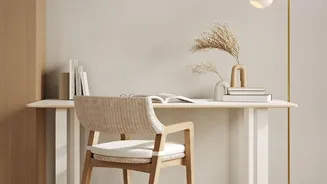
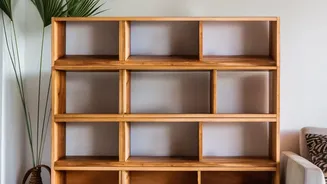
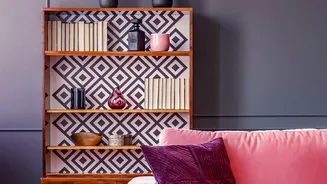
In the world of design, what you don't see is just as important as what you do. This is the principle of negative space—the unoccupied area around an object that helps it stand out. When a bookshelf is crammed from end to end, nothing gets the spotlight.
By intentionally leaving shelves partially empty, you create visual 'breathing room'. This pause allows the eye to rest and appreciate the items you've chosen to display, making each one feel more significant. An emptier shelf makes a room feel lighter, more open, and exudes a sense of calm confidence.
From Library to Gallery
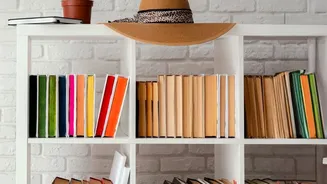
The first step in adopting this minimalist approach is to shift your mindset. A bookshelf is not just functional storage; it is a composition, a small personal gallery. Before you begin, take everything off the shelves. This gives you a blank canvas and forces you to be intentional about what returns. The goal isn't to get rid of your books, but to curate them. Select the ones that are most meaningful to you, have beautiful covers, or fit a particular colour story. Many designers suggest that a shelf that is about 70% full looks curated, while a shelf that is 90% full simply looks like storage. The process is about choosing what deserves to be seen.
Achieving Visual Balance
Once you’ve chosen your items, arranging them is key. Avoid lining everything up in rigid rows. Create visual interest by varying the orientation and height of your books. Stand some vertically and stack others horizontally. These horizontal stacks can act as a pedestal for a decorative object. A popular interior design guideline is the 'triangle principle', where you arrange objects of varying heights to form a loose triangle, guiding the eye naturally across the shelf. Another useful ratio is the 60/30/10 rule: aim for about 60% books, 30% decorative objects, and 10% completely empty space to keep the display from feeling crowded.
It's Not Just About Books
To truly elevate your shelves, incorporate items other than books. This adds personality and texture. Think about objects with different shapes and materials—a sculptural ceramic vase, a small plant for an organic touch, a framed photo, or a metallic accessory. In Indian homes, this is a wonderful opportunity to display traditional artefacts, handcrafted items, or meaningful souvenirs that tell a personal story. However, the 'less is more' rule still applies; choose a few high-quality, impactful pieces rather than filling the space with numerous small trinkets. Limiting your decor to a cohesive colour palette of two or three tones will also create a sense of harmony.
Start Your Shelf Edit
Ready to try it? Start small. You don't have to tackle your entire library at once. Begin with a single shelf. Clear it, clean it, and then ‘shop’ from your own home for items to display. Group items into 'yes' and 'no' piles based on a simple aesthetic you're aiming for, such as a neutral colour scheme. Place your largest 'anchor' piece first, then add books and smaller objects around it. Remember to step back and assess as you go. If a shelf feels too busy, the solution is often to subtract an item rather than add another. The goal is to create a space that feels personal, organised, and serene, not stark or empty.