






A Glimpse into a Bygone Era
The Chettinad region, spread across the Sivaganga and Pudukottai districts, is the homeland of the Nattukottai Chettiars, a prosperous community of merchants and bankers. From the mid-19th to the early 20th century, their travels across Southeast Asia
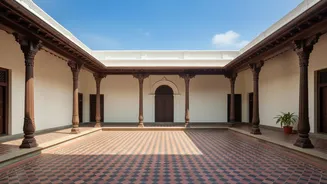
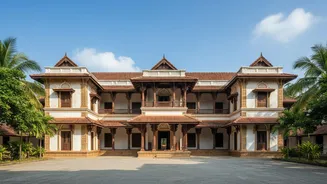
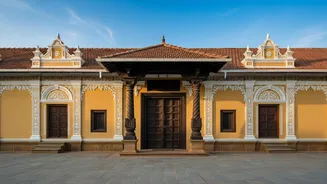
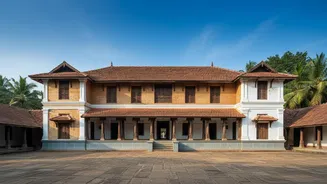
brought immense wealth, which they poured into building thousands of palatial homes. These were not mere houses but sprawling mansions, or 'periya veedu' (big houses), designed to accommodate large joint families, sometimes with as many as 50 to 80 rooms. The Chettiars imported materials from all over the world—Burmese teak, Italian marble, Belgian glass, and English tiles—blending them with traditional Tamil architectural styles to create a unique and spectacular fusion.
Architecture as Sustainable Design
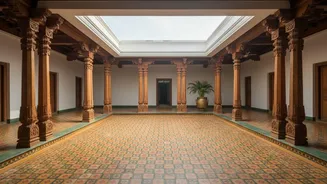
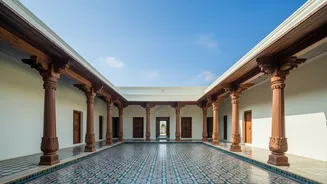
Long before 'eco-friendly' became a buzzword, Chettinad architecture had sustainability built into its very core. The design of these mansions is a masterclass in climate-responsive construction. A key feature is the series of open-air courtyards that act as the lungs of the house, allowing for natural light and cross-ventilation, which passively cools the interiors in the hot, semi-arid climate. The thick walls, often coated in a special lime and egg-white plaster, reflect heat and maintain a cool temperature indoors. Furthermore, the distinctive sloping roofs were ingeniously designed for rainwater harvesting, channelling monsoon rains into village ponds and wells, showcasing a remarkable vision for water management.
Restoration with a Modern Conscience
As fortunes waned in the mid-20th century, many of these magnificent structures fell into disrepair. Today, a wave of thoughtful restoration is bringing them back to life. Pioneering hoteliers and conservationists are transforming these mansions into heritage hotels, with a strong focus on preservation. Properties like Visalam, Saratha Vilas, and The Bangala are leading examples where restoration is done with immense respect for the original structure. They retain original elements like the famous, locally handmade Athangudi tiles and intricately carved wooden pillars. Modern eco-friendly practices are woven in seamlessly, including serving meals on traditional banana leaves, sourcing produce from local farms, and supporting community-driven initiatives that help preserve the region's unique crafts.
Beyond the Walls: A Cultural Immersion
Staying in a restored Chettinad mansion is more than just a luxurious holiday; it is a deep dive into the region's living culture. For the culturally mindful guest, the experience extends far beyond the architectural grandeur. Many of these heritage hotels offer curated experiences that connect guests with the local community. You can participate in cooking classes to learn the secrets of the fiery and aromatic Chettinad cuisine, famous for its freshly ground spices. You can also take guided walks through the villages, visit the workshops of Athangudi tile-makers, or watch master weavers create the iconic Chettinad cotton saris. These interactions provide an authentic glimpse into a way of life that has been preserved for generations.