



A Cosmic Downpour From Outer Space
First, let’s clarify what we’re even looking for. Cosmic rays are not actually 'rays' but high-energy particles—mostly protons and atomic nuclei—that travel through space at nearly the speed of light. They are shot out from some of the universe’s most extreme
environments, like exploding stars (supernovae) or the supermassive black holes at the centers of galaxies. While a constant stream of lower-energy cosmic rays hits our planet, scientists are most interested in the ultra-high-energy ones, which are exceedingly rare. When one of these powerful particles smashes into the upper atmosphere, it creates a spectacular, fleeting event: a cosmic ray shower. This collision triggers a cascade of secondary particles that rain down through the atmosphere, sometimes covering an area of several square kilometers by the time they reach the ground. This shower is our only way to detect the original, powerful particle that started it all.
The Ultimate Needle in a Haystack
Detecting these showers presents a monumental challenge. Firstly, they are incredibly fast, lasting only for microseconds. A human observer could never hope to spot one. Secondly, the most energetic and scientifically interesting cosmic rays are bafflingly rare. An event of the highest energy might only strike a given square kilometer of the atmosphere once per century. To have any chance of seeing one, you need to watch a massive patch of the sky, all the time, without blinking. Observatories designed for this purpose, like the Pierre Auger Observatory in Argentina, are spread across thousands of square kilometers. Manually operating telescopes to monitor such a vast area for an event that might not even happen would be impossible. It’s a task far beyond human capability, demanding a solution that is both tireless and inhumanly fast.
Enter the Automated Sky Watchers
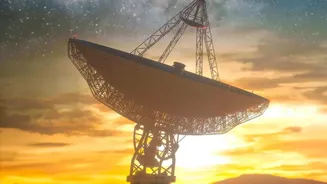
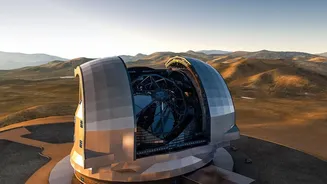
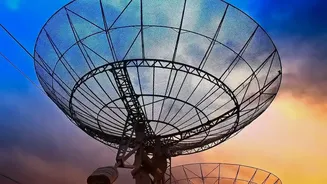
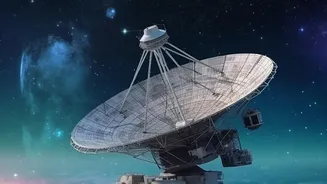
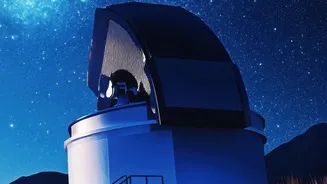
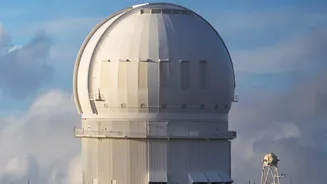
This is where automated telescope scanning becomes essential. Instead of having astronomers glued to eyepieces, modern deep space observatories are robotic. They operate autonomously, especially at night, constantly scanning the skies for any sign of a transient event. These systems use two main methods. Some employ fluorescence telescopes, which look for the faint ultraviolet light that the shower particles produce when they excite nitrogen molecules in the air. Others use surface detectors—arrays of tanks filled with pure water—that register a signal when shower particles pass through them. Both methods require a system that can operate without direct human control, night after night, waiting patiently for a brief flash or a specific pattern of detector hits that signals a cosmic ray has arrived. This is a job built for machines.
How the Algorithms See the Invisible
The real magic isn't just the robotic hardware; it's the software running it. Automated scanning algorithms are the brains of the operation, tasked with one of the biggest data challenges in science. Modern observatories generate terabytes of information every single night. An algorithm’s first job is to filter this deluge of data in real time, discarding noise from satellites, airplanes, city lights, and instrument glitches. Its second job is pattern recognition. The software is trained to know the precise signature of a cosmic ray shower—the specific shape, duration, and energy of the light it produces, or the unique pattern of signals across a detector array. When the algorithm spots a match, it instantly logs the event, records all relevant data, and can even alert other instruments to cross-reference the finding. It does in milliseconds what would take a team of humans years to accomplish.
Unlocking Secrets of the Universe
So why go to all this trouble? By successfully tracking cosmic ray showers, scientists can work backward to calculate the energy and trajectory of the original particle. This information is a crucial clue to its origin. Because these particles are so powerful, they are believed to come from the most energetic phenomena in the cosmos, places where matter is accelerated to speeds we can't replicate on Earth. Each confirmed detection helps astronomers pinpoint these mysterious cosmic accelerators. Studying them provides a unique window into the physics of black holes, galaxy mergers, and other violent events that shape the universe. Without automated algorithms processing the data, we would remain blind to these powerful messages from the stars, and the origin of the most energetic particles in the universe would remain a complete mystery.