






The Old Model: An ISRO Monopoly
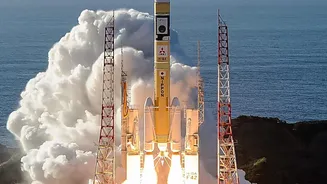
Historically, the Indian Space Research Organisation (ISRO) was the sole player in India's space endeavours. From designing the launch vehicles like the PSLV and GSLV to manufacturing components and conducting launches, ISRO did it all. Private companies
were involved, but primarily as suppliers and vendors, manufacturing components based on ISRO's designs. They were part of the supply chain, not the creators of end-to-end launch systems. This state-led model took India to the Moon and Mars, but the new global space economy—projected to be worth trillions—demands more agility, frequency, and commercial focus.
The Game Changer: Indian Space Policy 2023
The biggest change comes from the Indian Space Policy 2023, which formally institutionalises private sector participation across the entire value chain. It clearly delineates the roles of different bodies to prevent conflicts of interest and create a level playing field. The policy allows Non-Governmental Entities (NGEs) to undertake end-to-end space activities, including building and launching their own rockets, owning satellites, and even engaging in commercial recovery of space resources. This isn't just about outsourcing work; it's about creating a parallel, private ecosystem for space activities.
New Referees for a New Game
To manage this new era, two key bodies have been established. The Indian National Space Promotion and Authorisation Centre (IN-SPACe) acts as a single-window agency to promote, authorise, and supervise all space activities by both government and private entities. Think of it as the regulator and facilitator, ensuring everyone plays by the rules and has access to ISRO's facilities. Meanwhile, NewSpace India Limited (NSIL), ISRO's commercial arm established in 2019, is tasked with commercialising space technologies and managing demand-driven satellite missions, essentially acting as a commercial interface for ISRO's mature technologies.
Meet the Trailblazers: Skyroot and Agnikul
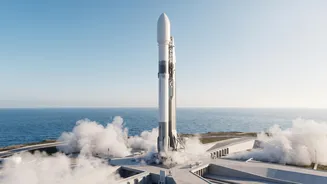
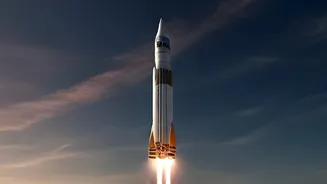
This policy shift is already bearing fruit. Hyderabad-based Skyroot Aerospace made history in July 2026 by launching Vikram-1, India's first privately developed orbital rocket, making India the third country after the US and China with a private orbital launch capability. The company had previously launched a sub-orbital rocket, Vikram-S, in 2022. Another key player is Chennai's Agnikul Cosmos, which successfully test-flew its semi-cryogenic, 3D-printed engine rocket, Agnibaan, from its own private launchpad at Sriharikota in May 2024. These startups, founded by former ISRO engineers and young entrepreneurs, are at the forefront of India's 'NewSpace' revolution.
What This Means for ISRO and India
This privatisation frees ISRO from the routine tasks of manufacturing operational launch vehicles like the PSLV. The space agency can now focus its immense talent and resources on what it does best: cutting-edge research and development, deep-space exploration missions like Chandrayaan and Gaganyaan, and national security projects. For India, it means a faster launch cadence, more innovation driven by competition, and a larger slice of the global space economy, which is currently valued at over $8 billion and projected to grow five-fold to $40-45 billion by 2030. A vibrant private sector will create high-tech jobs and a robust domestic space industry.