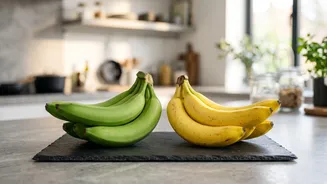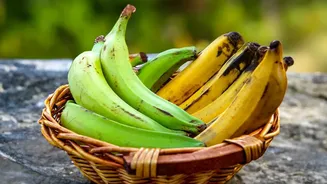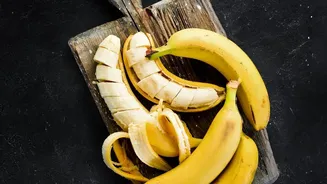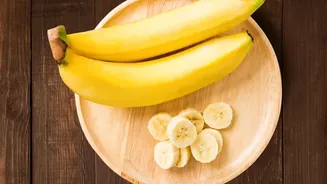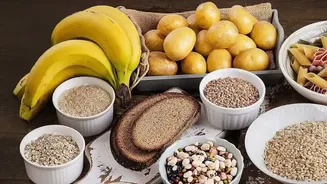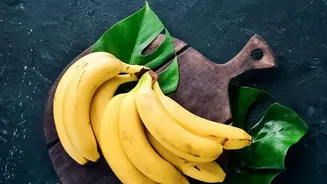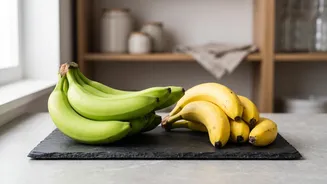





It’s a universal kitchen dilemma: do you grab the firm, greenish banana or the soft, yellow one with a few brown spots? This choice is more than just preference—it’s a fascinating chemical journey from starchy to sweet, all in one peel.
The Green Banana: A Starch Powerhouse
A raw or green
banana has a distinctly different profile from its ripe counterpart. It’s firm, has a slightly waxy texture, and tastes more earthy than sweet. This is because a green banana is packed with starch, specifically a type called resistant starch. Up to 80% of a green banana's composition is complex starch, which our bodies don't easily break down. Much like a raw potato, these starches don't taste sweet on the tongue. This high concentration of resistant starch is also why green bananas have a lower glycemic index, meaning they release energy slowly and keep you feeling full longer.
The Ripening Signal: Enter Ethylene Gas
So, what triggers the magical transformation from starchy to sweet? The process is initiated by a natural plant hormone called ethylene gas. Though produced by most fruits, bananas are prolific ethylene producers. This colourless, odourless gas acts as a chemical signal, telling the fruit it’s time to mature. It kick-starts a cascade of enzymatic reactions that change everything from the banana's colour and texture to its aroma and, most importantly, its taste. Commercial growers even use ethylene to control ripening, ensuring bananas arrive at the store at the right stage of maturity.
The Great Sugar Conversion
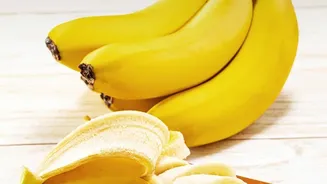
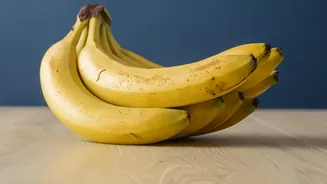
Once ethylene gives the signal, enzymes within the banana get to work. The most significant change is the breakdown of those long, complex starch chains into simple sugars. Enzymes like amylase act like chemical scissors, snipping the starches into sucrose, glucose, and fructose. As the banana ripens, its starch content plummets while its sugar content soars. A fully ripe, yellow banana may contain only 1% starch, with the rest converted into sugars, making it taste incredibly sweet. This is why a yellow banana provides a much quicker energy boost compared to a green one.
More Than Just Sweetness
The ripening process affects more than just the sugar content. The same enzymes that break down starches also go to work on pectin, the compound that keeps the banana's cell walls firm and structured. As pectin breaks down, the banana becomes softer and mushier. Simultaneously, the green chlorophyll in the peel degrades, revealing the yellow pigments underneath. The fruit also begins to produce aromatic compounds, creating that classic banana smell and flavour that is absent in the green stage. When the banana develops brown spots, it indicates that even more starch has converted to sugar and antioxidant levels have increased.
Which Banana Is Healthier?
The 'healthiest' banana really depends on your goals. Green bananas, with their high resistant starch content, are excellent for gut health. This starch acts as a prebiotic, feeding the good bacteria in your colon. They also have a lower glycemic index (around 30–42), making them a better choice for blood sugar management. Ripe, yellow bananas are easier to digest for most people and their simple sugars provide a quick source of energy, making them an ideal pre–workout snack. Their glycemic index is higher, typically ranging from 51 to 62. As they become overripe with brown spots, the sugar content is at its peak, making them perfect for baking into banana bread where their sweetness can shine.