




First, What Is Your Core?
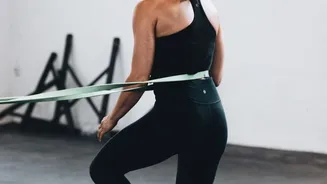
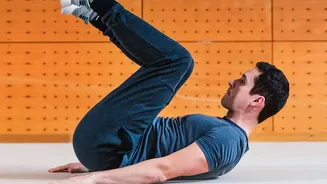
Before we compare, let's clarify what 'the core' actually is. It's much more than just the 'six-pack' muscles (rectus abdominis). Your core is a 3D cylinder of muscles that includes your deep abdominal walls (transverse abdominis), the muscles along your sides
(obliques), your lower back (erector spinae), your diaphragm, and even your glutes and pelvic floor. A strong core stabilizes your entire body, transfers power between your upper and lower body, and protects your spine from injury during all kinds of movements. Therefore, a good core workout should challenge this entire system, not just the muscles you see in the mirror.
Rowing: The Powerhouse Stabilizer
Rowing is renowned as a full-body workout, engaging up to 86% of your muscles in a single, fluid motion. The core is central to this effort, acting as the critical link that transfers the immense power generated by your legs to the handle. Throughout the four phases of the rowing stroke—the catch, drive, finish, and recovery—your core muscles are in a constant state of engagement. During the powerful 'drive' phase, your abdominals and lower back contract to keep your torso solid and prevent energy leaks. In the 'recovery', they work to control your forward movement, ensuring a smooth return to the starting position. This repetitive, controlled motion makes rowing fantastic for building foundational core strength and endurance. The work is primarily focused on stabilization in one plane of motion: forward and back.
Dancing: The Dynamic & Reactive Core
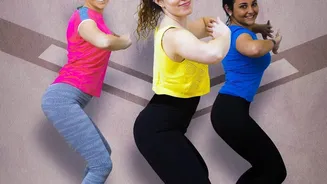
Dancing engages the core in a completely different, yet equally demanding, way. While a rower follows a set path, a dancer’s body moves in all directions—twisting, turning, leaping, and balancing. This requires the core to be not just strong, but incredibly intelligent and reactive. Dance training enhances core stability, which is essential for everything from maintaining posture in ballet to the complex isolations of hip-hop. Movements in dance often demand isometric contractions, where the core holds the body stable during a balance, as well as rapid concentric (shortening) and eccentric (lengthening) contractions during turns and jumps. Different styles place unique demands on the core; for example, ballroom dancing requires immense postural control, while contemporary dance involves fluid spinal movements. This multi-directional work builds a core that is adept at managing unpredictable forces and maintaining balance.
The Verdict: Power vs. Agility
So, which is better? The answer depends entirely on your goals. Rowing is a champion for building raw, linear strength and endurance in the core. The consistent, high-load movement is a fantastic way to develop the deep stabilizing muscles that support posture and power generation in a controlled environment. If your goal is to build a powerful foundation and get a major cardiovascular workout simultaneously, rowing is an exceptional choice.Dancing, on the other hand, excels at developing a dynamically stable and agile core. It trains your muscles to react, stabilize, and produce force through multiple planes of motion. This translates into improved coordination, balance, and the ability to control your body with grace and precision. If your goal is functional fitness that prepares you for the varied movements of daily life or other sports, dancing offers a unique and effective challenge.