




A Royal Legacy Baked in Clay
The story of Bishnupur's terracotta art is inseparable from its patrons, the Malla dynasty, who ruled the region known as Mallabhum for nearly a thousand years. During their zenith in the 17th and 18th centuries, the Malla kings, devout Vaishnavites,
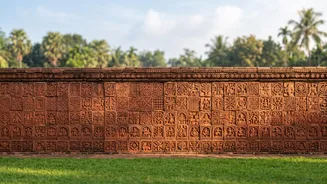
embarked on a temple-building spree. Faced with a scarcity of stone in the alluvial plains of Bengal, they turned to the humble, locally abundant laterite clay. This practical choice blossomed into a unique and spectacular architectural tradition. Artisans transformed simple burnt clay bricks into a canvas, covering temple facades with thousands of terracotta plaques that have withstood centuries of sun and rain. This decision not only defined the region's aesthetic but also created a distinct school of temple architecture that remains a testament to their ingenuity.
Temples That Tell Timeless Stories
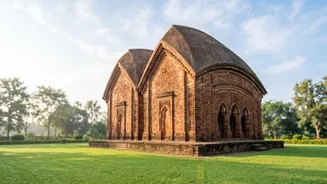
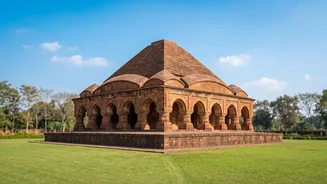
Each temple in Bishnupur is a narrative masterpiece, with walls that serve as storybooks for the masses. The Jor-Bangla Temple, also known as Keshta Rai, is a prime example. Built in 1655 by King Raghunath Singha, its unique structure mimics two traditional Bengali huts joined together, topped by a single tower. Its panels vividly narrate scenes from the Ramayana, the Mahabharata, and the life of Krishna, known as the Krishna Leela. Similarly, the Madanmohan Temple, built in 1694, is an 'Eka-Ratna' or single-spired temple, celebrated for the dynamic battle scenes from the Mahabharata carved above its main arches. The Shyam Rai Temple is another marvel, a 'Pancha-Ratna' or five-spired structure, with terracotta art on all its walls detailing the life of Lord Krishna.
An Open-Air Gallery of Life and Myth
What draws enthusiasts is the sheer richness and detail of the carvings. The terracotta panels are a window into the past, depicting more than just mythology. While tales from the great epics and Puranas form the core, the artists also captured scenes from contemporary 17th-century life. You can find panels showing European traders, soldiers on horseback, women in traditional attire, and musicians playing instruments. There are detailed portrayals of hunting expeditions, fishermen casting their nets, and farmers in their fields. This blend of the divine and the everyday makes walking through Bishnupur feel like exploring a living history book. The carvings provide invaluable insight into the society, culture, and beliefs of the Malla period, making it a treasure trove for historians and art lovers alike.
The Enduring Craft and Cultural Hub
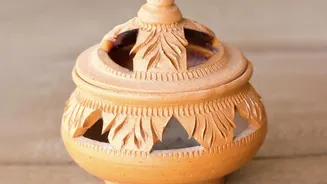
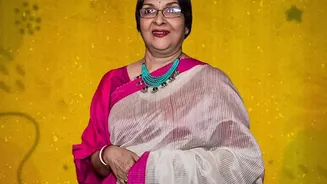
Beyond the temples, Bishnupur's identity is steeped in art. The town is famous for the Baluchari saree, whose designs are often inspired by the temple terracotta motifs. It is also home to the Bishnupur Gharana, a school of Dhrupad classical music that flourished under royal patronage. This cultural ecosystem is what makes the town more than just a historical site. The craft of terracotta continues to thrive, with local artisans creating figurines, most famously the long-eared Bankura horse, and decorative panels that tourists carry home as mementos. For visitors from Kolkata, a trip to Bishnupur is an easily accessible cultural immersion. A train journey of about three to four hours or a drive of similar duration connects the bustling metropolis to this serene town of temples.