






The Unseen Deluge
From newsrooms verifying citizen journalism to courtrooms examining digital files, the demand for authenticating visual evidence has exploded. The rise of generative AI, which can create photorealistic but entirely fabricated images, has added a complex
new layer to this challenge. Human reviewers, the traditional gatekeepers of authenticity, are facing a deluge of content that is impossible to manually vet at scale. The pressure is immense, as a single piece of manipulated media can fuel misinformation, sway legal outcomes, or damage reputations. This digital reality has created an urgent need for tools that can help separate the real from the synthetic.
Enter the Digital Detective
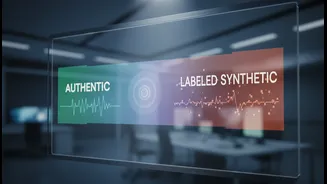
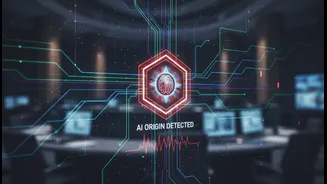
AI image detectors work by scanning for the subtle, often invisible fingerprints left behind during the creation process. These tools don't 'see' like humans do. Instead, they analyze pixel patterns, noise, compression artifacts, and other digital data to calculate the probability that an image was generated by a machine. Some advanced systems are even trained to recognize the unique signatures of specific AI models like Midjourney or DALL-E. The goal is to provide a rapid, scalable first pass, flagging images that warrant a closer look from a human expert. While some detectors report accuracy rates as high as 99%, these figures come with significant caveats.
The Pitfalls of Automated Judgment
Despite their power, AI detectors are far from infallible. They are prone to both false positives (flagging a real photo as AI) and false negatives (missing a fake). Even a simple act like taking a screenshot, cropping, or compressing an image can destroy the digital artifacts the detector relies on, causing its accuracy to plummet. A recent Reuters analysis found that Meta's new detection tool failed to identify over half of its own AI-generated images after they were cropped. Furthermore, these systems are locked in a constant arms race; as AI image generators improve, detectors must be continually retrained to keep up. Relying on them as the sole arbiter of truth is a risky proposition.
Redefining the Human Reviewer
The most significant change brought by AI detectors will not be the replacement of human experts, but the evolution of their role. The future standard is the 'human-in-the-loop' model, where technology and human judgment work in partnership. In this workflow, the AI performs the heavy lifting, sifting through thousands of images to flag suspicious content. The human reviewer then steps in to handle the nuanced and complex cases that require context, ethical consideration, and domain-specific knowledge. Their job will shift from exhaustive manual review to higher-level analysis, focusing on interpreting the AI's findings, investigating edge cases, and making the final call on high-stakes decisions.
Toward a New Gold Standard
The integration of AI necessitates the creation of new, robust standards for evidence verification. In a legal context, this might mean developing protocols for how AI-assisted analysis is presented and challenged in court. For journalism, it involves establishing clear policies on when and how these tools are used, and how their findings are reported to the public. Organizations are already working on technical standards for verifying provenance—the origin and history of a digital file—to create a more trustworthy chain of custody. Ultimately, the detector's output isn't a final answer; it's another piece of evidence that must be weighed.