


Cosmic Beacons at the Dawn of Time
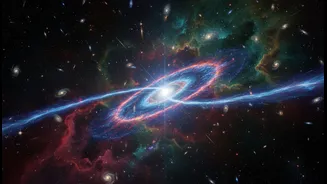
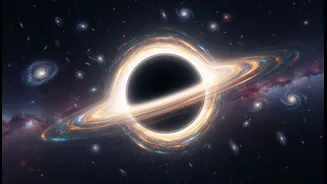
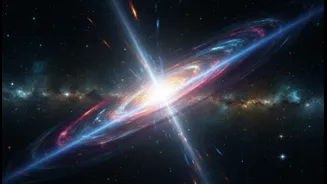
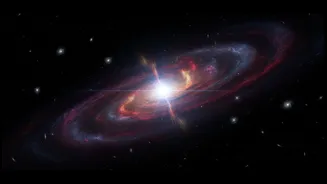
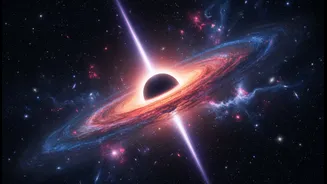
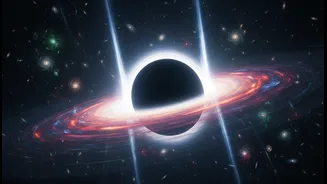
A quasar is the intensely bright core of a distant galaxy, powered by a supermassive black hole actively feeding on gas and dust. This process releases enormous amounts of energy, creating a luminosity that can outshine all the stars in its host galaxy combined,
making them visible across billions of light-years. Because of the time it takes their light to reach us, observing the most distant quasars is like looking back in time to the universe's infancy, just a few hundred million years after the Big Bang. This makes them invaluable tools for understanding how the first massive structures in the cosmos formed and grew.
The 'Exceptional' Problem
For decades, astronomers faced a frustrating bias. The only ancient quasars they could find were the brightest and most extreme examples. These were the low-hanging fruit, the outliers that were easiest to detect across cosmic distances. This created a fundamental problem: scientists had no way of knowing if these discoveries were representative of all early quasars or if they were truly exceptional. It's like trying to understand an entire city's population by only ever meeting its most famous celebrities. Without a broader survey, it was impossible to know what a 'typical' ancient quasar even looked like.
Enter Euclid: The Game-Changer
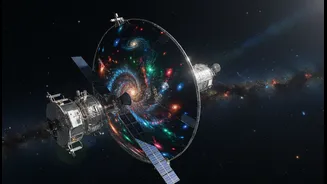
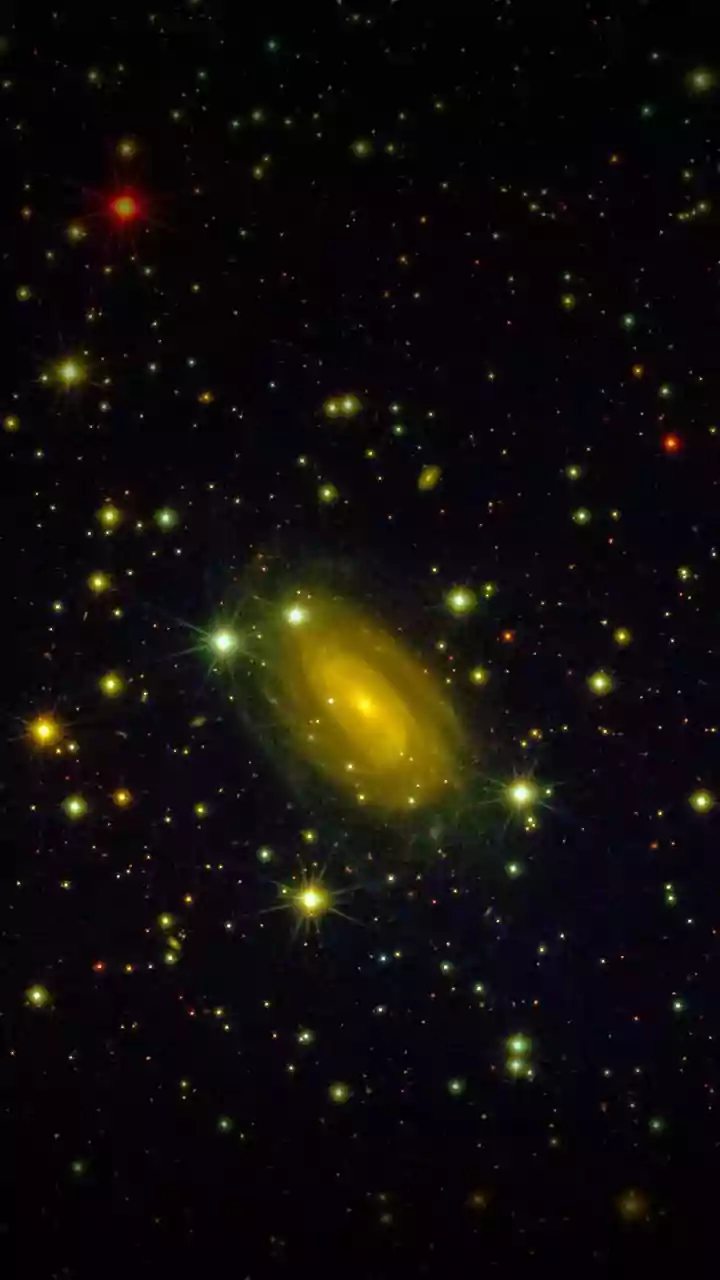
The European Space Agency's Euclid telescope, launched in 2023, is fundamentally changing this equation. Its primary mission is to map the 'dark universe' to understand dark matter and dark energy, but its unique capabilities make it a perfect quasar-hunting machine. Euclid combines a wide field of view, allowing it to survey a huge portion of the sky, with the sensitivity to detect objects 10 to 100 times fainter than previous surveys could find. It's like switching from a flashlight to a floodlight; suddenly, astronomers can see not just the brightest beacons, but a whole population of more ordinary, fainter quasars.
A New Cosmic Census
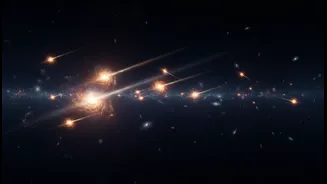
In just its first year and a half of operation, Euclid has already made dramatic progress, discovering 31 new quasars from the universe's first billion years and more than doubling the number known in this early epoch. Two of these are the most distant ever observed, seen as they were when the universe was only 670 million years old. Crucially, many of these newfound quasars are not the exceptionally bright outliers of the past. They are the 'normal' population that astronomers have been searching for, finally allowing for a true census. As one scientist noted, for the first time they can study the typical early-universe quasar, not just the exceptions.
Answering the Big Questions
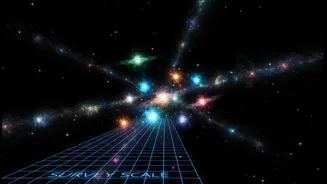
By building this large, representative sample, Euclid's survey scale provides the statistical power to finally determine if remote quasars are a different breed. Scientists can now compare the properties of hundreds of quasars from the early universe to their modern counterparts. This will help solve one of the biggest puzzles in astrophysics: how supermassive black holes grew to billions of times the mass of the sun so quickly after the Big Bang. The answer has profound implications for our theories of galaxy formation and the evolution of cosmic structures. If the early quasars are indeed just like nearby ones, it suggests the physics governing their growth has been consistent over cosmic time. If they are different, it points to unique conditions in the early universe that we are only just beginning to uncover.