




The New Space Race is Commercial
For decades, space exploration was the exclusive domain of national governments with astronomical budgets. Today, the landscape is radically different. A new, commercially driven space race is underway, and Indian entrepreneurs are emerging as key players.
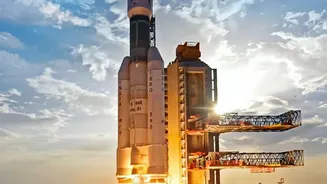
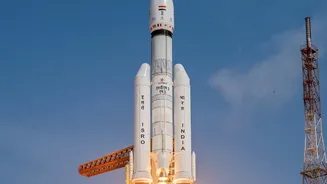
Following the global success of ISRO's cost-effective missions, the private sector is now stepping up to democratize access to the final frontier. The goal is no longer just national pride, but building a sustainable, profitable space economy. The Indian government is actively fostering this shift, with the number of domestic space startups soaring from a single digit in 2014 to over 400 by early 2026. This boom is fueled by a strategic decision for ISRO to focus on large-scale research and exploration, leaving the manufacturing of launch vehicles and satellites to private enterprise.
Pioneers of the Private Moonshot
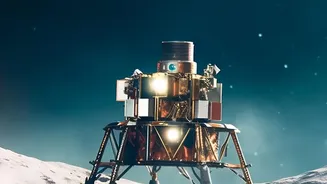
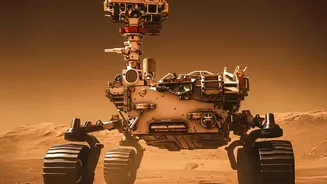
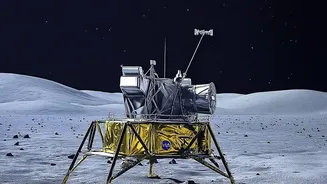
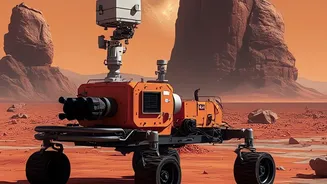
At the forefront of this private push is Bengaluru-based TeamIndus, incorporated as Axiom Research Labs. The company was born from the ambition to compete in the Google Lunar XPRIZE, a global challenge to land a privately funded rover on the Moon. Though the competition ended in 2018 without a winner, TeamIndus continued its mission, having already developed significant technology and expertise. Their rover, named ECA (an acronym for 'Ek Choti Si Asha' or 'A Small Hope'), was designed to be a lightweight and agile explorer. Comprising a team of young engineers and veteran ISRO scientists, the startup epitomized the new wave of Indian space innovation, attracting investments from prominent figures like Nandan Nilekani and Ratan Tata.
Cracking the Code of Frugal Innovation
The key to making commercial lunar missions viable is cost. Indian startups are building on the nation's reputation for 'frugal engineering' to develop what can be called 'budget rovers'. This is not about cutting corners, but innovating at every step. These companies reduce expenses by using modular designs, leveraging advances in 3D printing for components, and incorporating commercially available, off-the-shelf electronics where possible, rather than building everything from scratch. For instance, during its development phase, TeamIndus ingeniously sourced tonnes of dust from local stone quarries to simulate the lunar surface for rover testing, a prime example of resourceful problem-solving. This approach significantly lowers the financial barrier to entry, which traditionally runs into hundreds of millions, if not billions, of dollars for government missions.
More Than a Flag: The Lunar Payload Market
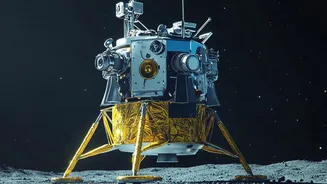
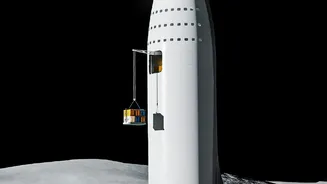
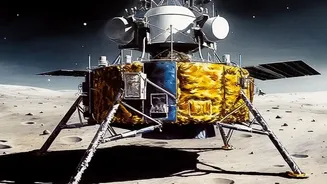
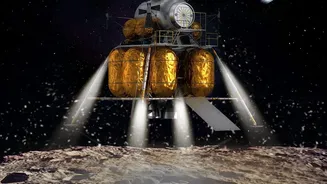
These budget rovers are not being built for exploration alone; they are essentially lunar delivery trucks. The business model revolves around selling space on the rover and its lander to customers who want to conduct experiments or test technology on the Moon. This could include universities, research institutions, and even other countries. A rover might carry instruments to analyse lunar soil, prospect for water ice, or test the durability of new materials in the harsh lunar environment. This 'Mobility-as-a-Service' model mirrors NASA’s successful Commercial Lunar Payload Services (CLPS) program, which has created a thriving market for companies like Astrobotic and Intuitive Machines in the US. The price for sending a payload to the moon commercially can be around $300,000 per kilogram, and by driving costs down, Indian startups aim to capture a significant share of this emerging market.
The Road Ahead: Challenges and Opportunities
The path to the moon is fraught with challenges. Startups face immense technical hurdles, the constant need for capital investment, and the complex process of securing a reliable launch contract. Space remains an unforgiving environment, and the risk of mission failure is always present. However, the ecosystem in India has never been more supportive. With the government's clear vision to land an Indian on the Moon by 2040 and establish a space station by 2035, the strategic importance of a robust private space industry is clear. As ISRO opens its doors for collaboration and mentorship, these startups are not just chasing a dream; they are building the foundational infrastructure for India’s future in deep space.