
A Hostile Lunar Landscape
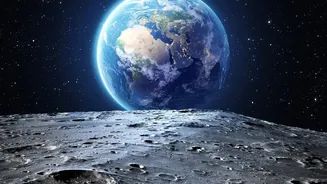
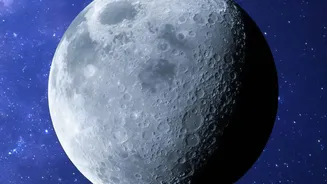
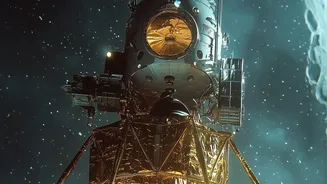
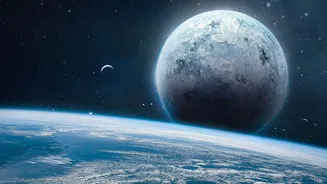
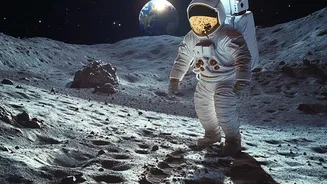
The Moon is, by any measure, an inhospitable world. It lacks a protective atmosphere, meaning its surface is bombarded by intense ultraviolet (UV) radiation from the sun and cosmic rays from deep space. Temperatures swing wildly, reaching a scorching
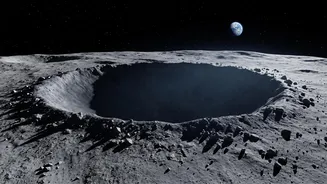
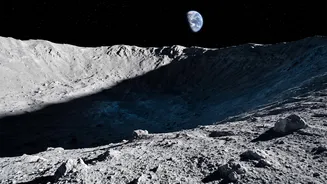
127°C in daylight and plunging to brutally cold lows in the dark. Past missions, like the Apollo landings, explored the equatorial regions where these conditions are at their most extreme. However, the focus of upcoming Artemis missions is the lunar south pole. This region is dramatically different. Due to the Moon's slight axial tilt, the sun hangs perpetually low on the horizon. This creates vast, permanently shadowed regions (PSRs) inside deep craters—areas that have not seen direct sunlight in billions of years. These PSRs are incredibly cold and shielded from direct radiation, making them prime locations where resources like water ice might be preserved. They also present a potential refuge for any microbial life that might hitch a ride from Earth.
The Microbial Contenders
Even with the most rigorous sterilization procedures, eliminating every single microbe from a spacecraft or spacesuit is nearly impossible. Humans are natural carriers of a vast microbial ecosystem. Recognizing this, a team of NASA scientists decided to investigate which of these common microbial stowaways might be tough enough to endure simulated lunar conditions. The researchers selected five organisms known for their resilience, many of which have been found inside and even outside the International Space Station. The lineup included three types of bacteria: Deinococcus radiodurans, famous for its resistance to radiation; Staphylococcus aureus, commonly found on human skin; and Bacillus subtilis, a soil microbe. They also tested two species of fungi: several types of Fusarium, a common soil fungus, and Aspergillus niger, the hardy species often seen as black mold in damp household environments. Using data from NASA's Lunar Reconnaissance Orbiter, the team modeled the specific conditions at several potential Artemis landing sites near the south pole.
The Survivors: Fungi Over Bacteria
The results of the simulation, published in Science Advances, were surprising. The study found that all five microbes could survive for at least a day in specific areas of the lunar south pole. The fungi, however, proved to be significantly more resilient than the bacteria. The undisputed champion was Aspergillus niger. This fungus was so resistant to UV radiation that the models showed it could survive even in areas that received some partial sunlight. The bacteria were less able to withstand the UV exposure. It's crucial to understand that survival does not mean thriving. The study found that none of the microbes could grow or reproduce under the simulated conditions. Instead, they would enter a dormant state known as cryptobiosis, pausing all cellular activity until conditions improve. In the most protected, permanently shadowed regions, some of these organisms could potentially survive for weeks or even months.
Why This Matters for Future Astronauts
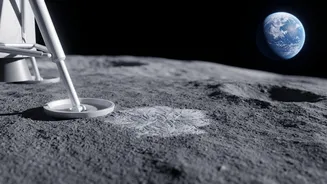
These findings have significant implications for the future of space exploration. The primary concern is planetary protection—the principle of avoiding the contamination of other celestial bodies with Earth life. If we are to search for signs of past or present life on the Moon or, eventually, on Mars, we need to be certain that what we find is genuinely extraterrestrial and not just a microbe we brought with us. The survival of Earth microbes could contaminate precious samples and skew the results of scientific experiments designed to detect delicate organic signatures. Establishing a baseline of the Moon's pristine environment before extensive human activity begins is critical. This research highlights the need to understand how our microbial companions interact with new environments and to develop even better contamination control procedures for future missions. While an astronaut's bootprint might seem insignificant, the study suggests it could inadvertently create a tiny, shadowed niche where an Earth microbe could survive for a time on the lunar surface.