




A New Martian Driving Record
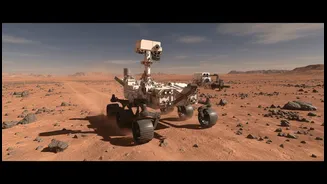
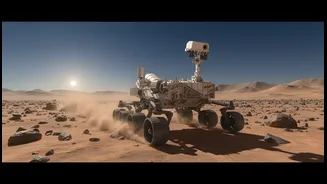
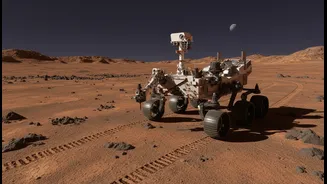
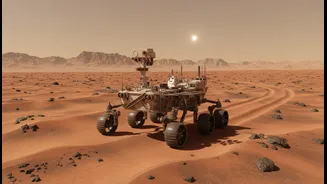
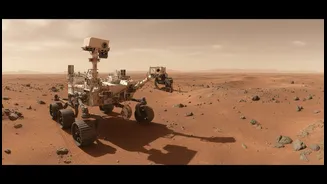
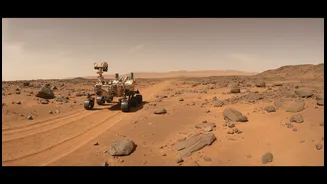
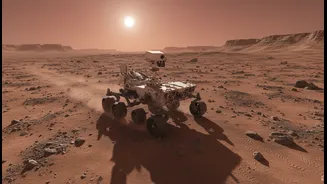
On June 14, 2026, the Perseverance rover officially traveled more than 26.2 miles (42.195 kilometers) across the surface of Mars, the equivalent of a full marathon. What makes this feat so remarkable is the speed at which it was accomplished. Perseverance reached
the milestone in just over five years, less than half the time it took the previous record-holder, the Opportunity rover, which needed more than 11 years to cover the same ground. This isn't because Perseverance has a higher top speed—it still moves at a cautious 0.1 mph—but because of how it drives when human operators on Earth aren't holding the joystick.
The Brains Behind the Speed: AutoNav
The secret to Perseverance's impressive pace is its advanced autonomous navigation system, called AutoNav. Unlike its predecessor, Curiosity, which had to stop, take pictures, analyze the terrain, and then proceed, Perseverance can 'think while driving.' It uses a dedicated computer, its Vision Compute Element, to continuously capture stereo images, build 3D maps of the terrain ahead, identify potential hazards like rocks and sand traps, and plot the safest and most efficient path forward, all while its wheels are still turning. This ability to process and navigate in real-time dramatically reduces downtime and allows the rover to cover much more ground each Martian day.
Faster, Smarter, and Safer
While AutoNav allows for greater speed, the system is fundamentally designed with safety as its top priority. The rover is programmed to be highly risk-averse. When its navigation cameras map the terrain, the software assigns a 'cost' to different paths based on the danger they pose. It will always choose the route with the lowest risk, even if it's not the absolute shortest. Furthermore, a secondary system using lower-mounted Hazard Avoidance Cameras (Hazcams) acts as a last line of defense, scanning the area immediately in front of the wheels. If this system spots an unforeseen obstacle, it has the power to immediately halt the rover and force a recalculation, ensuring the multi-billion-dollar explorer doesn't drive into trouble.
A Leap Forward from Curiosity
The jump in autonomous capability from the Curiosity rover to Perseverance is significant. While both rovers share a similar chassis design, Perseverance's upgrades have revolutionized its travel efficiency. Curiosity's navigation system treated the rover like a simple disc, forcing it to drive around any two obstacles that were close together, even if it could physically fit through. Perseverance’s enhanced system, called ENav, is more sophisticated, understanding the rover's actual shape and allowing it to navigate through more complex and tightly packed terrain. This, combined with its 'thinking while driving' capability, enables it to autonomously travel up to five times faster than Curiosity, turning what would have been a cautious crawl into a confident traverse.
Why the 'Marathon' Matters for Science
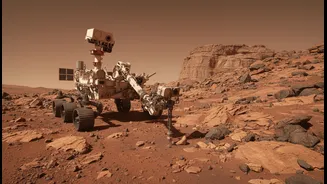
Covering ground faster isn't just for setting records; it directly accelerates the pace of scientific discovery. Perseverance's primary mission in Jezero Crater is to search for signs of ancient microbial life and collect compelling rock and soil samples for a future return mission to Earth. The faster the rover can travel between scientifically interesting locations—like the ancient river delta it has been exploring—the more time its science team has to conduct detailed analysis, use its instruments, and drill for core samples. This greater mobility allows scientists to explore a wider and more diverse range of geological features, dramatically increasing the mission's overall scientific return and our understanding of the Red Planet.