






A Game-Changing Policy Shift
For decades, space was the exclusive domain of the Indian Space Research Organisation (ISRO). That changed dramatically in 2020 with the establishment of the Indian National Space Promotion and Authorisation Centre (IN-SPACe). This autonomous body was created
to act as a single-window agency to promote, authorise, and supervise the activities of private companies in the space sector. By opening up ISRO's facilities, sharing technological expertise, and creating a predictable regulatory framework, IN-SPACe has effectively rolled out the red carpet for startups. The Indian Space Policy 2023 further clarified the roles of ISRO, IN-SPACe, and NewSpace India Limited (NSIL), ISRO's commercial arm, creating a collaborative ecosystem instead of a state-run monopoly. As a result, the number of space startups has skyrocketed from a handful six years ago to over 450 today.
An Influx of Capital and Investment
Enthusiasm for India's space sector is being matched by a significant flow of investment. In the last three years, Indian space startups have attracted nearly $400 million in funding. Projections show the Indian space economy could grow from around $8.4 billion in 2022 to $44 billion by 2033. To fuel this growth, the government has announced measures like a ₹1,000 crore venture capital fund to provide crucial early-stage capital. Policies have also been updated to allow up to 100% Foreign Direct Investment (FDI) in manufacturing satellite components, making the sector more attractive to global investors. This financial backing is enabling companies to move from drawing boards to launchpads, funding everything from R&D to large-scale manufacturing.
The Rise of Full-Stack Launch Providers
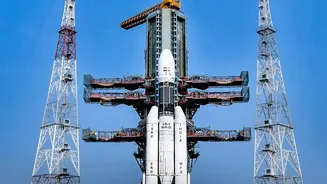
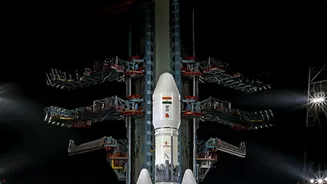
The most visible sign of the sector's success is the emergence of private companies building and launching their own rockets. Hyderabad-based Skyroot Aerospace made history in July 2026 by successfully launching Vikram-1, India’s first privately developed orbital rocket. This achievement made India only the third country, after the US and China, with a private company capable of orbital launches. Another key player, Chennai-based Agnikul Cosmos, has also achieved major milestones, including launching a sub-orbital test vehicle powered by the world's first single-piece 3D-printed engine. These companies are not just building components; they are offering end-to-end launch services, a crucial capability that democratises access to space for smaller satellite operators.
A Deep and Experienced Talent Pool
India's space ambitions are powered by its people. The country has a strong foundation of engineering talent from premier institutions like the IITs and BITS Pilani. Furthermore, the private sector boom has created a 'reverse brain drain', where experienced scientists and engineers from ISRO and global firms are moving to agile Indian startups. This migration channels decades of invaluable expertise directly into commercial innovation. Startups like Skyroot and Agnikul were founded by former ISRO scientists, blending deep institutional knowledge with a nimble, startup-driven approach. This fusion of experience and entrepreneurial spirit is a powerful catalyst for rapid development and problem-solving.
Innovation in a High-Tech Ecosystem
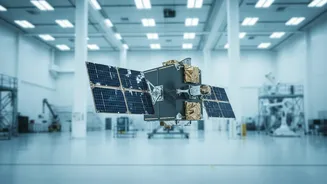
Beyond launch vehicles, a diverse ecosystem of startups is flourishing. Companies like Dhruva Space are providing full-stack solutions, including satellite manufacturing, deployers, and ground station services. Dhruva Space has successfully space-qualified its satellite deployers on ISRO's PSLV missions and secured orders for building satellites. Other startups are focusing on specialised areas like satellite propulsion, Earth observation, and downstream data applications. This 'full-stack' approach, where companies manage the entire lifecycle of a space mission, reduces complexity and cost for customers. This specialisation and integration are creating a robust domestic supply chain and fostering innovation across the entire space value chain.
The 'Frugal Engineering' Advantage
India's reputation for cost-effective engineering, famously demonstrated by ISRO's low-cost missions, is a major competitive advantage for its private sector. Startups are leveraging advanced manufacturing techniques like 3D printing to drastically reduce the cost and time required to build complex components like rocket engines. Agnikul’s Agnilet engine, for instance, is a single-piece, 3D-printed marvel. This focus on indigenous production and frugal innovation allows Indian companies to offer launch services and satellite solutions at a fraction of the cost of their global competitors, positioning India as a potentially dominant player in the global market for small satellite launches.