






A Gift from Halley's Comet
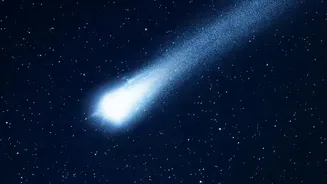
The Orionid meteor shower isn't just a random display of shooting stars; it has a famous origin. Each meteor you see is a tiny piece of ice and rock that broke off from Comet 1P/Halley, perhaps the most well-known comet in history. Every year in October,
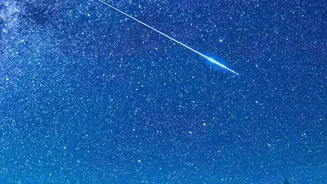
Earth passes through this stream of debris. As these particles, some no bigger than a grain of sand, hit our atmosphere at incredible speeds—about 66 kilometers per second—they burn up, creating the brilliant streaks of light we call meteors. These fast meteors are known for leaving behind glowing "trains" that can linger in the sky for several seconds. Occasionally, a larger piece creates a spectacular fireball, a prolonged and brilliant flash of light. Watching the Orionids is like seeing tiny, fiery pieces of Halley's Comet, which itself only visits the inner solar system once every 76 years.
Peak Viewing Dates and Times
The key to any meteor shower is timing. For the 2026 Orionids, the peak activity is expected on the night of October 21st and into the pre-dawn hours of October 22nd. While the shower is active from early October to early November, your best chance of seeing the highest number of meteors will be during this peak. In a typical year, you can expect to see about 15 to 20 meteors per hour under perfect conditions. However, the Orionids are known for having broad and sometimes unpredictable peaks, so it's worth looking on the nights before and after October 21-22 as well. In some exceptional years, rates have surged to be comparable to the more famous Perseids.
The Pre-Dawn Window Is Key
While the peak is October 21-22, the specific time of night you watch is crucial. In 2026, the Moon will be in a bright, waxing gibbous phase, which can wash out fainter meteors for much of the night. But there is a perfect window of opportunity. The Moon will set around 3 a.m. local time during the peak mornings. This leaves a couple of hours of dark, moonless sky before dawn breaks. This pre-dawn period is the absolute best time to watch. Not only will the sky be darkest, but the shower's radiant point in the constellation Orion will be high in the sky, increasing the number of meteors visible. So, plan on setting an early alarm or staying up late; the hours between 3 a.m. and sunrise are your golden ticket.
How to Prepare for Success
You don't need any special equipment to enjoy a meteor shower—your eyes are the only tool required. In fact, binoculars or a telescope are not recommended because they limit your field of view, and meteors can appear anywhere in the sky. The most important step is to get away from city and residential lights. Find a dark, open space where you can see as much of the sky as possible. Give your eyes at least 20 minutes to fully adjust to the darkness; this means avoiding looking at your phone screen. Since you'll be outside for a while, comfort is key. Bring a blanket or a reclining lawn chair so you can lie back and look up without straining your neck. Dress in warm layers, as even autumn nights can get chilly in the early morning hours.
Where to Look in the Sky
The shower is named the Orionids because the meteors appear to originate from a point, called the radiant, near the constellation of Orion the Hunter. You can find Orion rising in the east after 10 p.m. and climbing high in the southern sky by the pre-dawn hours. Look for the three bright stars that form Orion's belt. However, you don't need to stare directly at the radiant. In fact, meteors seen farther away from this point will appear to have longer tails as they streak across the sky. The best strategy is to simply lie back, look straight up, and take in as wide a view of the sky as you can. The meteors can appear in any part of the sky, so a relaxed, wide-angle gaze is your best bet.