







Your Gut and Brain Are Always Talking
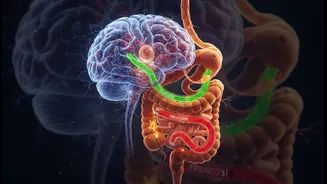
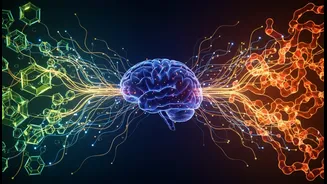
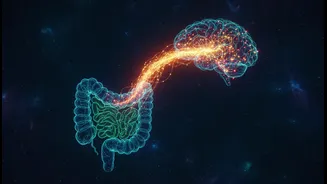
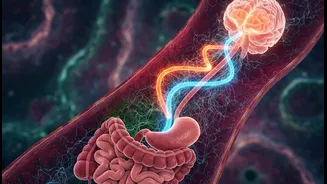
Imagine a superhighway of information running directly between your digestive system and your brain. This is the gut-brain axis, and one of its main channels is a long nerve called the vagus nerve. This system constantly sends updates about what you’ve
eaten. It’s not just about feeling full because your stomach is stretched; it’s a sophisticated process where your gut identifies specific nutrients and tells your brain what’s arrived. This communication is crucial for controlling hunger, cravings, and even your mood. The brain, in turn, makes decisions based on this information, like whether to keep eating or put the fork down.
Glucose vs. Fructose: Not All Sugars Are Equal
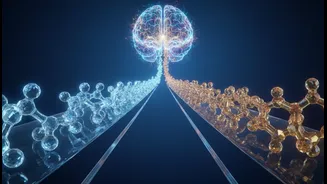
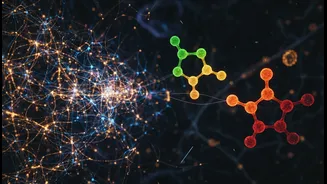
Calories are not always created equal, especially when it comes to sugar. While glucose and fructose have the same number of calories, the body and brain treat them very differently. Glucose is the body's primary fuel source, found in foods like bread and starches. Fructose is the sugar found naturally in fruits, but it's also a major component of high-fructose corn syrup, which is added to countless processed foods and drinks. For years, it was thought that hunger-regulating brain cells just tracked total calories. However, recent studies show that the brain pays close attention to the type of sugar it's dealing with.
Glucose Sends a Strong 'I'm Full' Signal
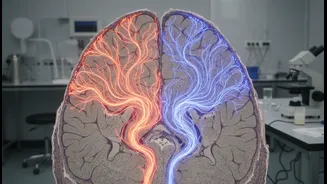
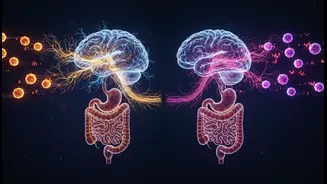
When you consume glucose, your gut sends a powerful message to the brain that effectively switches off hunger. This signal travels to a specific group of brain cells called Agouti-related protein (AgRP) neurons. Think of AgRP neurons as the main 'on' switch for hunger. When they are active, you feel hungry. Glucose consumption strongly suppresses the activity of these neurons, leading to a clear feeling of satiety. Interestingly, research suggests this powerful signal from glucose doesn't solely rely on the vagus nerve; it uses a separate, potent pathway to let your brain know that significant energy has arrived.
Fructose's Message Is Much Weaker
Here's where it gets interesting. When you consume fructose, the 'I'm full' message sent to the brain is much weaker. Studies on mice have shown that fructose is markedly less effective than an equal amount of glucose at suppressing those hunger-driving AgRP neurons. The signal from fructose travels to the brain primarily through the vagus nerve, but it just doesn't have the same hunger-quieting impact. This means that even after consuming calories from fructose, your hunger neurons may not get the message to power down, which could leave you still feeling hungry or wanting more.
Why This Matters for Your Cravings
This difference in signaling helps explain why some foods are easy to overeat. A drink or snack high in fructose might not satisfy your brain's hunger signals as effectively as a food rich in glucose. In studies, mice showed a preference for glucose or high-fructose corn syrup (a mix of both sugars) over fructose alone, likely because the glucose component provided a stronger 'reward' signal to the brain by shutting down hunger neurons more effectively. The combination in high-fructose corn syrup sends a more appealing signal than fructose by itself, which may help explain why foods containing it can be so irresistible.