




The Challenge of Thin Air
Space travel has always had a logistics problem: everything an astronaut needs, from food and water to breathable air, must be carried from Earth. This is incredibly expensive and limits the duration and scope of missions. For long-term settlement under
NASA's Artemis program, this model is unsustainable. The solution is known as In-Situ Resource Utilization (ISRU), which is a technical term for using local resources. While the Moon has virtually no atmosphere, its soil, known as regolith, is surprisingly rich in oxygen—about 45% by mass. The catch is that this oxygen is chemically bound within minerals like silicates and oxides, making it unbreathable. The key, then, is to find an efficient way to break those chemical bonds and release the life-sustaining gas.
How to 'Cook' Oxygen From Rocks
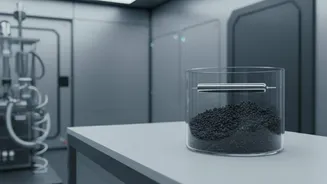
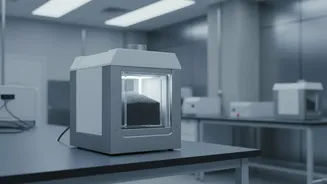
NASA's answer to this challenge is a technology called the Carbothermal Reduction Demonstration, or CaRD. In recent tests, scientists used a powerful heat source to simulate the concentrated energy of the sun, heating lunar regolith simulant (a man-made copy of moon dust) to extreme temperatures inside a specialized reactor. This process, known as carbothermal reduction, is commonly used on Earth for industrial purposes like making steel. In the lunar context, the intense heat causes the oxygen-bearing minerals in the regolith to release carbon monoxide. This gas can then be processed further to split it into pure, breathable oxygen and carbon. Recent integrated tests successfully combined a solar concentrator, mirrors, and a reactor to confirm that sunlight alone can drive this crucial reaction.
More Than Just a Breath of Fresh Air
While providing breathable air for habitats and spacesuits is a vital application, the oxygen extracted from regolith has an even more significant purpose: rocket propellant. Liquid oxygen is a common oxidizer used in rocket engines, and the ability to produce it on the Moon would be revolutionary. It would dramatically reduce the mass that needs to be launched from Earth, freeing up space and power for other critical supplies and scientific instruments. Missions could refuel on the Moon for a return trip to Earth or, even more excitingly, for journeys deeper into the solar system. This turns the Moon from just a destination into a strategic outpost and a refuelling station for future exploration.
A Stepping Stone to Mars
The technologies being proven on Earth and planned for the Moon are foundational for NASA's long-term 'Moon to Mars' architecture. The lessons learned from deploying and operating oxygen extraction plants in the harsh lunar environment will be directly applicable to future crewed missions to the Red Planet. The same basic principles can be adapted to process the Martian atmosphere, which is rich in carbon dioxide, to create oxygen and even methane for fuel. In fact, a smaller-scale experiment called MOXIE is already successfully producing oxygen from carbon dioxide aboard the Perseverance rover on Mars, proving the concept works on another world. The CaRD technology represents a more robust, large-scale system intended for a permanent base.
What's Next for Lunar Oxygen?
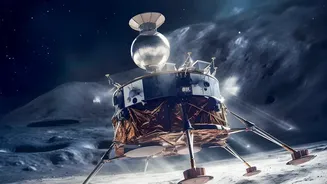
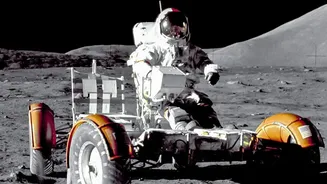
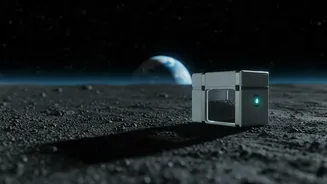
Having successfully demonstrated the process in vacuum chambers on Earth that simulate lunar conditions, the next major step is to test the technology on the Moon itself. Engineers are working to ruggedize the equipment—including reactors, solar concentrators, and control software—to survive the launch and operate reliably in the extreme temperatures and abrasive dust of the lunar surface. Future missions under the Artemis program are expected to deliver these pilot plants to the Moon, likely near the resource-rich South Pole. Once there, rovers could be used to scoop regolith and feed it into the automated system, beginning the first-ever industrial-scale production of a resource on another celestial body.