




An Erratic Lifeline in 2026
For generations, India has planned its existence around the southwest monsoon. This annual weather event is crucial for replenishing water reserves and is vital for the approximately half of the nation's farmland that lacks irrigation. However, the 2026
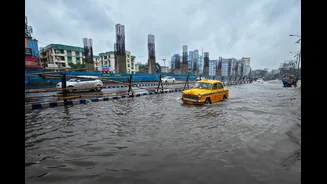
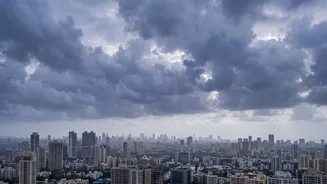
monsoon season is highlighting a worrying new reality. After a delayed and deficient start in June, a surge of moisture in July was not enough to prevent significant rainfall deficits in many regions. This pattern of long dry spells broken by sudden, intense downpours has become a defining feature. As of mid-August, the country faced a cumulative precipitation deficit, with sowing for the critical Kharif crop season lagging. This volatility—floods in some areas while others remain parched—is no longer an anomaly; it is the chaotic signature of a changing climate.
The Ripple Effect on Farm and Family
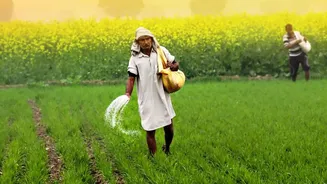
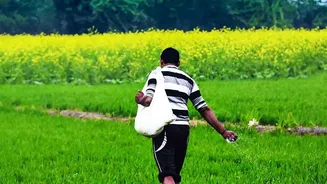
The consequences of this erratic rainfall ripple from the field to the dinner table. Farmers, who depend on predictable rains to time their planting, are caught in a cycle of uncertainty. An early forecast of a weaker monsoon in 2026, influenced by El Niño conditions, immediately raised concerns. When rains fail to arrive on time, sowing is delayed, and farmers may be forced to choose lower-value, more resilient crops over water-intensive cash crops. Conversely, a sudden, intense downpour can wash away freshly planted seedlings. This directly impacts crop yields, agricultural incomes, and can lead to broader economic stress, including rising food prices. For the millions who rely on farming for their livelihood, this unpredictability poses a direct threat to their economic survival.
The Science of Seeing the Future
In the face of this climate chaos, the science of weather prediction has become a critical tool for national resilience. The India Meteorological Department (IMD) is increasingly leveraging advanced technology, including supercomputers and artificial intelligence, to move beyond conventional forecasting. In May 2026, the IMD launched a new AI-enabled system designed to provide hyper-local weather forecasts up to four weeks in advance. These models integrate vast amounts of data from satellites, automatic weather stations, and doppler radars to generate highly specific, actionable information. One pilot program in Uttar Pradesh, for example, aims to provide rainfall forecasts at a 1-kilometre resolution up to 10 days in advance, a massive leap in precision. This is about turning atmospheric data into a decision-support system for the entire country.
From Forecast to Action
Accurate, long-range forecasts are a game-changer. Studies have shown that when farmers receive reliable information about the upcoming season, they adapt their strategies accordingly. A forecast predicting a longer growing season can encourage a farmer to invest in higher-yield cash crops. A warning of a delayed monsoon might prompt a shift to drought-resistant millets or pulses. The benefits extend far beyond the farm. Timely warnings enable disaster management agencies to pre-position resources ahead of floods or cyclones. They allow dam operators to make smarter decisions about water release and storage, balancing the needs of irrigation, hydropower, and urban water supply. Providing farmers with better forecasts has been shown to reduce cultivation costs and improve yields, directly boosting their income and food security.